Yangjiajie
PLACE

Yangjiajie

Peak-wall viewpoints

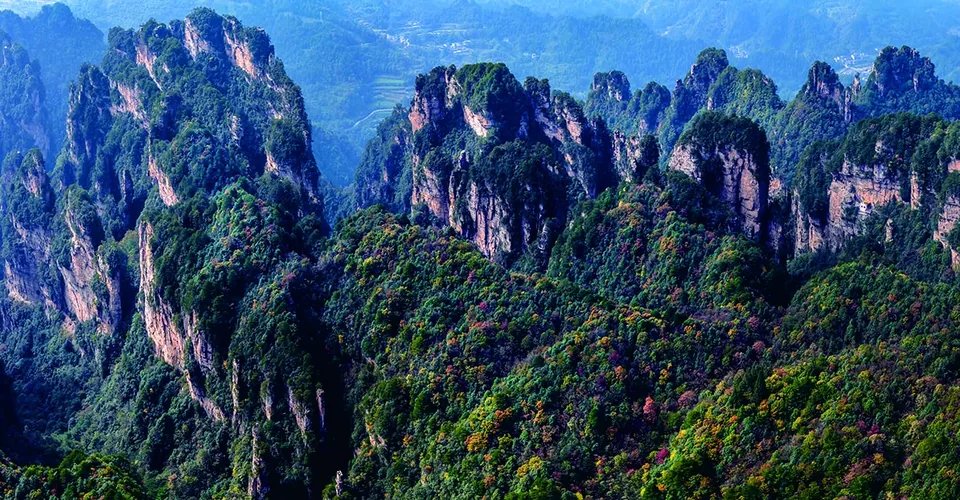
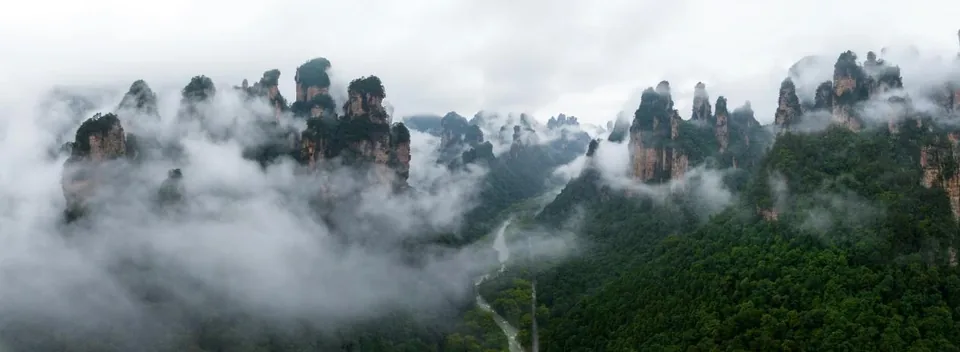
Yangjiajie represents an early stage of peak-forest evolution. Deep ravines and parallel sandstone walls give this area its distinctive character.

Practical information

Opening hours, tickets, transport facilities and routes may change. Check the latest information through official scenic-area channels before travelling.

Opening hours, tickets, transport facilities and routes may change. Check the latest information through official scenic-area channels before travelling.

Yangjiajie

Yangjiajie

Yangjiajie takes its name from a tradition that descendants of the Yang family generals of the Northern Song dynasty lived and multiplied here and stationed troops in the area. It is a characteristic setting for Zhangjiajie’s quartz-sandstone peak walls, which stand like screens: imposing, steep and shaped by natural processes.

Many local sights are closely associated with the Yang family generals. Their descendants are said to continue living here, while the Yang family genealogy and ancestral tombs from the Ming and Qing dynasties remain.

Walking through forests and across ravines reveals the Natural Great Wall, Tianbo Mansion and Wulong Village. The monumental walls and their broad scale convey a different, more expansive character than the pillar forests.

Natural Great Wall and peak-wall landforms

Natural Great Wall and peak-wall landforms

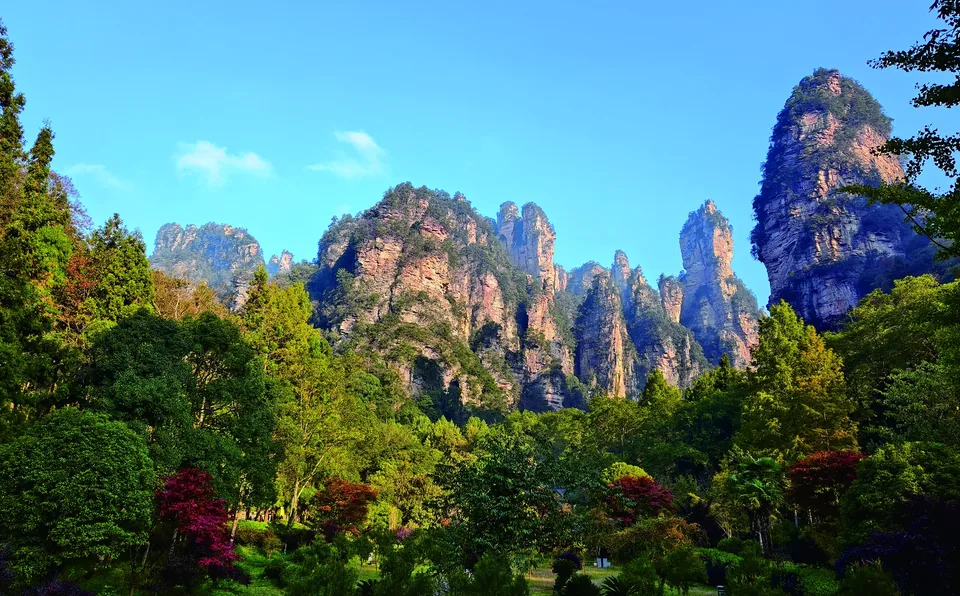
The Natural Great Wall consists of parallel quartz-sandstone peak walls, like a stone wall built across the land by nature. Rising a little over a hundred metres and extending for several hundred metres, the steep, upright walls have a commanding presence. They form where water continuously erodes a set of vertical joints in a quartz-sandstone platform, producing walls aligned in one direction. Sturdy pines crown them, and layered rock textures reveal the geological sculpting. The continuous walls stretch across the mountains like great dragons.

Wulong Village, formerly called Heilong Village, is surrounded by cliffs on steep terrain. A former bandit stronghold, it evokes the saying “one person guarding the pass can fend off ten thousand”. The approach to its summit is described as involving narrow cliff passages, bending through rock cracks or climbing ladders. Deep precipices surround the rear of the village. The adjacent Tianbo Mansion viewpoint overlooks dozens of aligned quartz-sandstone peak walls and offers a notable view of Zhangjiajie.

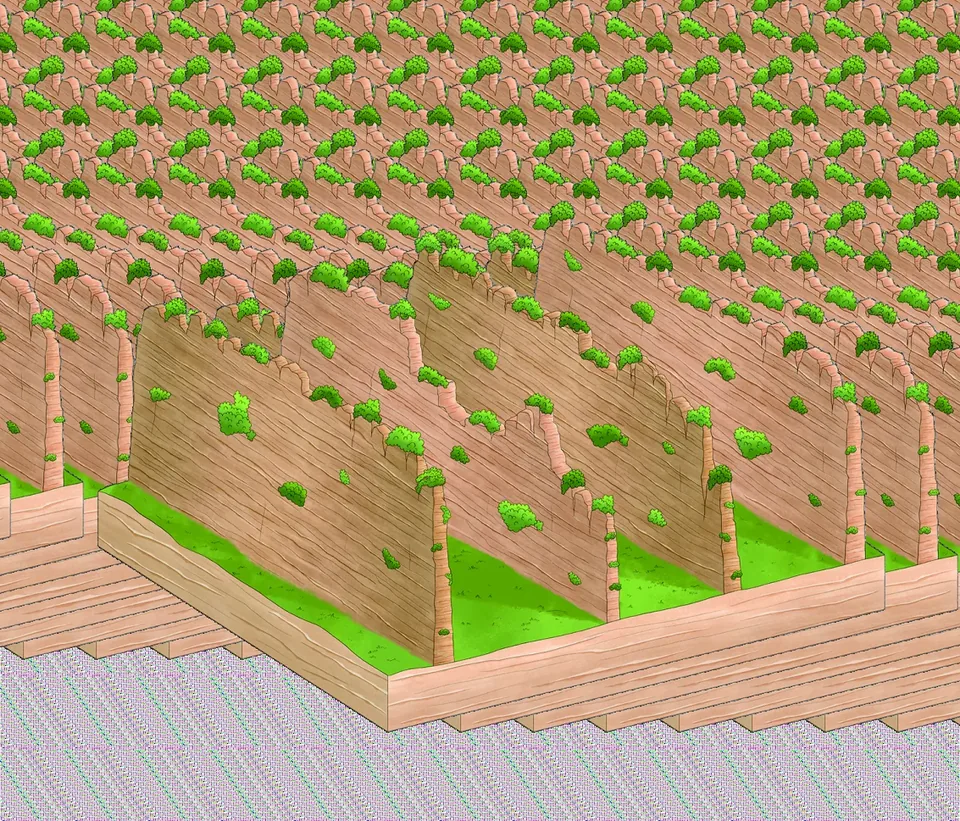
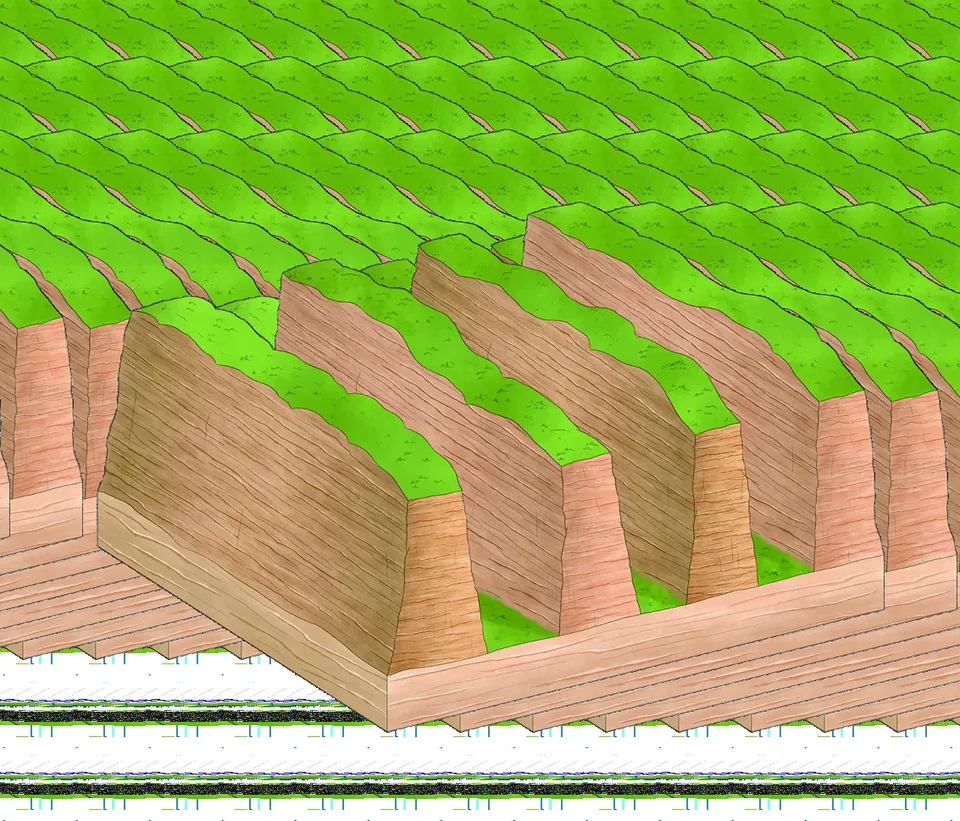
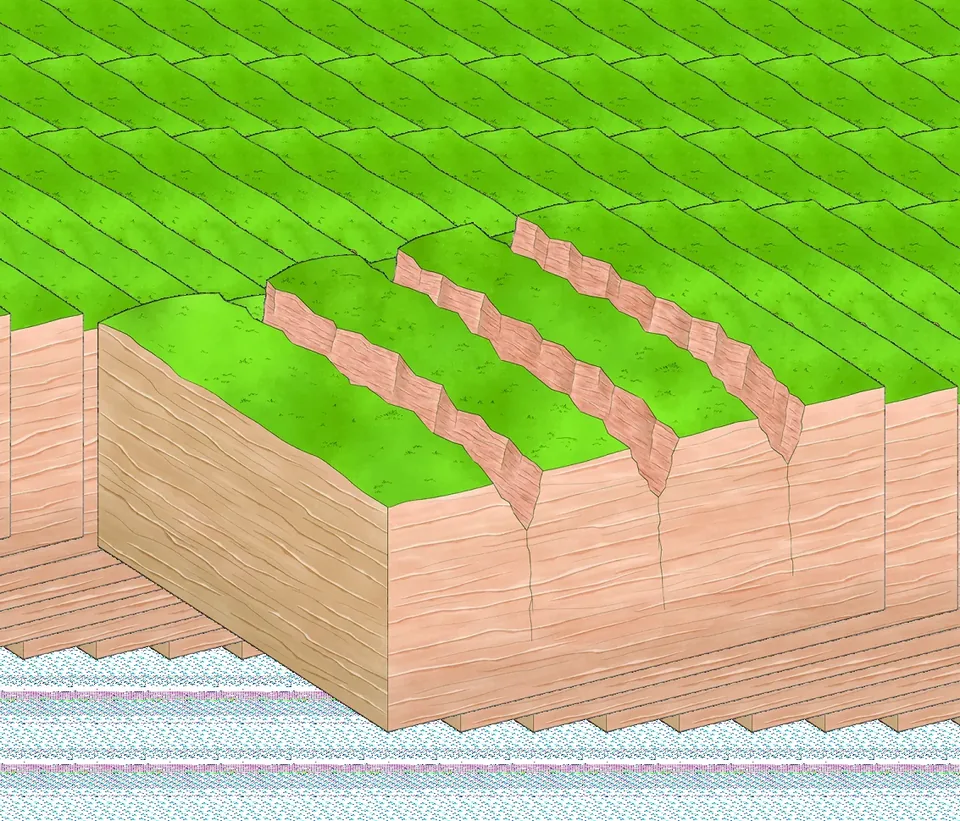
Formation of the Natural Great Wall: water continuously erodes a set of vertical joints in a quartz-sandstone platform or mesa, leaving wall-shaped mountain ridges extending in one direction. With steep, upright faces on both sides, they appear as peaks from the side and walls from the front. Several parallel sets resemble a natural Great Wall.

The peak-wall formation sequence begins with tectonic activity creating a set of nearly parallel vertical joints in a quartz-sandstone platform or mesa. Water continuously erodes along these joints, forming gullies and ravines.

As the crust rises, erosion reaches progressively deeper and shapes tall walls. If several sets of joints run in different directions, the walls are eventually divided into individual pillars.

AREA HIGHLIGHTS

Sights in this area

These sights sit within the same visitor area. Plan their order around walking routes, shuttle connections and same-day access.

  1. Natural Great Wall天然长城
  2. Tianbo Mansion天波府
  3. Wulong Village乌龙寨
  4. Crowing Rooster金鸡报晓
  5. One Man Guards the Pass一夫当关
  6. Fearful Step一步难行
  7. Bowing Head不得低头
  8. Singing Pavilion放歌亭
  9. Wulang Worshipping Buddha五郎拜佛
  10. Conglang Rock枞琅岩
  11. Twin Elms Embracing Rock双榆抱石
  12. One Step to Heaven一步登天
  13. Sky Corridor空中走廊
  14. Rock Biting Tree灵石咬树
  15. Longfeng Temple龙凤庵
  16. Kitten Fishing小猫钓鱼
  17. Regret Meeting Late相见恨晚
  18. General Rock将军岩