Yellow Dragon Cave
PLACE

Yellow Dragon Cave

Independent 4A attraction · separate ticket

Independent scenic attractions · separate tickets

Water and dry cave spaces reveal an underground karst landscape distinct from the peak forest.

Practical information

Opening hours, tickets, transport facilities and routes may change. Check the latest information through official scenic-area channels before travelling.

Opening hours, tickets, transport facilities and routes may change. Check the latest information through official scenic-area channels before travelling.

Huanglong Cave

Huanglong Cave
Huanglong Cave
Huanglong Cave

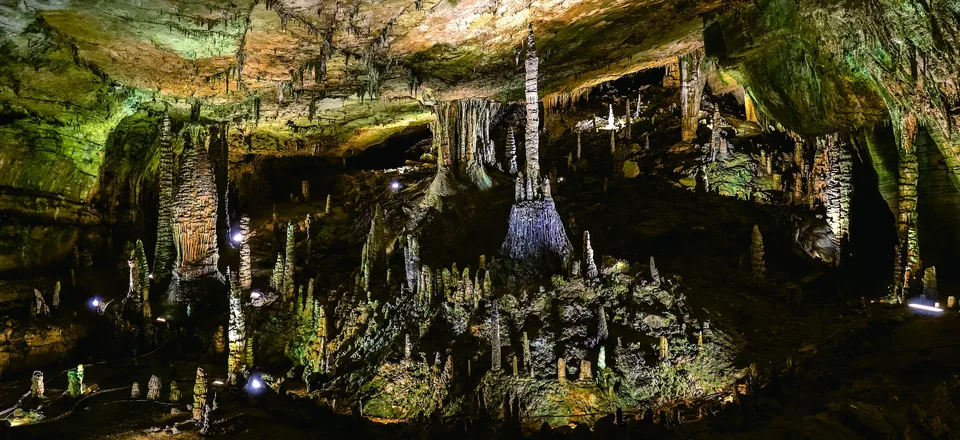
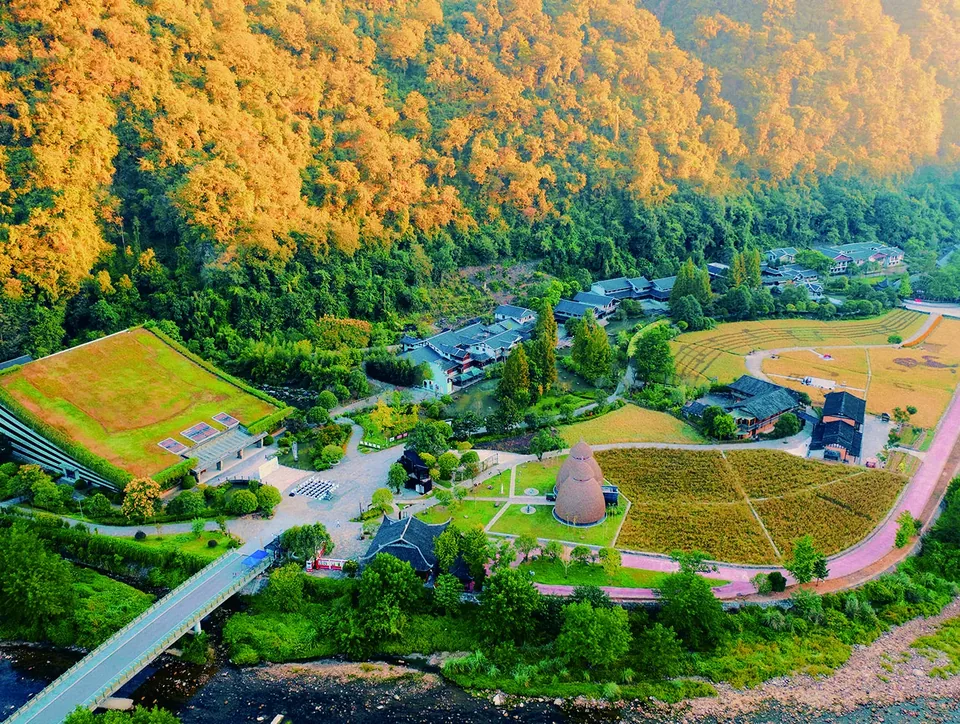
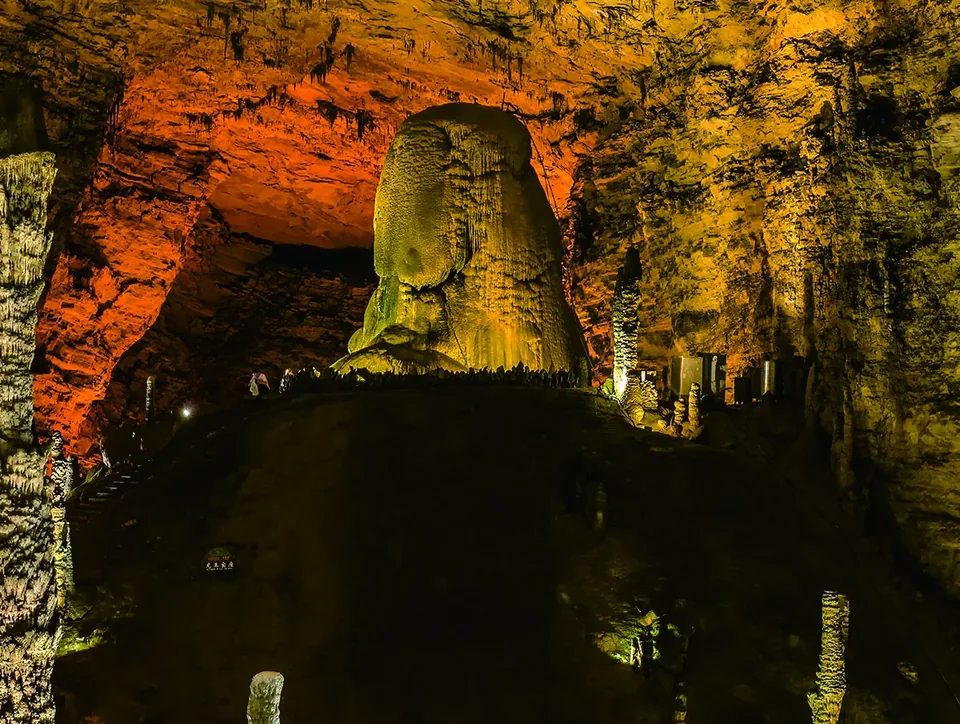
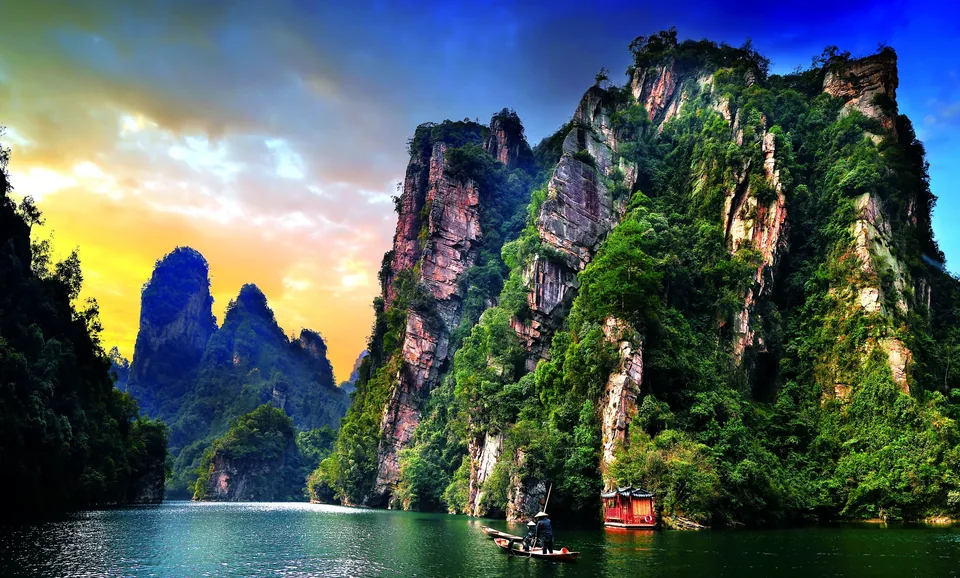
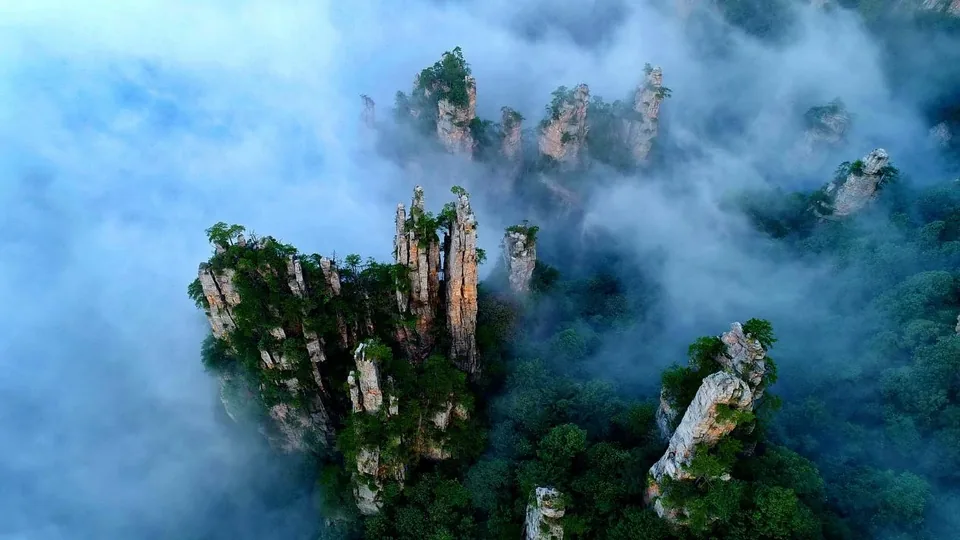
Huanglong Cave, also known as Yellow Dragon Cave, lies in Zhangjiajie's Wulingyuan scenic area. It is a karst cave with interconnected chambers and underground waterways. Stalactites, stalagmites and stone columns form a landscape quite different from the sandstone peaks outside. The Ecological Plaza, waterwheels and cultural spaces offer additional places to explore above ground; plan your visit around your available time and energy.

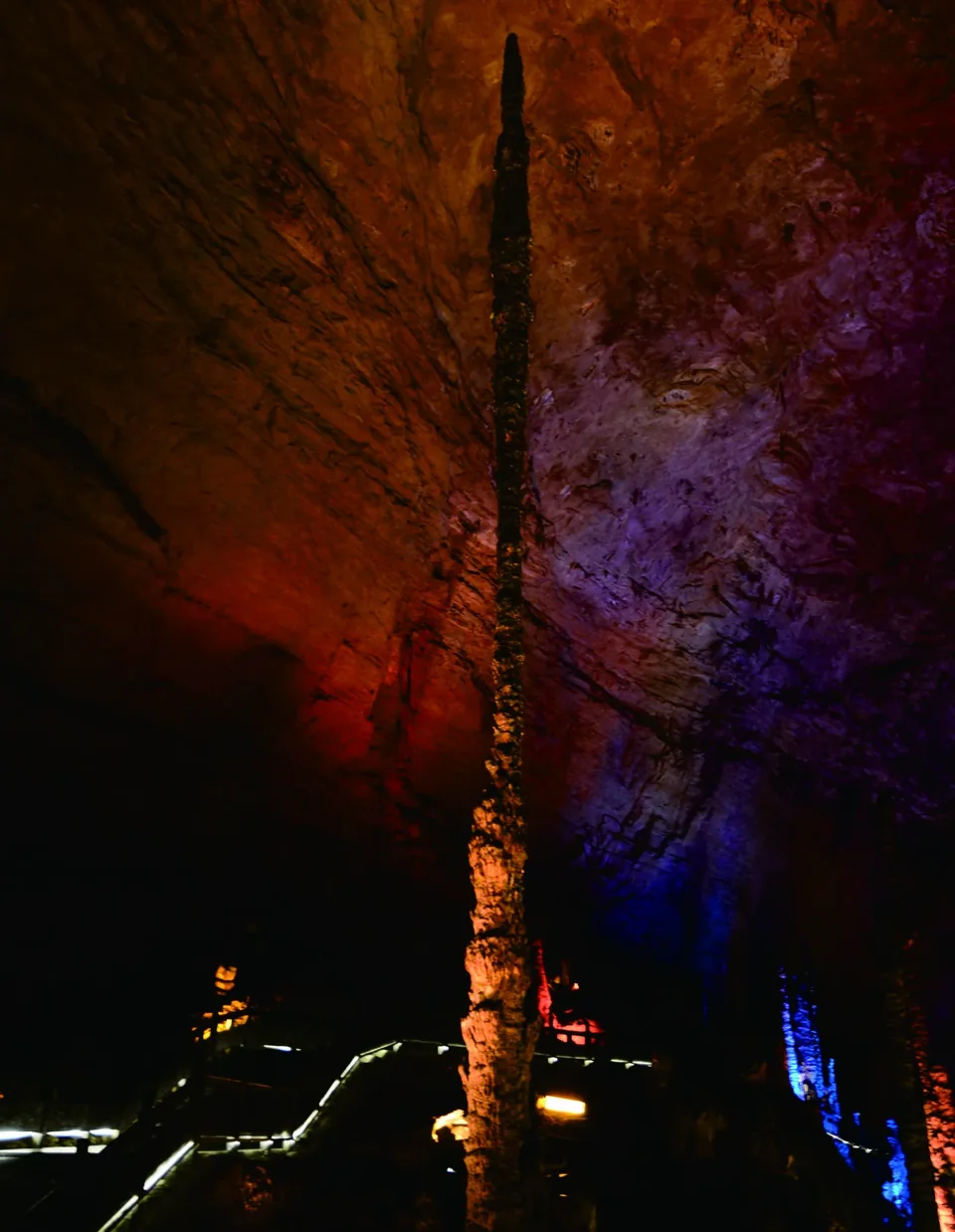
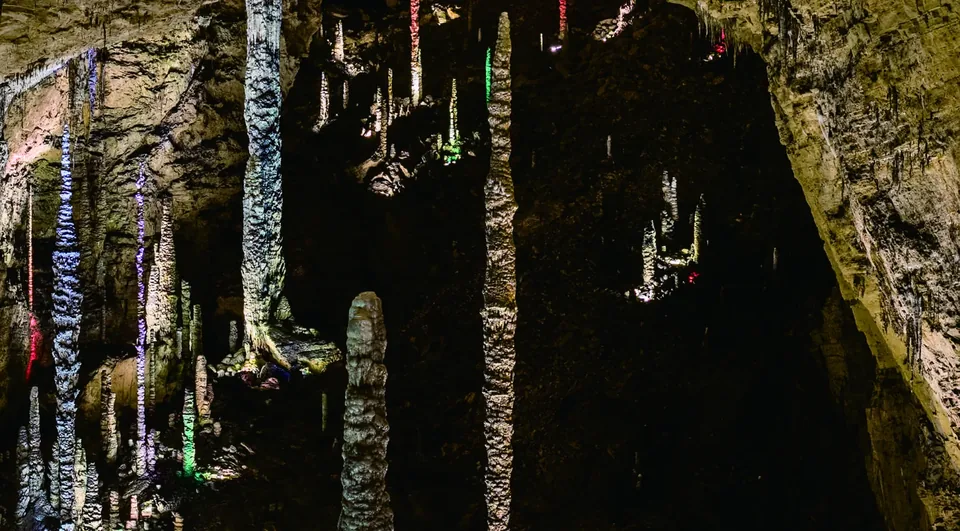
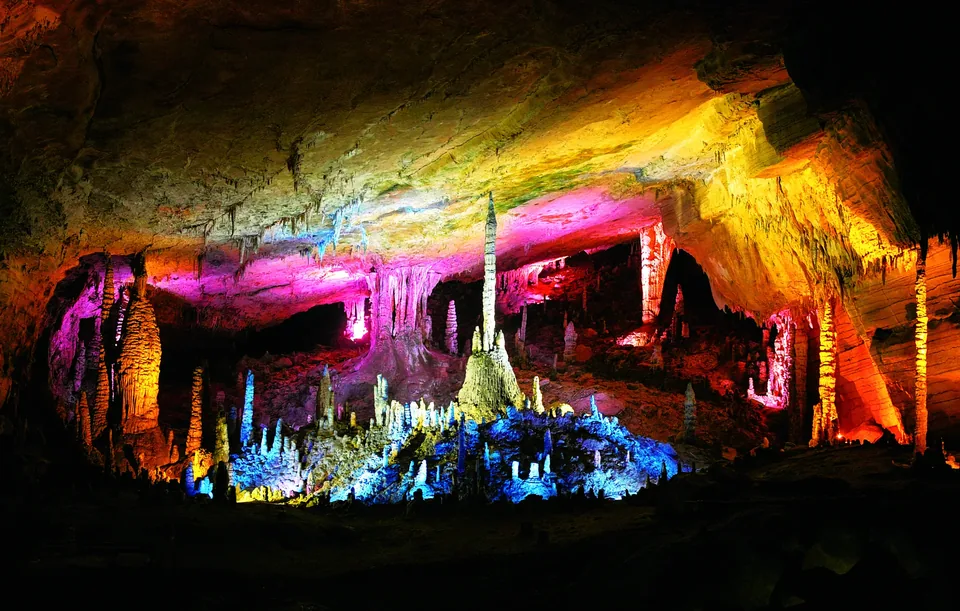
Stalactites, stalagmites, columns, stone waterfalls, draperies, curtains and cave corals create changing views throughout the cave. Its best-known stalagmite is the Sea-stabilising Needle, about 19.2 metres high and approximately 0.6 metres in diameter. Slender and upright, it is celebrated for its exceptional proportions.

Karst wonders of Huanglong Cave

Karst wonders of Huanglong Cave

The Sea-stabilising Needle stands in the uppermost Dragon Palace Hall. This stalagmite is thicker at both ends and slender in the middle, and is regarded as Huanglong Cave’s signature treasure. It is about 19.2 metres tall and approximately 0.6 metres in diameter, giving a diameter-to-height ratio of roughly 3%. Its shape and unusually high height-to-diameter ratio make it striking. Its surface has a crystalline sheen, and it stands on a slope of collapsed rock like the legendary Golden Cudgel reaching toward the ceiling. Its textured surface suggests the marks of time, with a faint blue sheen under dim light. Looking up, the rhythmic sound of dripping water seems like the whispers of passing time. This remarkable formation, shaped by water drop by drop, is a natural work of art hidden deep within the cave.

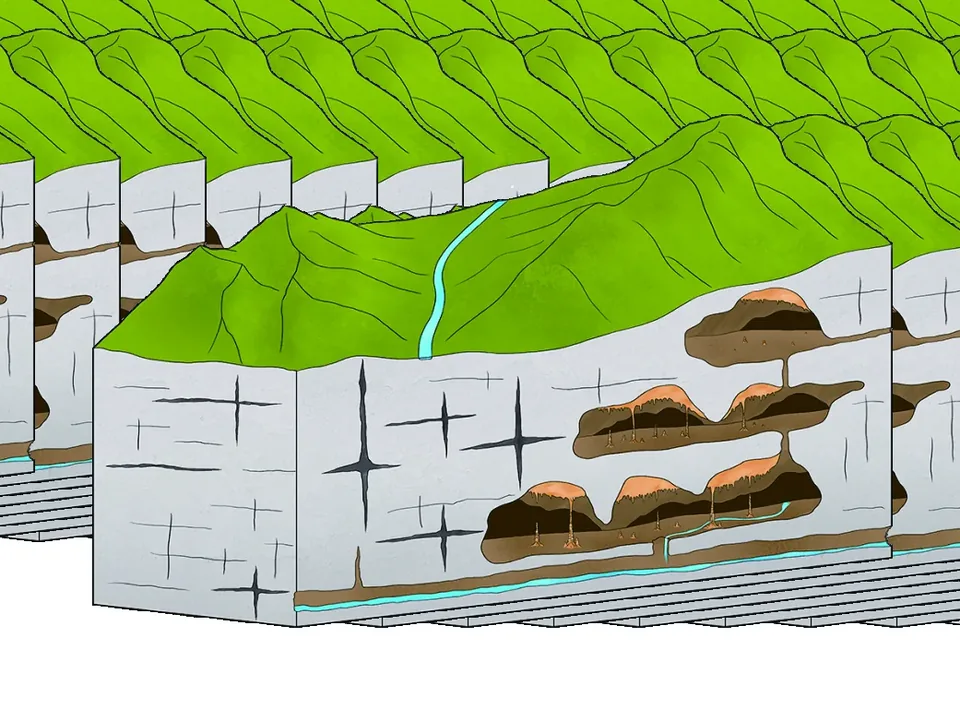
How did Huanglong Cave acquire its four storeys? As you follow the cave’s solution passages, the route sometimes climbs and sometimes descends steeply, opening into broad halls or narrowing into confined corridors. Careful observation reveals four approximate levels. Their formation can be understood through the following sequence.

Stage 1: Around 250 million years ago, the Zhangjiajie region was a marine environment. Biological and chemical processes produced large quantities of limestone composed mainly of calcium carbonate, providing the material from which the cave would later develop.

Stage 2: Over a long span of geological time, limestone that had been buried deep underground became exposed at the surface. Surface water began dissolving it, forming features such as solution grooves, rock pinnacles and sinkholes.

Stage 3: As the crust rose, water dissolved downward along limestone bedding planes, joints and fractures, forming underground drainage and cave systems. During periods of relative crustal stability, dissolution and gravity-driven collapse widened the spaces laterally into large halls and solution passages.

Stage 4: The crust subsequently rose several more times. After each uplift, groundwater began dissolving farther downward, developing deeper drainage and cave systems. Repetition of this process produced today’s four-level cave landscape, a silent witness to crustal uplift.
AREA HIGHLIGHTS

Area highlights

Explore landscapes, viewpoints and cultural spaces in each area. Cableways, the elevator and sightseeing tram are identified as transport facilities. Photographs show the places, not their current opening status.

Landscape

Ecological Plaza

生态广场

Landscape

Gathering Hall

聚会厅

Landscape

Sea-stabilising Needle

定海神针

Landscape

Xiangshui River

响水河

Landscape

Crystal River

水晶河

Landscape

Dragon's Eye

龙眼

Landscape

Labyrinth

迷宫

Landscape

Monkey Listening to Instructions

猴子听训

Landscape

Dragon Dance Hall

龙舞厅

Landscape

Yellow Earth Slope

黄土高坡

Landscape

Dragon Palace

龙宫

Landscape

Dragon King's Throne

龙王宝座

Landscape

Sky-column Street

天柱街

Landscape

Celestial Bridge

天仙桥

Landscape

Tianxian Waterfall

天仙水瀑布

Landscape

Stalactites

钟乳石

Landscape

Inner Palace

后宫

Cultural site

Longshe Old House

龙舍老屋

Visitor facility

Maosi

网红茅斯

Cultural site

Traditional Waterwheels

水车遗风

Cultural site

Hallelujah Concert Hall

哈利路亚音乐厅