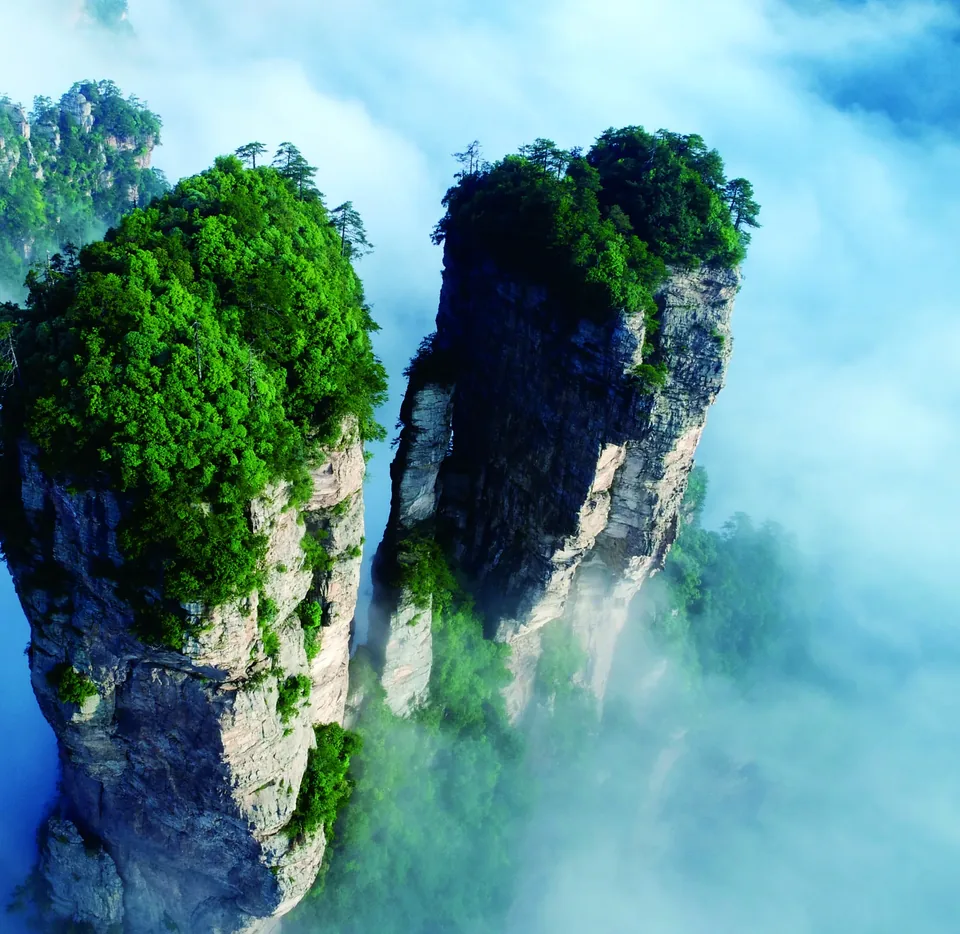
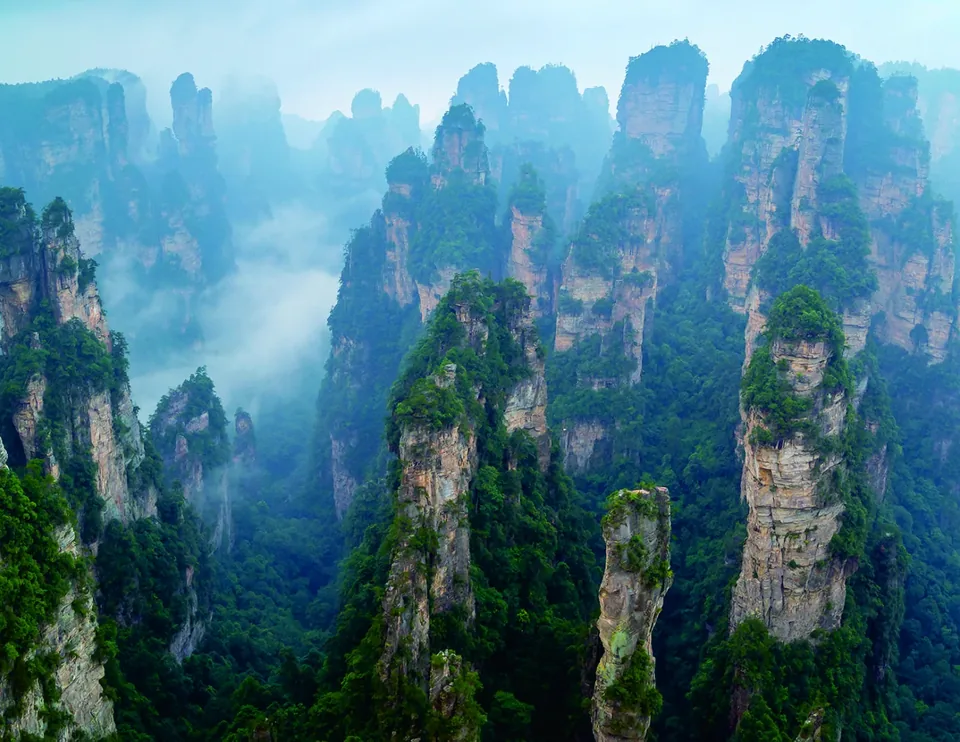
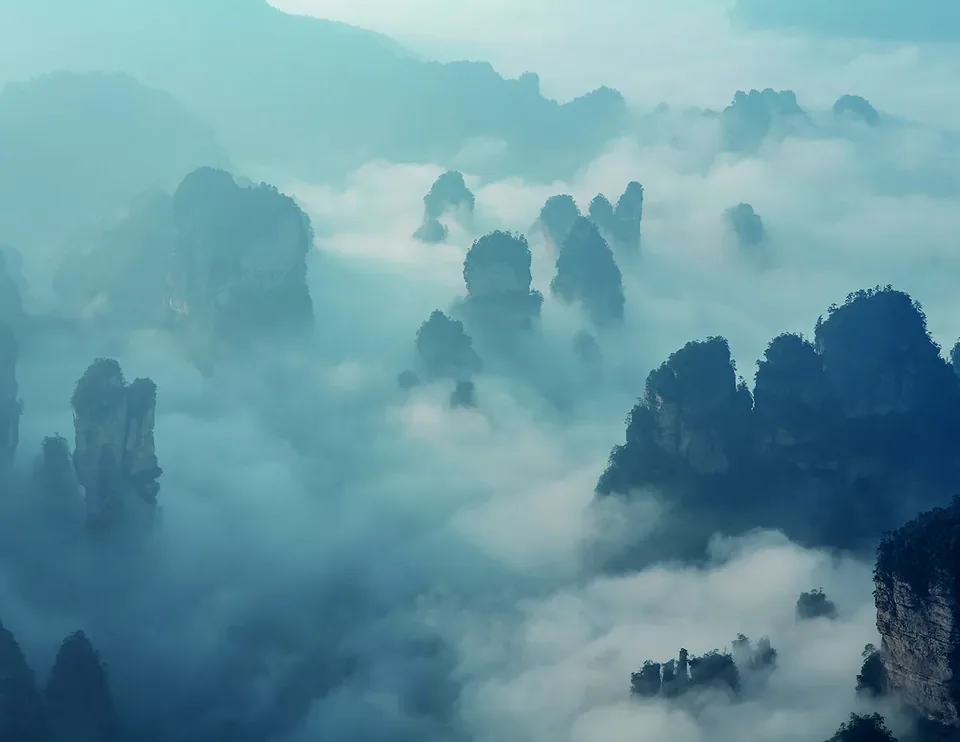
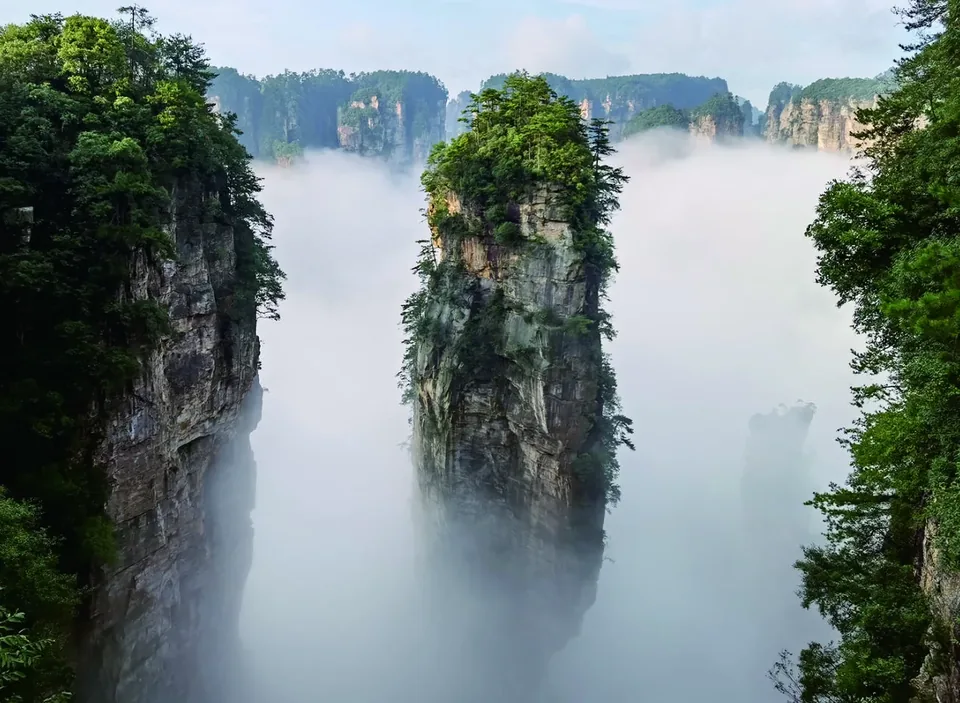
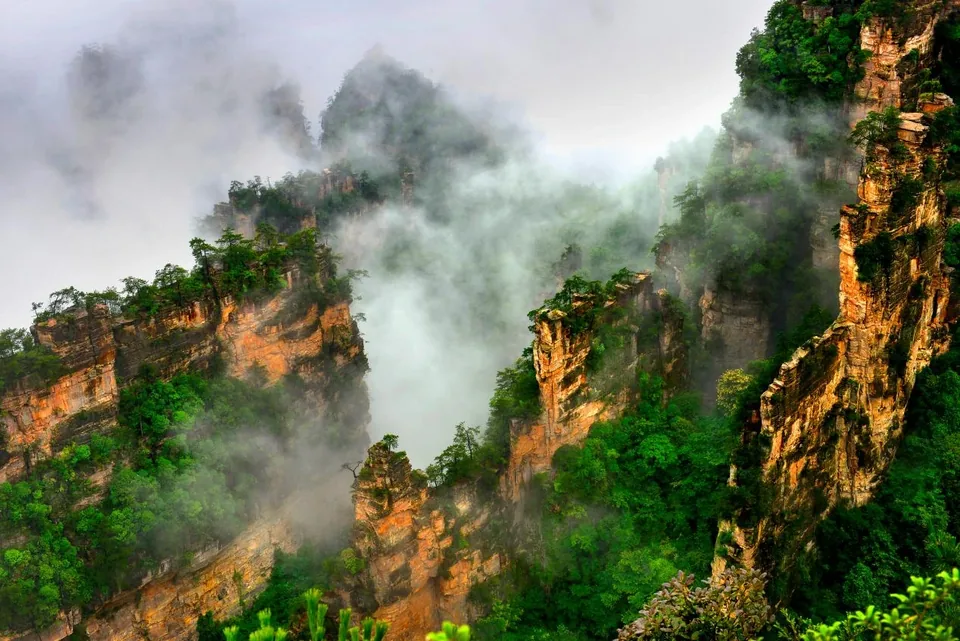
Qiankun Pillar, also known as Avatar Mountain, is one of Zhangjiajie’s “Three Thousand Remarkable Peaks”. The guidebook records an elevation of 1,074 metres and a vertical relief of about 150 metres. Lush vegetation crowns its distinctive form, whose clearly cut vertical joints make it rise as if hewn by an axe. Its name evokes a pillar supporting heaven and earth. It is associated with the inspiration for the floating Hallelujah Mountains in Avatar and has become a destination sought out by visitors from China and abroad.
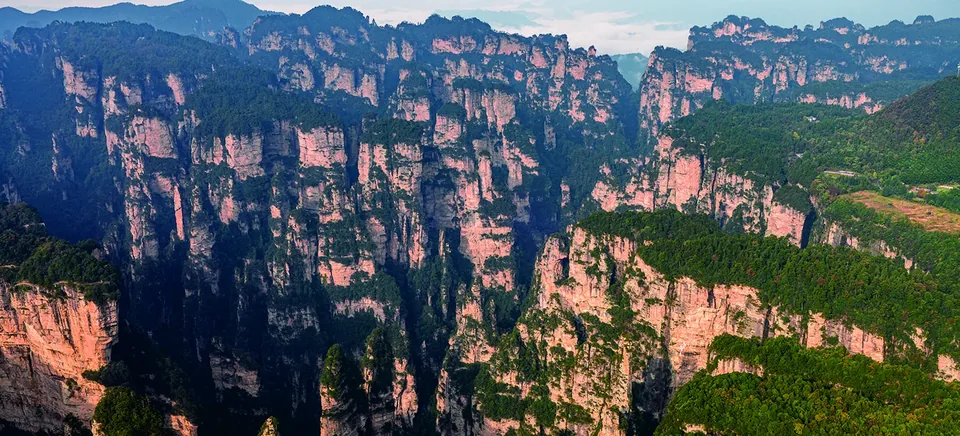
Formation of prismatic sandstone peak forests: the tall, upright pillars have four walls that look axe-cut. These smooth faces are mostly joint planes or surfaces developed along joints. Crustal movements subjected the quartz-sandstone strata to strong tectonic compression. Horizontal stress created numerous parallel vertical joints and fractures; flowing water eroded along them like a sculptor’s blade, establishing the core framework of Zhangjiajie’s sandstone peak-forest landform.
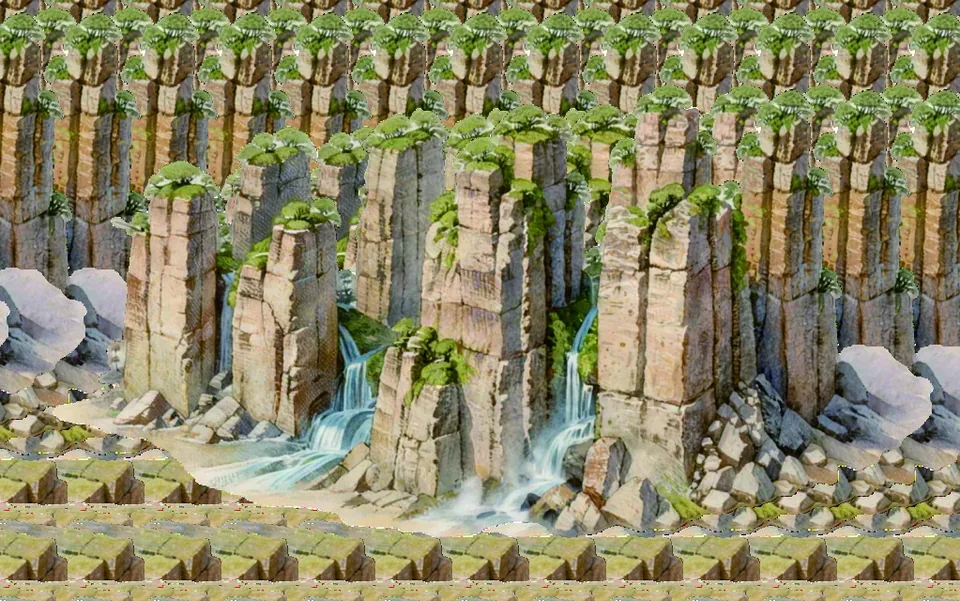
The prismatic-pillar formation sequence shows vertical joints created by crustal compression, water erosion along those joints, and the formation of prismatic sandstone peak forests.
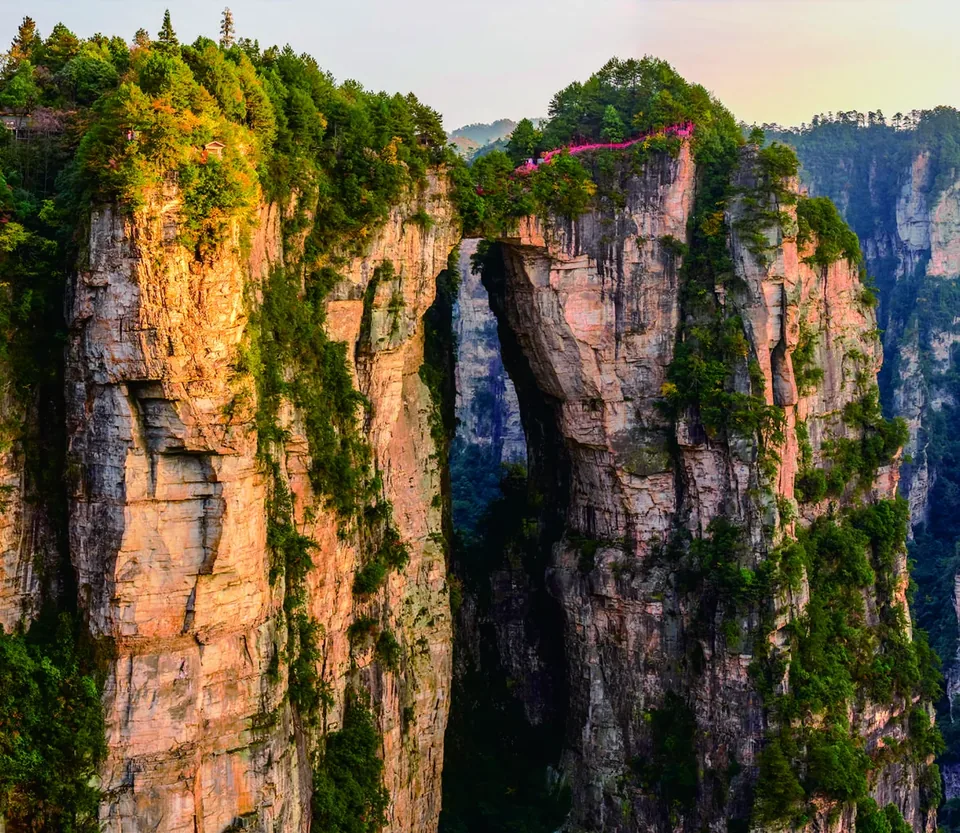
The No. 1 Bridge in the World links two peaks with a suspended rock corridor, forming a natural arch. Often enveloped in mist, it presents an imposing sight. The deck is about 2 metres wide and more than 20 metres long, with a vertical relief of approximately 350 metres. Tall pines grow on the bridge, old vines hang beside it, and a deep abyss lies below. Amid rising mist and wind in the pines, a visitor may feel as though the bridge itself is trembling and swaying: an exhilarating impression.
Formation of the bridge: dense vertical joints developed in the quartz sandstone. As water cut along them and separated the peak walls, softer rock layers beneath the bridge weathered, disintegrated and collapsed, forming caves on both sides. Stronger erosion gradually connected the caves. When the height of the opening became much greater than the thickness of its roof, the first form of a natural bridge appeared. A dense, hard hematite layer reinforced the deck, allowing it to remain as a geological feature.
The natural-bridge formation sequence shows water erosion along vertical joints; local collapse and intensifying erosion; caves joining through the cliff; and further rock collapse leaving a natural bridge.