Huangshizhai
PLACE

Huangshizhai

Clustered-peak viewpoints

A local saying holds that a visit to Zhangjiajie is incomplete without Huangshizhai. Its tableland and elevated viewpoints reveal the structure of the surrounding peak forest.

Practical information

Opening hours, tickets, transport facilities and routes may change. Check the latest information through official scenic-area channels before travelling.

Opening hours, tickets, transport facilities and routes may change. Check the latest information through official scenic-area channels before travelling.

Huangshizhai

Huangshizhai
Huangshizhai

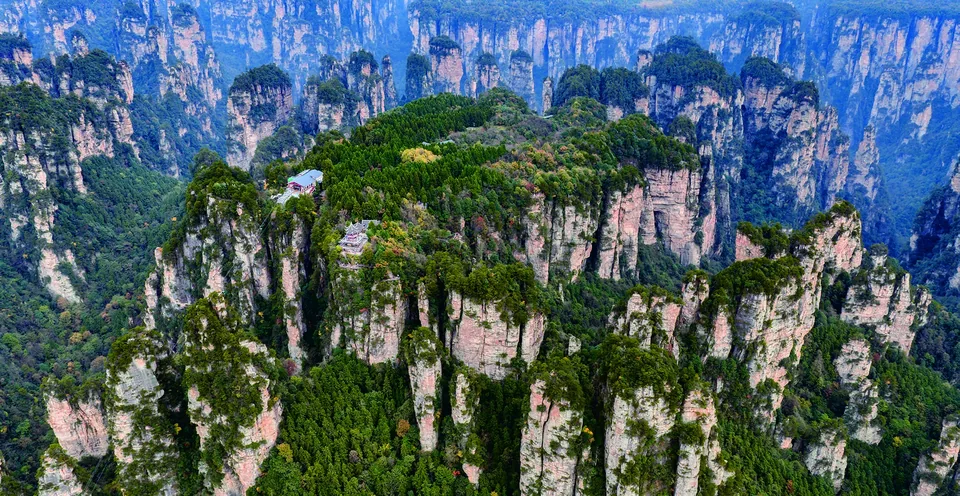
Huangshizhai takes its name from a tradition that Huang Shigong, the mentor of Zhang Liang in the Han dynasty, practised Taoism here. It is a large mesa representing an early stage in the development of Zhangjiajie’s quartz-sandstone peak-forest landform. The guidebook records an average elevation of about 1,100 metres and a flat, open summit covering about 0.2 square kilometres.

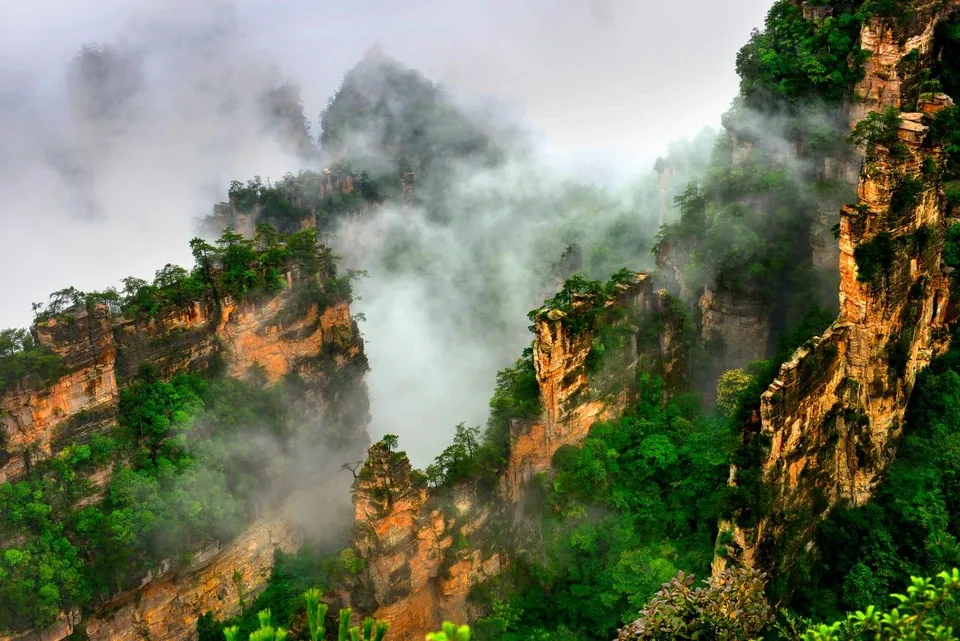
Walking around the mesa brings constantly changing views amid clusters of peaks. Double Welcome Gate, Star-picking Terrace and the Remaining Piers of the Heavenly Bridge are among its features, set against overlapping ridges.

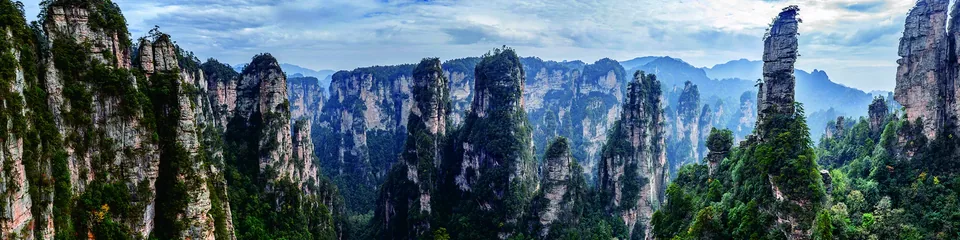
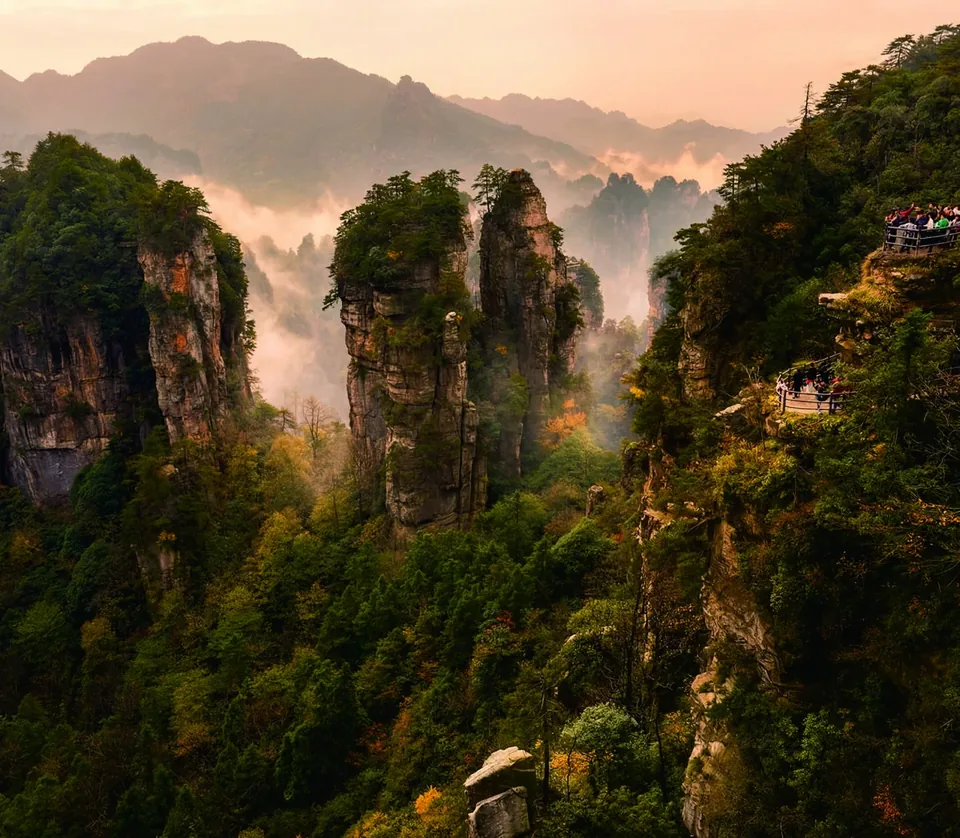
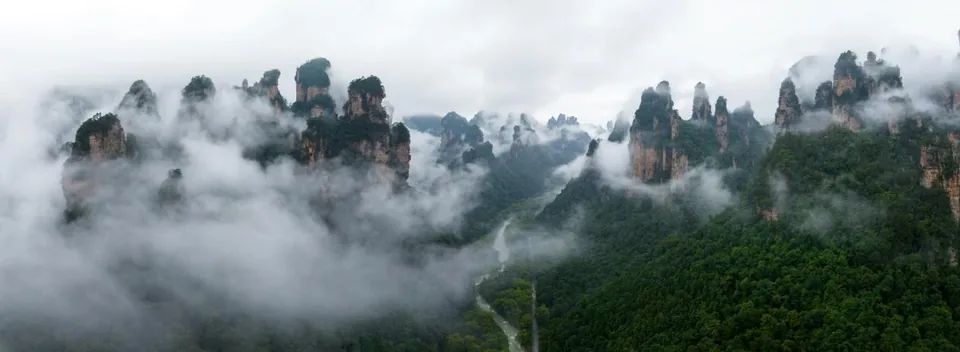
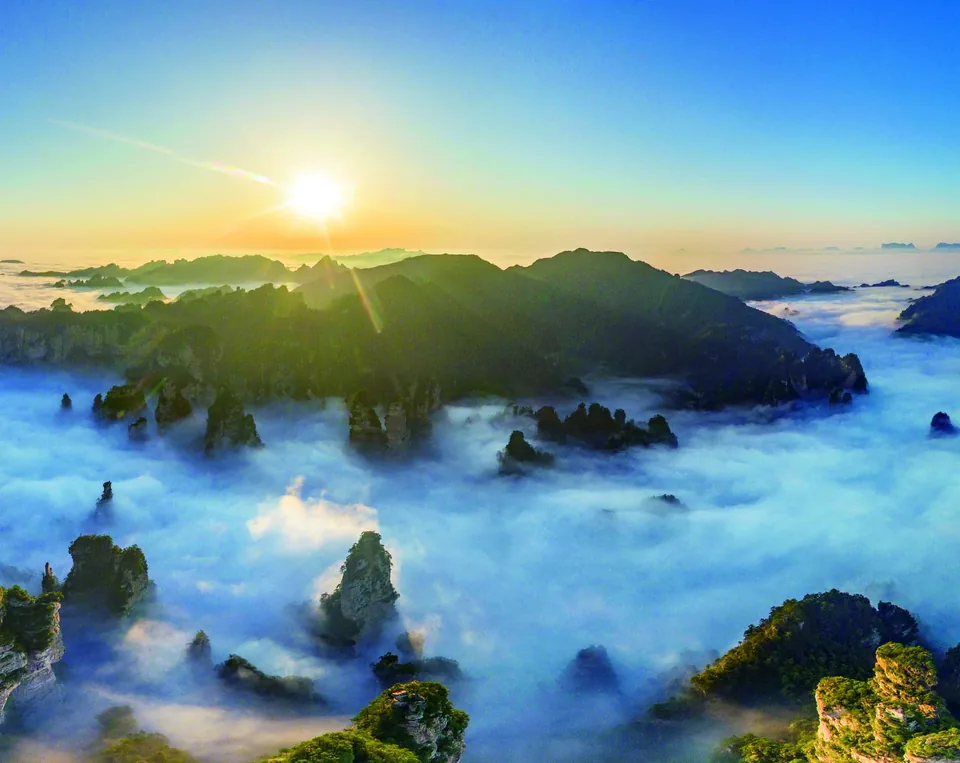
From the summit, countless pillars and a rolling cloud sea spread into the distance, evoking a fairyland and revealing the grandeur and beauty of the Zhangjiajie landform. A local saying holds that a visit to Zhangjiajie is incomplete without Huangshizhai.

Huangshizhai mesa, Star-picking Terrace and Heavenly Bridge remnants

Huangshizhai mesa, Star-picking Terrace and Heavenly Bridge remnants

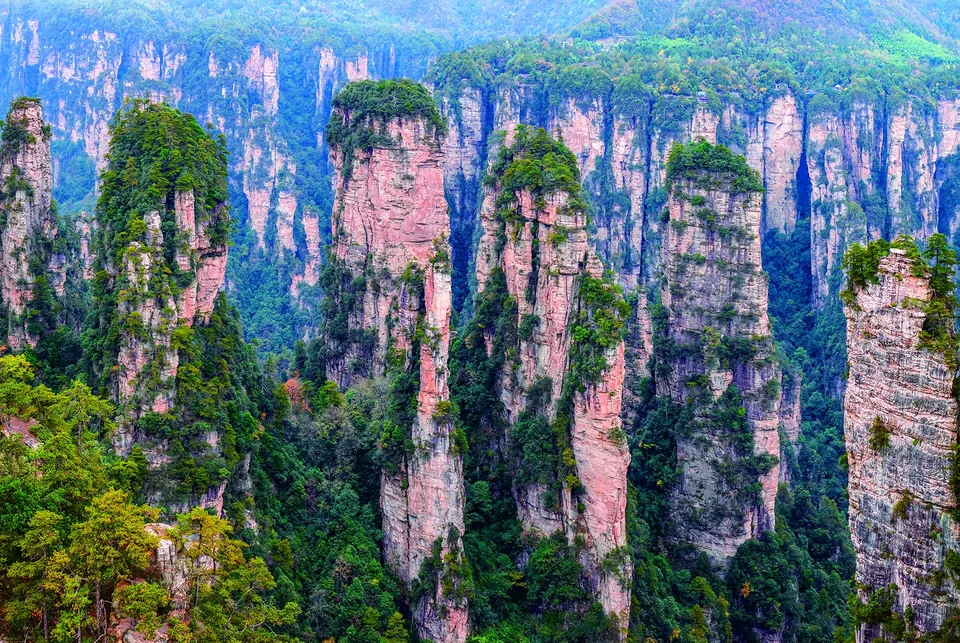
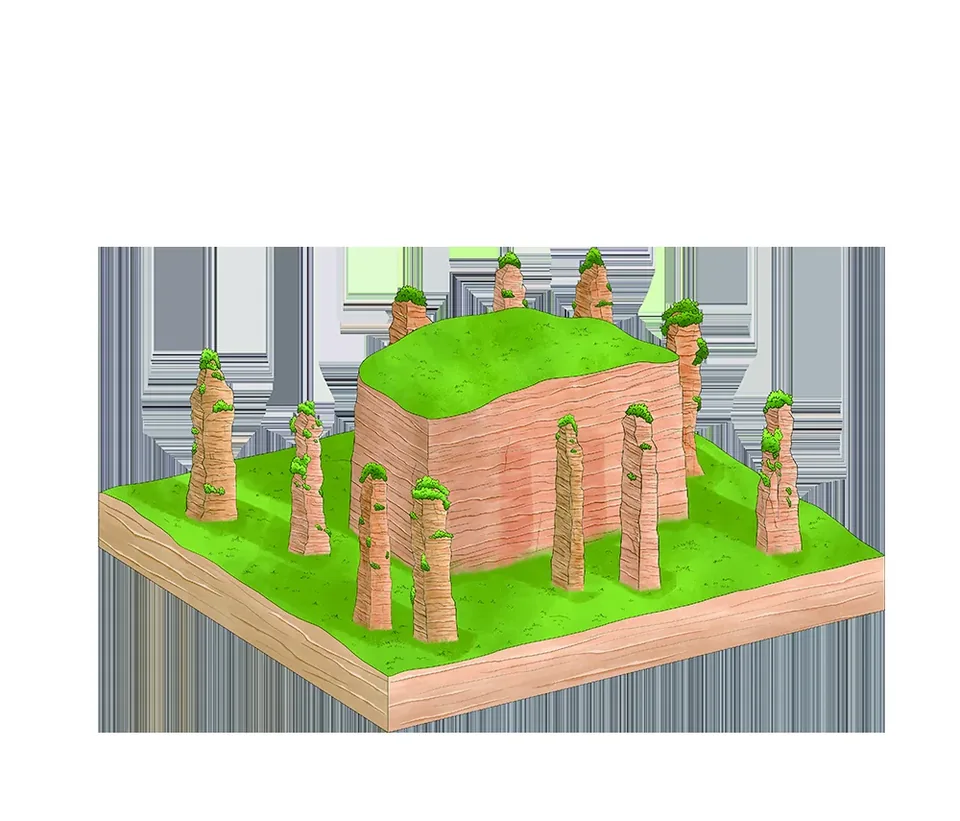
Evolution of the Huangshizhai mesa: tectonic activity created two sets of nearly parallel vertical joints in the quartz-sandstone platform. Water continually eroded along these joints to form gullies and ravines.

Star-picking Terrace is the highest aerial viewpoint on Huangshizhai, formed from two naturally stacked layers of quartz sandstone. The guidebook records a base rock of about 20 square metres and roughly 5 metres high; the upper rock is about 10 metres tall and 5 metres in diameter, with an old pine standing on top.

The terrace overlooks a deep valley, with clouds overhead and wooded peaks below. On misty rainy days the surrounding pillars appear and disappear in the cloud sea. Under a bright moon, the stars seem close enough to pluck by hand. In November 1993, State Councillor Zhang Jingfu visited the terrace and gave it this name.

The Remaining Piers of the Heavenly Bridge are a row of elliptical pillars more than 200 metres high rising steeply out of the gorge. Tall and striking, they resemble naturally formed bridge piers. They were shaped by water continually eroding, cutting and sculpting along multiple sets of joints in quartz sandstone.

AREA HIGHLIGHTS

Area highlights

Explore landscapes, viewpoints and cultural spaces in each area. Cableways, the elevator and sightseeing tram are identified as transport facilities. Photographs show the places, not their current opening status.

Landscape

Remaining Piers of the Heavenly Bridge

天桥遗墩

Landscape

Natural Mural

天然壁画

Landscape

Five-finger Peak

五指峰

Landscape

Twin Gates Welcoming Guests

双门迎宾

Viewpoint

Star-picking Terrace

摘星台

Cultural site

Six Wonders Pavilion

六奇阁

Landscape

Heavenly Book Treasure Box

天书宝匣

Landscape

Front Garden

前花园

Transport facility

Huangshizhai Cableway

黄石寨索道