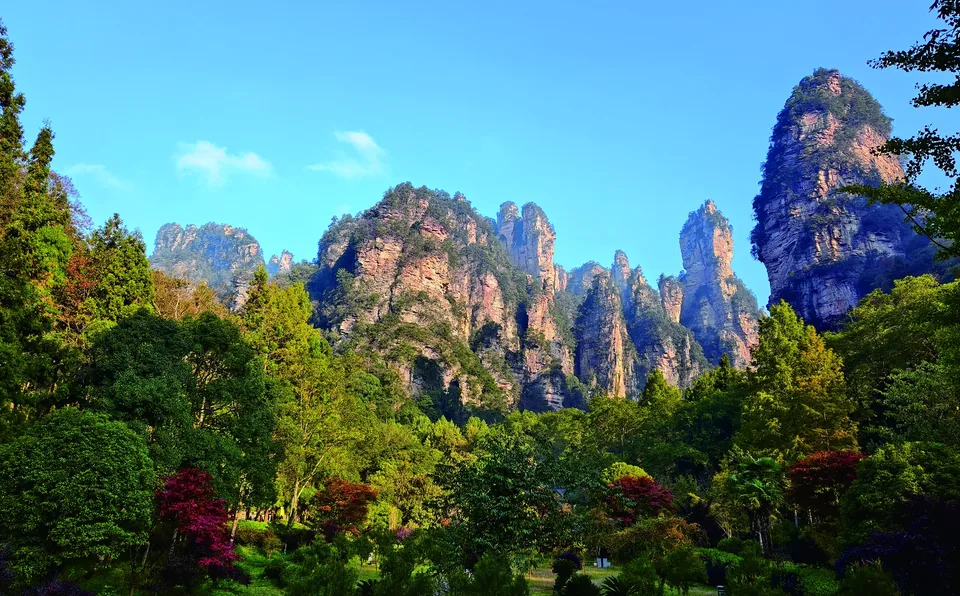
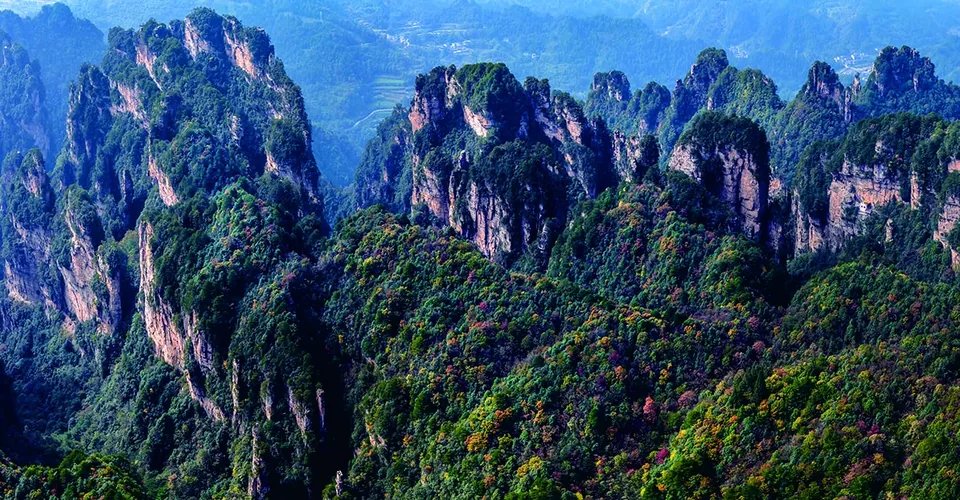
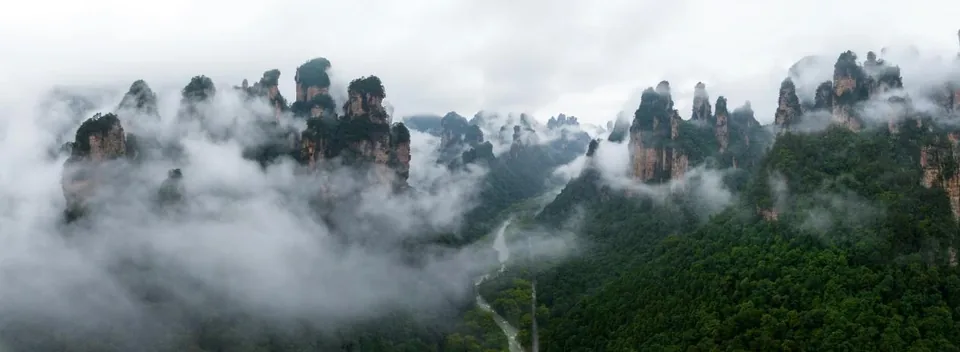
The Natural Great Wall consists of parallel quartz-sandstone peak walls, like a stone wall built across the land by nature. Rising a little over a hundred metres and extending for several hundred metres, the steep, upright walls have a commanding presence. They form where water continuously erodes a set of vertical joints in a quartz-sandstone platform, producing walls aligned in one direction. Sturdy pines crown them, and layered rock textures reveal the geological sculpting. The continuous walls stretch across the mountains like great dragons.
Wulong Village, formerly called Heilong Village, is surrounded by cliffs on steep terrain. A former bandit stronghold, it evokes the saying “one person guarding the pass can fend off ten thousand”. The approach to its summit is described as involving narrow cliff passages, bending through rock cracks or climbing ladders. Deep precipices surround the rear of the village. The adjacent Tianbo Mansion viewpoint overlooks dozens of aligned quartz-sandstone peak walls and offers a notable view of Zhangjiajie.
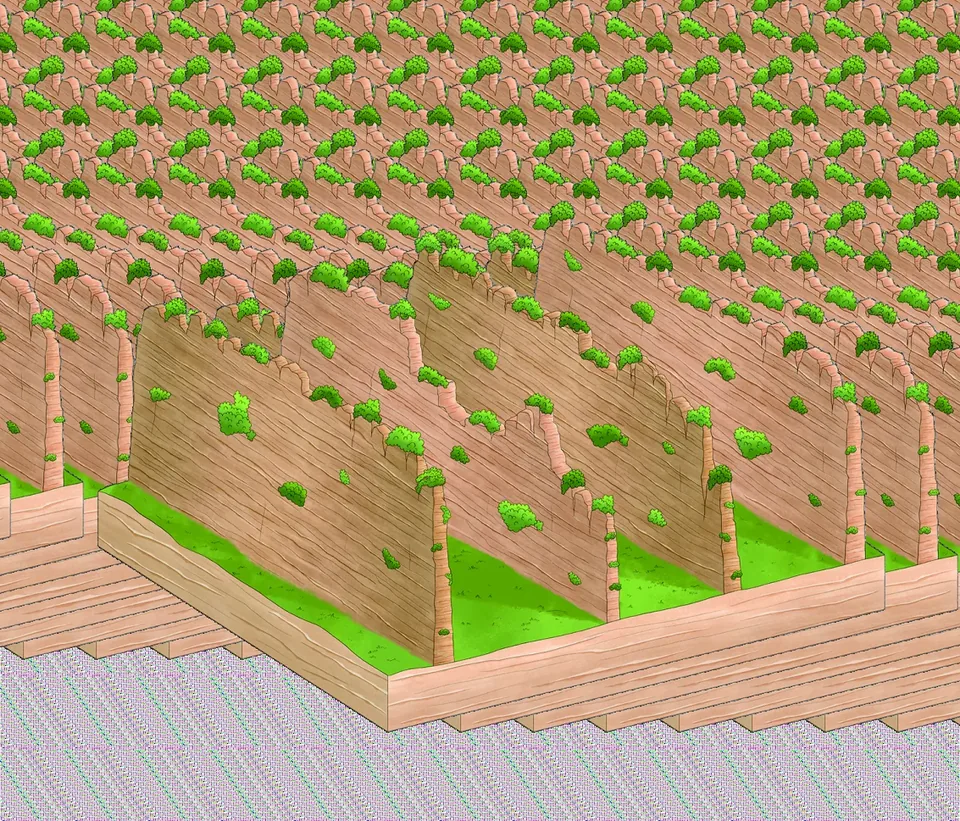
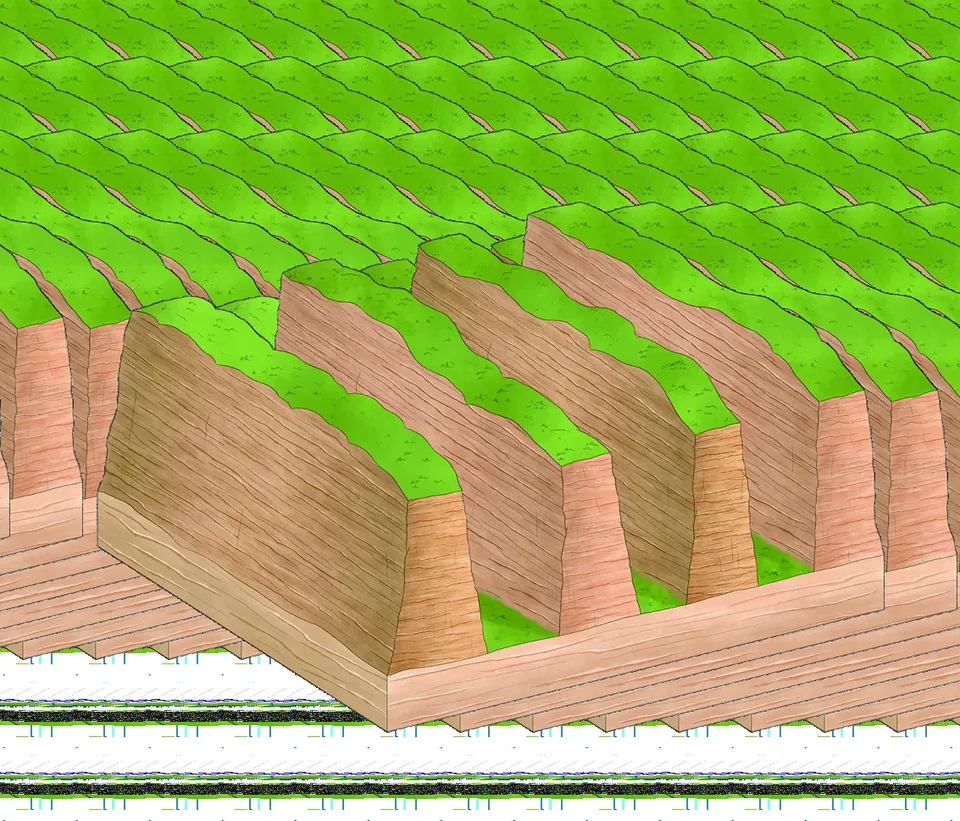
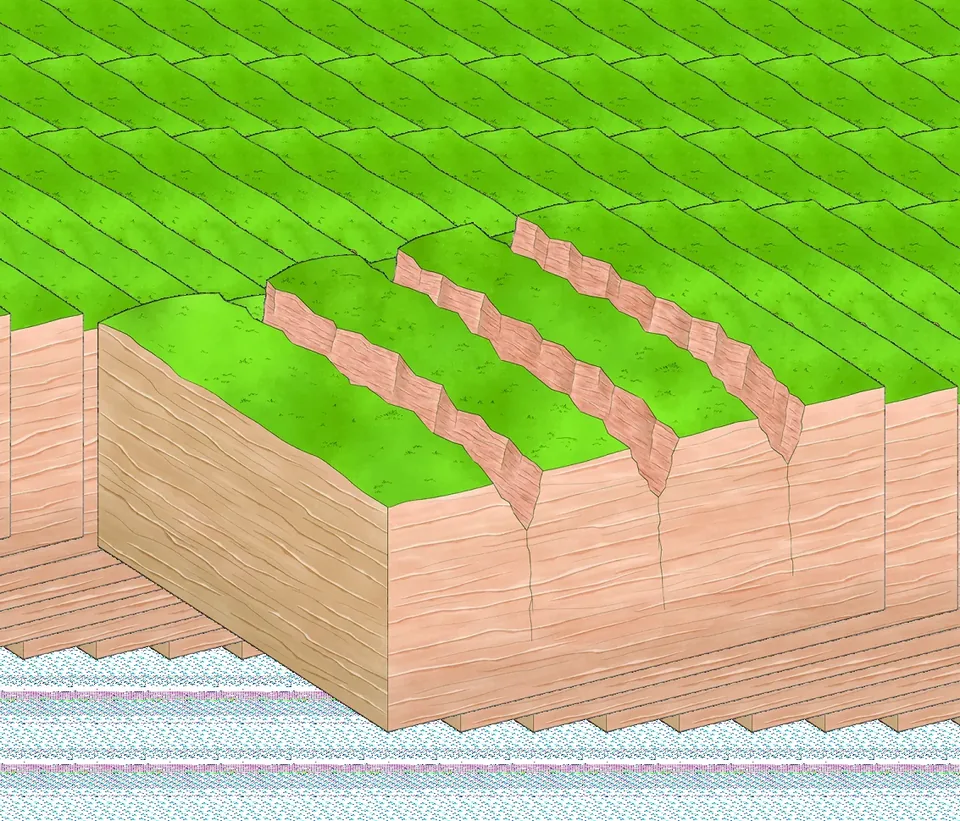
Formation of the Natural Great Wall: water continuously erodes a set of vertical joints in a quartz-sandstone platform or mesa, leaving wall-shaped mountain ridges extending in one direction. With steep, upright faces on both sides, they appear as peaks from the side and walls from the front. Several parallel sets resemble a natural Great Wall.
The peak-wall formation sequence begins with tectonic activity creating a set of nearly parallel vertical joints in a quartz-sandstone platform or mesa. Water continuously erodes along these joints, forming gullies and ravines.
As the crust rises, erosion reaches progressively deeper and shapes tall walls. If several sets of joints run in different directions, the walls are eventually divided into individual pillars.