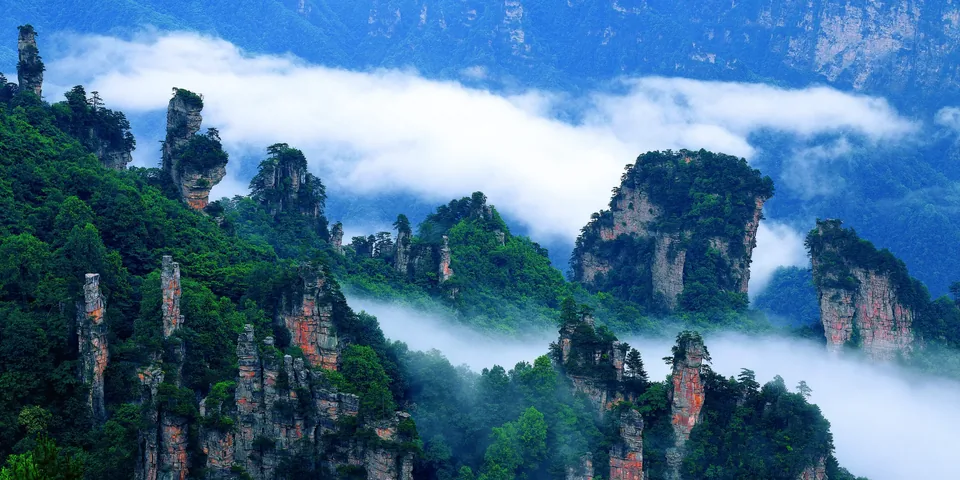
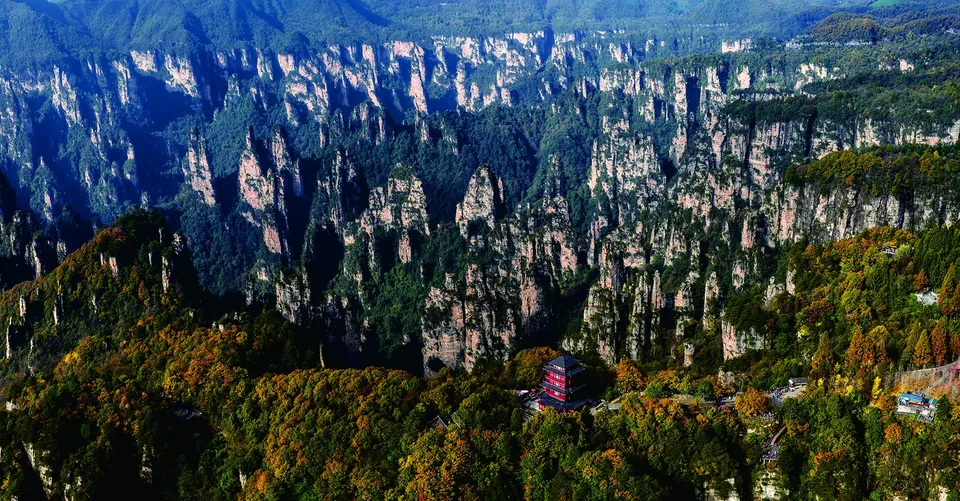
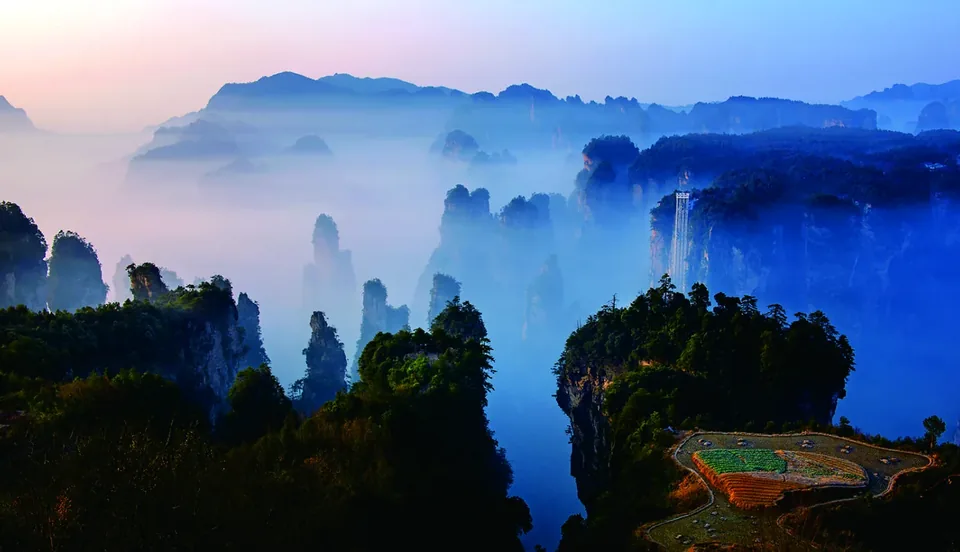
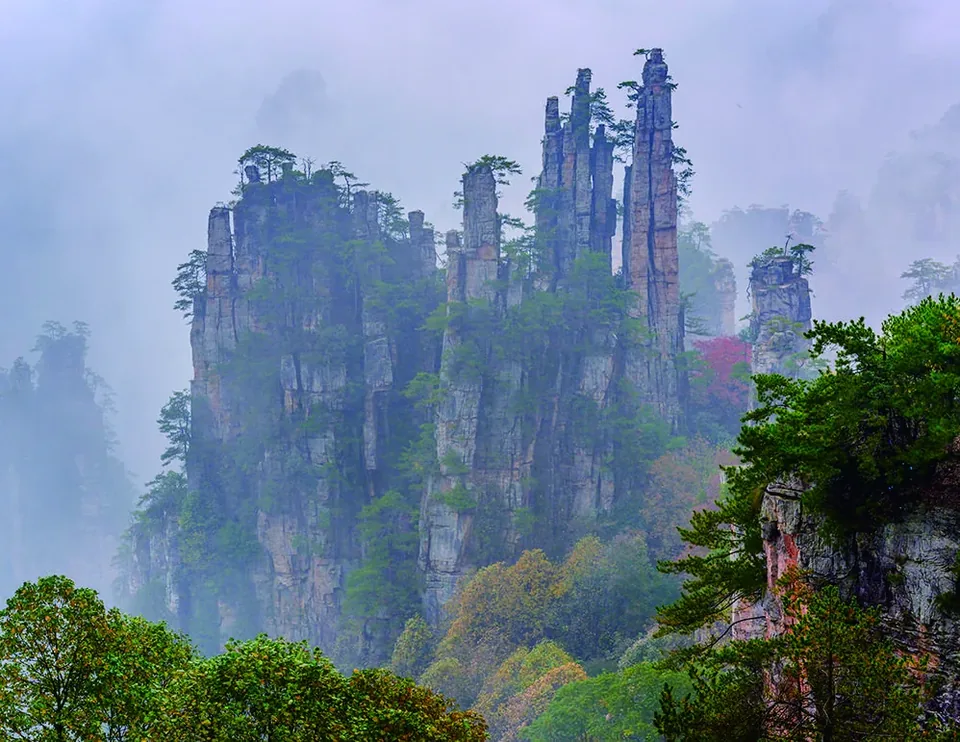
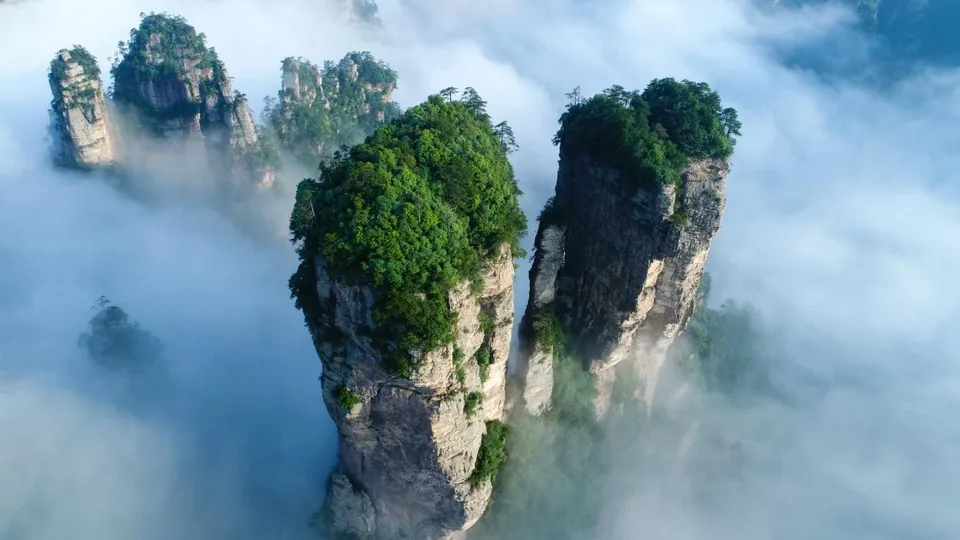
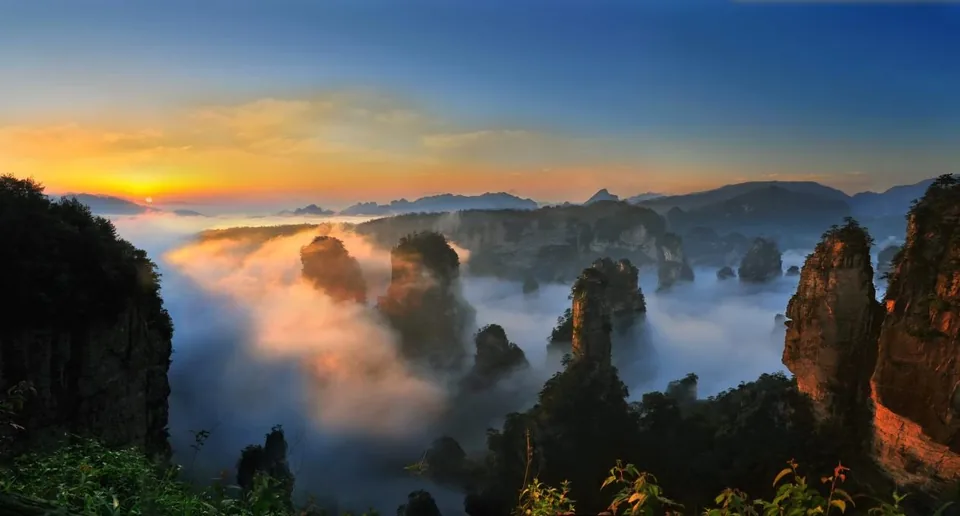
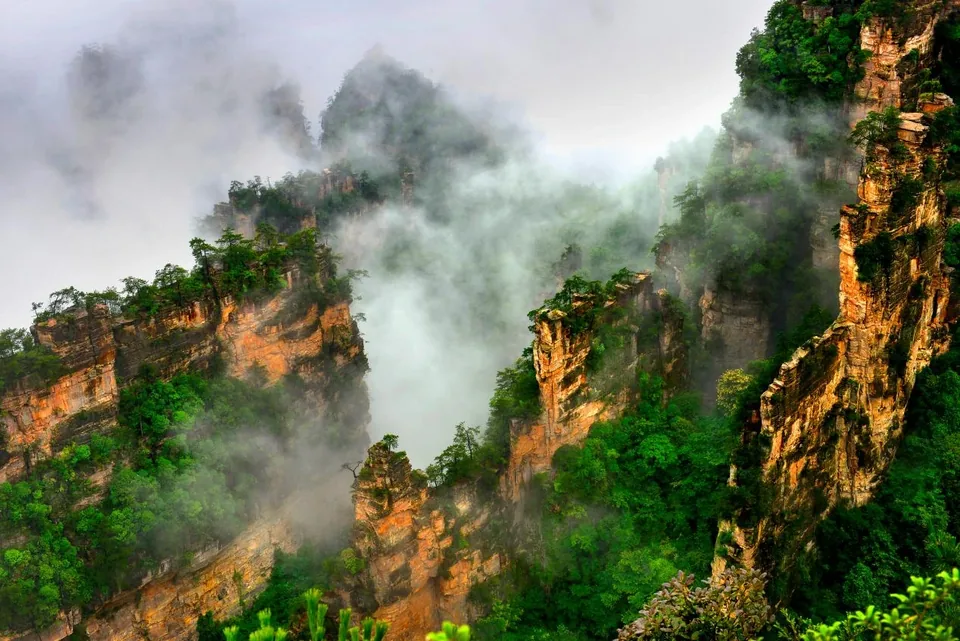
Imperial Brush Peak consists of several groups of parallel quartz-sandstone pillars a little over a hundred metres high. They taper towards the top, with sharply defined sides and well-developed vertical joints. The rock surfaces are mottled, and upright pines on the summits resemble spread brush bristles. Legend identifies them as the writing brushes of King Xiang Tianzi. In swirling clouds, the peaks appear and vanish as if a divine brush were painting a great landscape scroll. The feature displays the distinctive form of the sandstone pillars and evokes the atmosphere of traditional Chinese landscape painting.
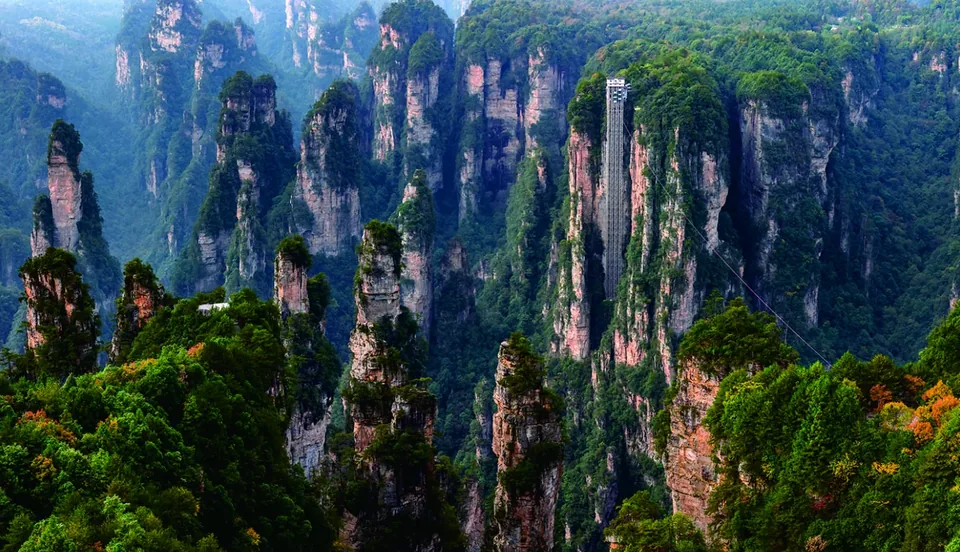
Celestial Warriors: dozens of differently shaped pillars rise almost vertically like bronze halberds cast by celestial beings. They form a dense, ordered “pillar array”. Legend says they are King Xiang Tianzi’s 48 great generals and 48 lesser generals meeting here. Seen from Tianzi Mountain, the feature is called Celestial Warriors; from Bailong Elevator, it is the Forty-eight Generals Rock. The view changes with the angle.
Evolution of the Zhangjiajie sandstone peak-forest landform - youthful stage: tectonic stress creates X-shaped shear joints in quartz sandstone. Water seeps into and scours these weak joint surfaces, deepening and widening the fractures to produce platforms, nascent mesas and linear ridges.
Adolescent stage: as cracks widen, water erodes the rock more rapidly and collapse begins, forming the earliest pillar forests. Erosion along weak interlayers reshapes the sandstone, moving the landform from its youthful stage into a visually striking adolescent stage. Peak clusters, walls, natural bridges and narrow ravines are characteristic.
Mature stage: rapid crustal uplift intensifies river incision and headward erosion. Valleys and tributary valleys develop fully; the sandstone is further divided and broken down, and the pillar-forest area expands. This is the most spectacular stage of the landscape, characterised by peak forests, narrow ravines and gorges.
Old stage: when the crust becomes relatively stable, lateral river erosion and valley widening dominate. The earlier sandstone peak forests begin to disintegrate and collapse under gravity. The landform enters its old stage, characterised by remnant forests of pillars, isolated peaks and broad valleys.