Yuanjiajie
PLACE

Yuanjiajie

Sandstone-pillar viewpoints

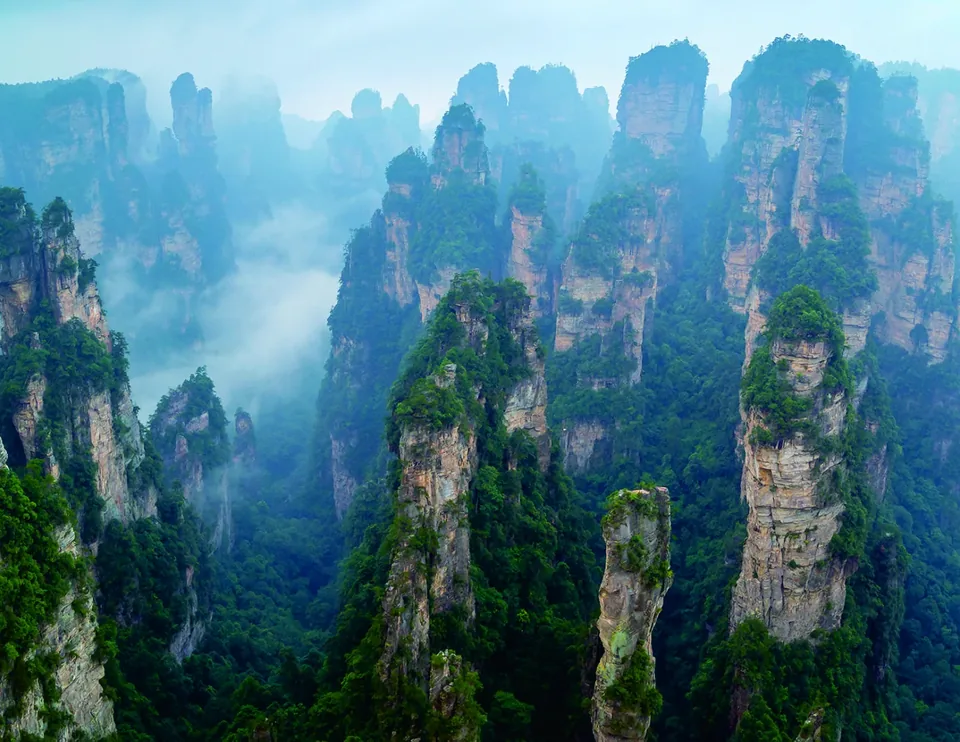
Known for sandstone pillars and natural stone bridges, Yuanjiajie is associated with the inspiration for the floating Hallelujah Mountains in Avatar and is a highlight of Wulingyuan’s core scenic landscape.

Highlights

  • View dense sandstone pillars from elevated lookouts
  • Recognise distinctive pillar and isolated-peak landforms
  • Understand how peaks connect around natural-bridge viewpoints

Where it fits

Zhangjiajie National Forest Park is a national 5A-rated scenic attraction. Tianzi Mountain, Yuanjiajie, Huangshizhai, Yangjiajie, Golden Whip Stream and Ten-mile Gallery are six visitor areas within the park, not six separately ticketed attractions. Baofeng Lake and Yellow Dragon Cave are independent 4A-rated scenic attractions with separate tickets.

How to visit

Visits mainly involve walking between viewpoints. Entrances, transfers, steps and facility operations must be checked through current official information.

Opening hours, tickets, transport facilities and routes may change. Check the latest information through official scenic-area channels before travelling.

Yuanjiajie

Yuanjiajie
Yuanjiajie
Yuanjiajie

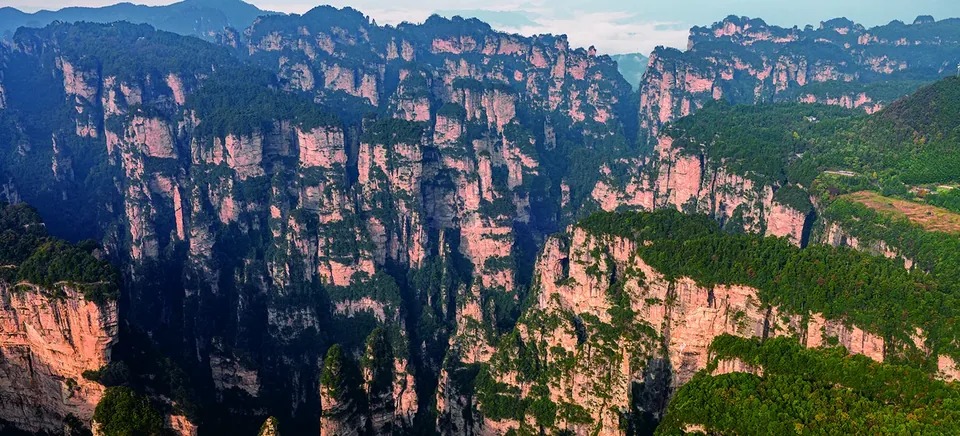
Yuanjiajie is a central and outstanding part of the Zhangjiajie landform. Narrow like a corridor from north to south and long like a belt from east to west, it is traditionally known as the “Forty-eight-li Yuanjiajie”.

Across the secluded stream it faces Huangshizhai and Yaozizhai, the three areas standing in concert. To the north and south it connects with Tianzi Mountain and Yangjiajie.

The walkway follows the mountain along the top of sheer cliffs, linking the Rear Garden, Enchanting Terrace, Qiankun Pillar (Avatar Mountain) and the No. 1 Bridge in the World.

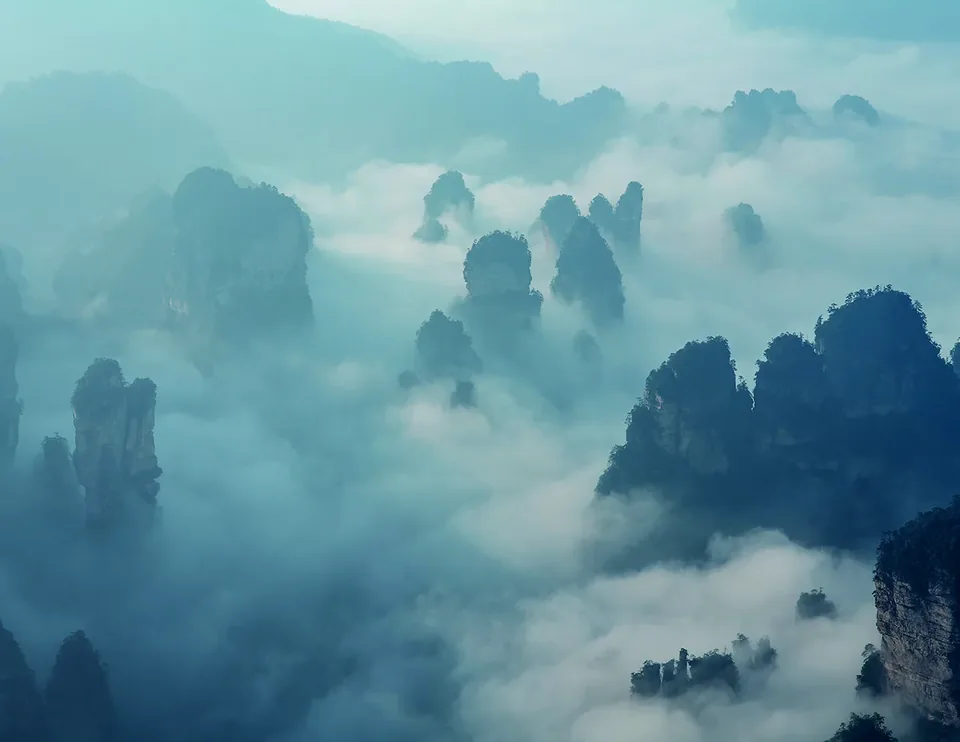
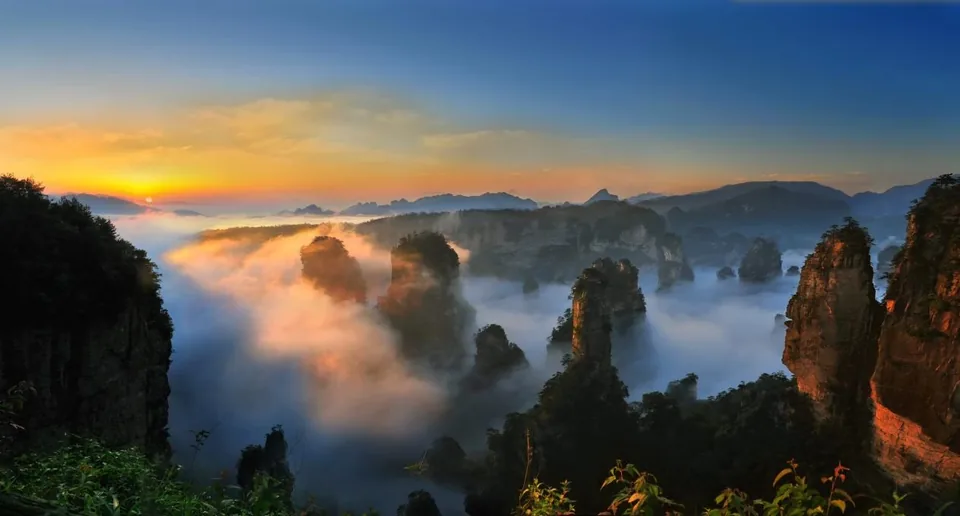
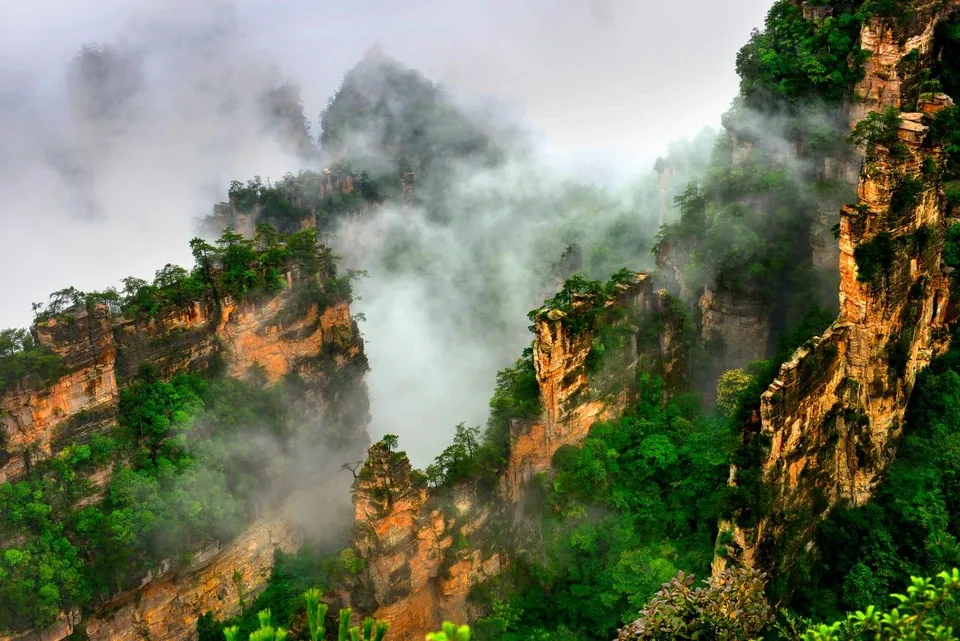
When clouds and mist rise among the countless peaks and valleys, the pillars appear and disappear as if floating in a celestial landscape, revealing both the grandeur and the delicate, otherworldly beauty of the Zhangjiajie landform.

Avatar Mountain and the No. 1 Bridge in the World

Avatar Mountain and the No. 1 Bridge in the World

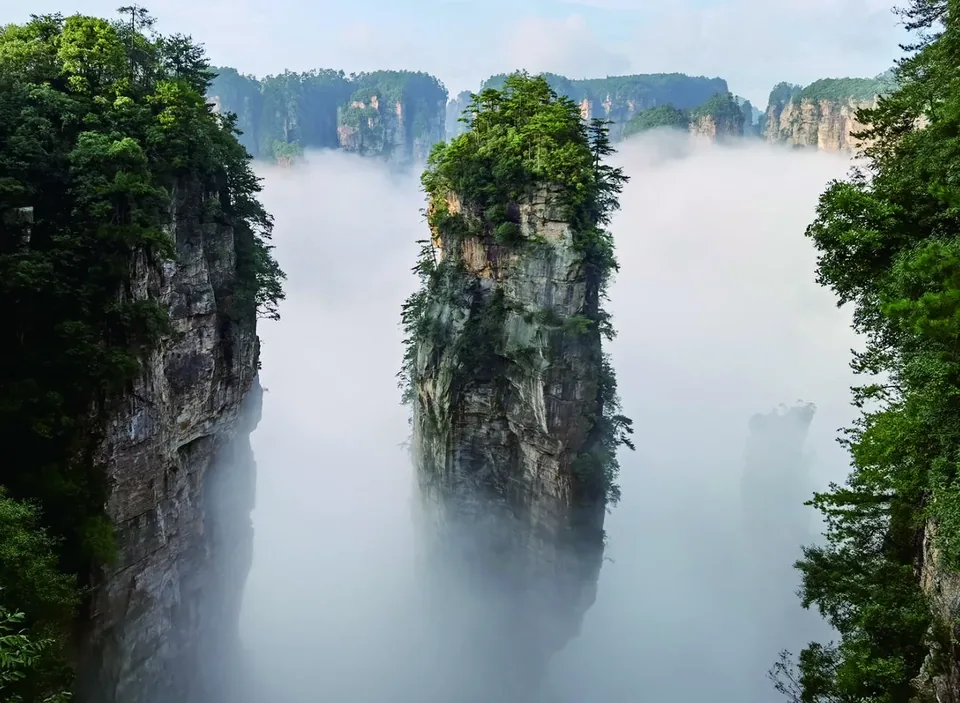
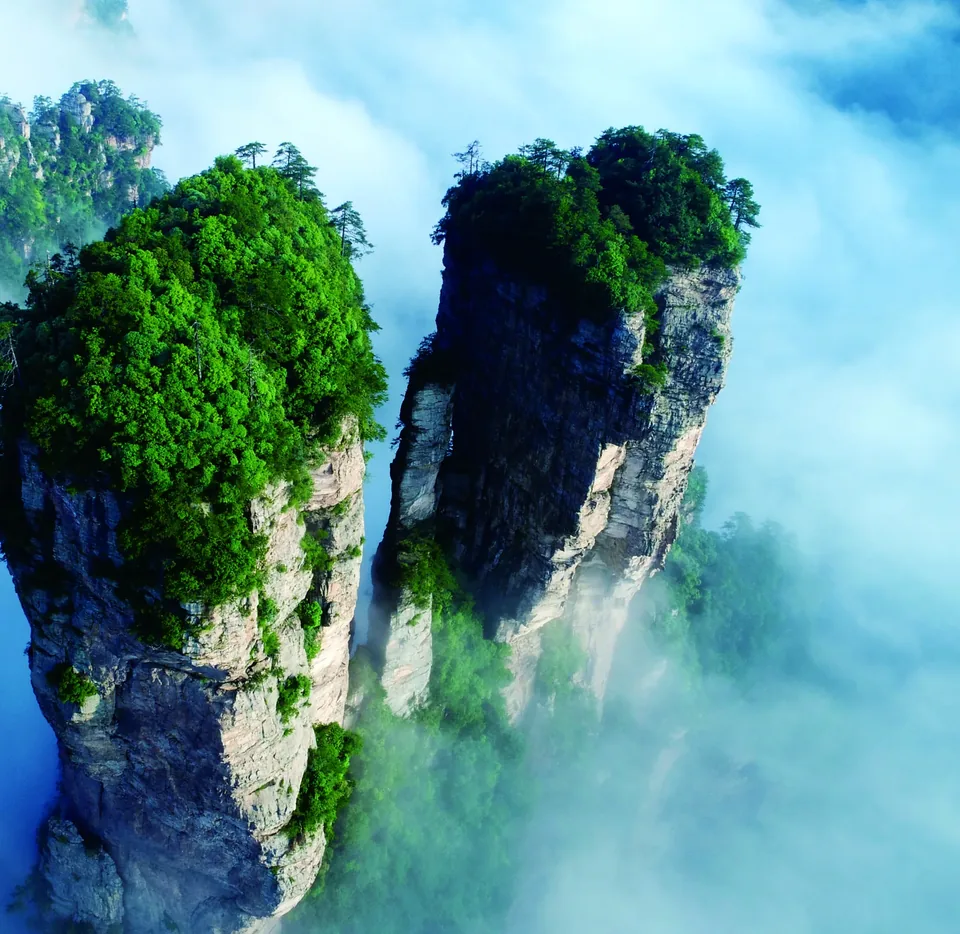
Qiankun Pillar, also known as Avatar Mountain, is one of Zhangjiajie’s “Three Thousand Remarkable Peaks”. The guidebook records an elevation of 1,074 metres and a vertical relief of about 150 metres. Lush vegetation crowns its distinctive form, whose clearly cut vertical joints make it rise as if hewn by an axe. Its name evokes a pillar supporting heaven and earth. It is associated with the inspiration for the floating Hallelujah Mountains in Avatar and has become a destination sought out by visitors from China and abroad.

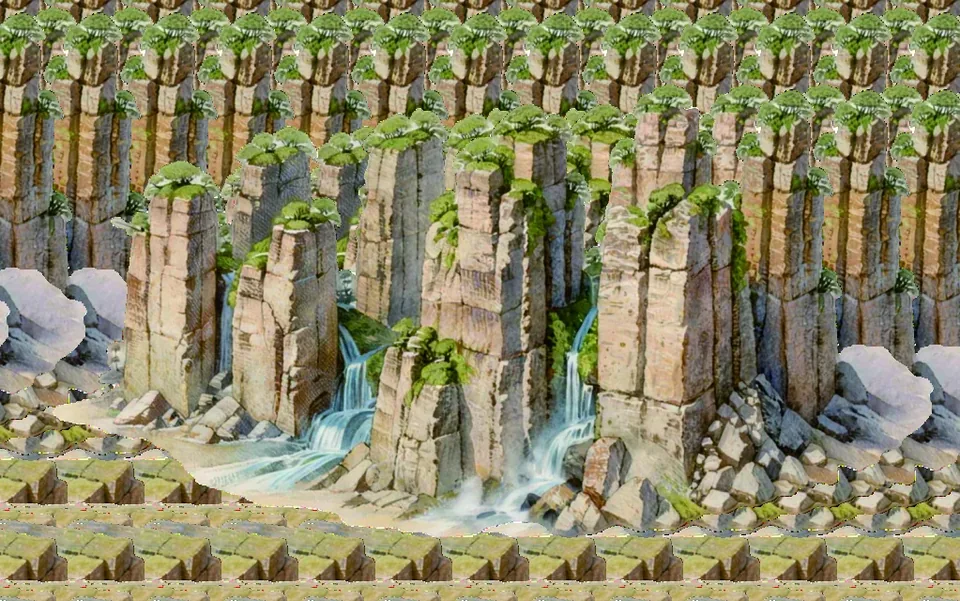
Formation of prismatic sandstone peak forests: the tall, upright pillars have four walls that look axe-cut. These smooth faces are mostly joint planes or surfaces developed along joints. Crustal movements subjected the quartz-sandstone strata to strong tectonic compression. Horizontal stress created numerous parallel vertical joints and fractures; flowing water eroded along them like a sculptor’s blade, establishing the core framework of Zhangjiajie’s sandstone peak-forest landform.

The prismatic-pillar formation sequence shows vertical joints created by crustal compression, water erosion along those joints, and the formation of prismatic sandstone peak forests.

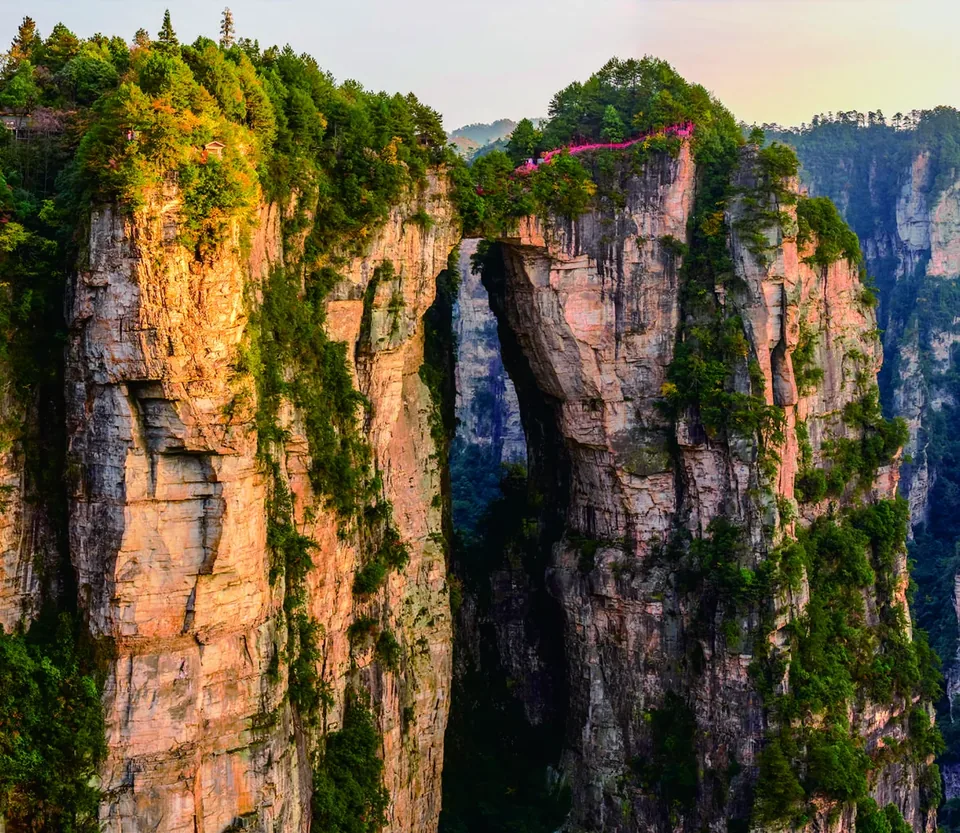
The No. 1 Bridge in the World links two peaks with a suspended rock corridor, forming a natural arch. Often enveloped in mist, it presents an imposing sight. The deck is about 2 metres wide and more than 20 metres long, with a vertical relief of approximately 350 metres. Tall pines grow on the bridge, old vines hang beside it, and a deep abyss lies below. Amid rising mist and wind in the pines, a visitor may feel as though the bridge itself is trembling and swaying: an exhilarating impression.

Formation of the bridge: dense vertical joints developed in the quartz sandstone. As water cut along them and separated the peak walls, softer rock layers beneath the bridge weathered, disintegrated and collapsed, forming caves on both sides. Stronger erosion gradually connected the caves. When the height of the opening became much greater than the thickness of its roof, the first form of a natural bridge appeared. A dense, hard hematite layer reinforced the deck, allowing it to remain as a geological feature.

The natural-bridge formation sequence shows water erosion along vertical joints; local collapse and intensifying erosion; caves joining through the cliff; and further rock collapse leaving a natural bridge.
AREA HIGHLIGHTS

Area highlights

Explore landscapes, viewpoints and cultural spaces in each area. Cableways, the elevator and sightseeing tram are identified as transport facilities. Photographs show the places, not their current opening status.

Landscape

Qiankun Pillar

乾坤柱

Avatar Mountain

Landscape

The No. 1 Bridge in the World

天下第一桥

Landscape

Door Opening to Mountains

开门见山

Viewpoint

Enchanting Terrace

迷魂台

Landscape

Rear Garden

后花园

Landscape

Generals in Formation

将军列队

Forty-eight General Rocks

Landscape

Warriors in the Mist

雾锁神兵

Transport facility

Bailong Elevator

百龙天梯