Must-visit scenic areas

Explore the main scenic areas, their highlights and how they connect.

5A · NATIONAL FOREST PARK

Zhangjiajie National Forest Park →

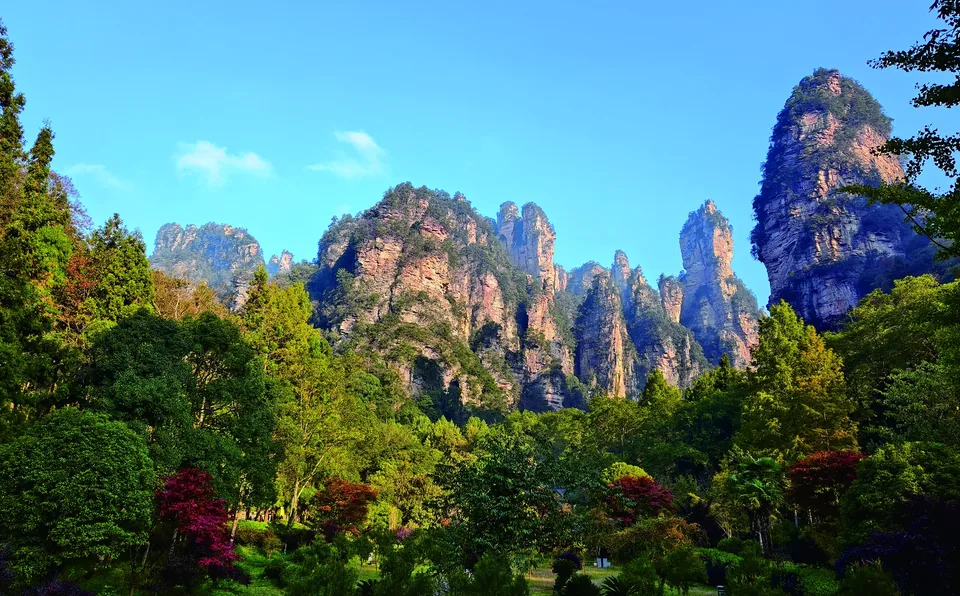
Zhangjiajie National Forest Park is a national 5A-rated scenic attraction. Tianzi Mountain, Yuanjiajie, Huangshizhai, Yangjiajie, Golden Whip Stream and Ten-mile Gallery are six visitor areas within the park, not six separately ticketed attractions. Baofeng Lake and Yellow Dragon Cave are independent 4A-rated scenic attractions with separate tickets.

Independent scenic attractions · separate tickets

Yuanjiajie

Yuanjiajie
Yuanjiajie
Yuanjiajie

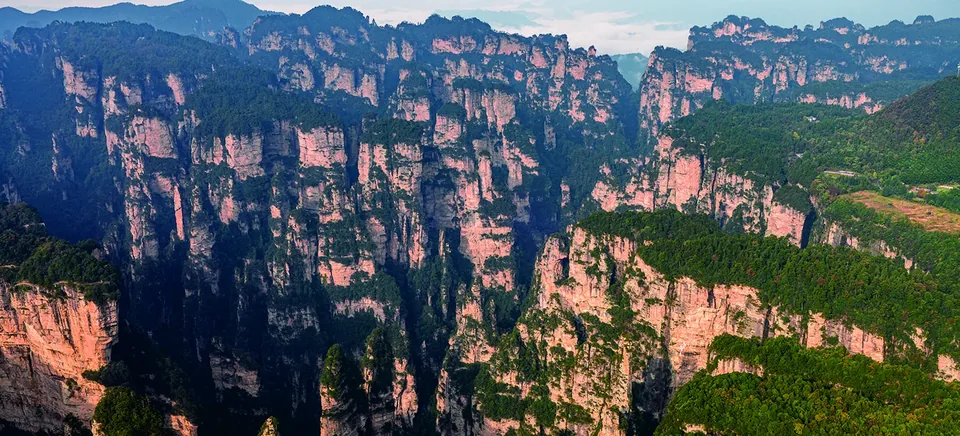
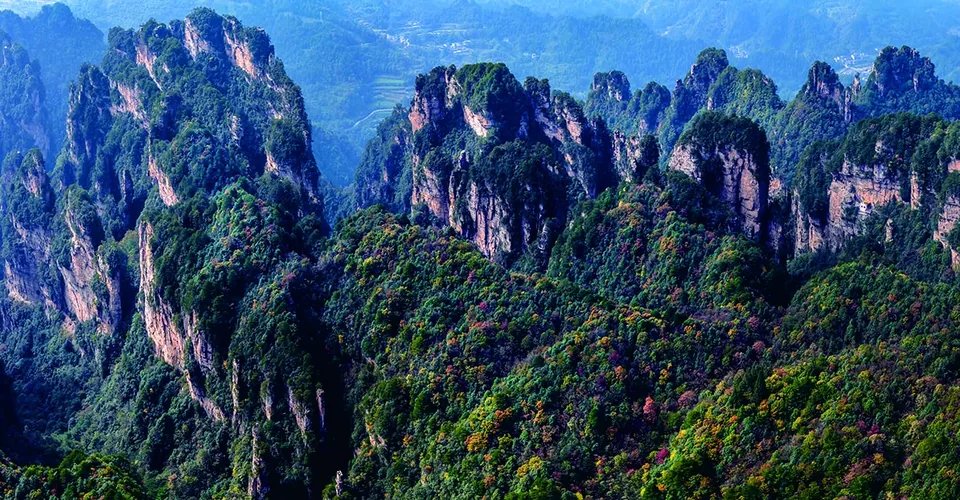
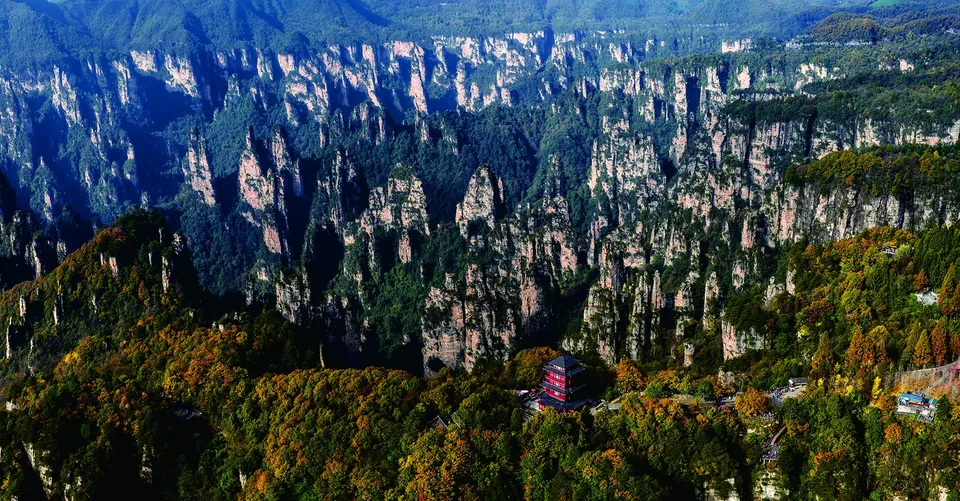
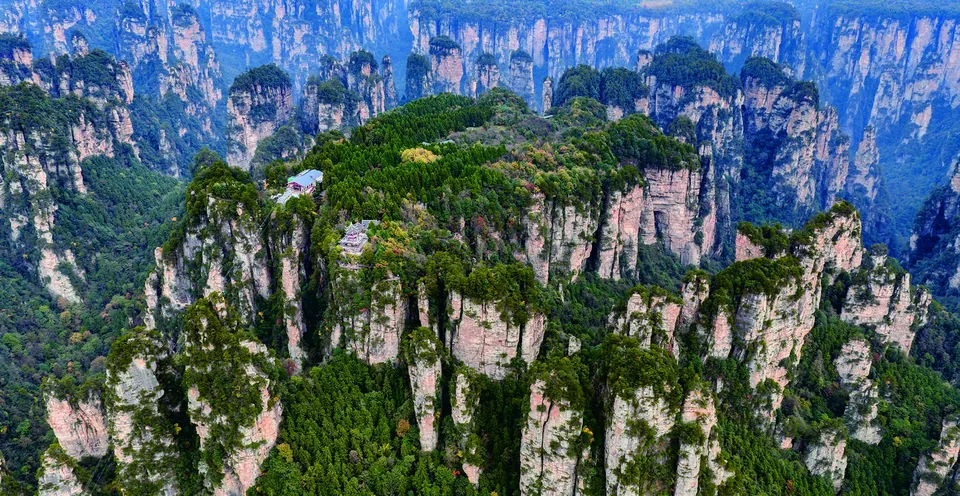
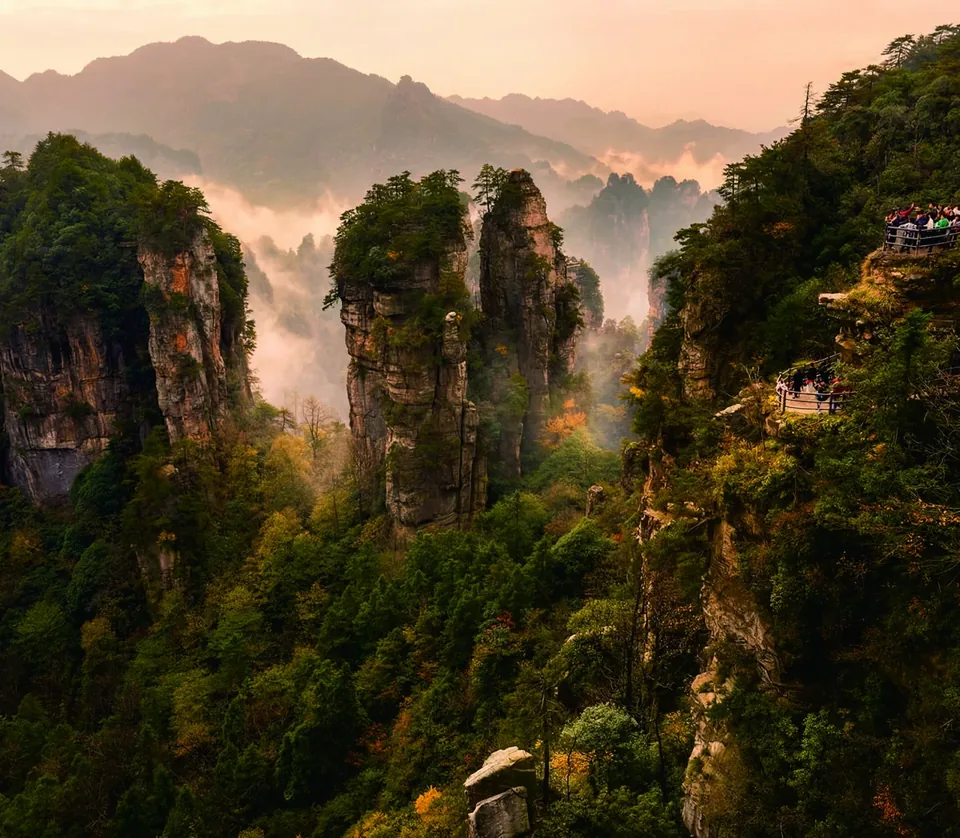
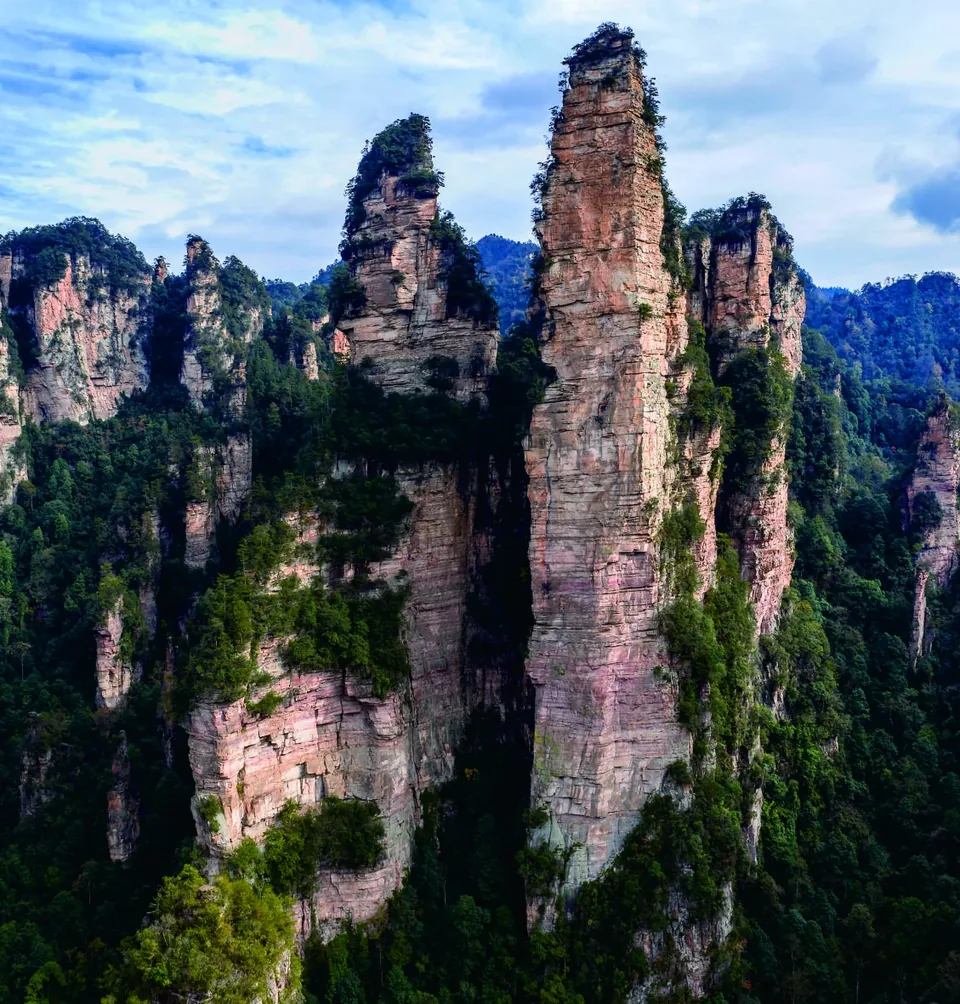
Yuanjiajie is a central and outstanding part of the Zhangjiajie landform. Narrow like a corridor from north to south and long like a belt from east to west, it is traditionally known as the “Forty-eight-li Yuanjiajie”.

Across the secluded stream it faces Huangshizhai and Yaozizhai, the three areas standing in concert. To the north and south it connects with Tianzi Mountain and Yangjiajie.

The walkway follows the mountain along the top of sheer cliffs, linking the Rear Garden, Enchanting Terrace, Qiankun Pillar (Avatar Mountain) and the No. 1 Bridge in the World.

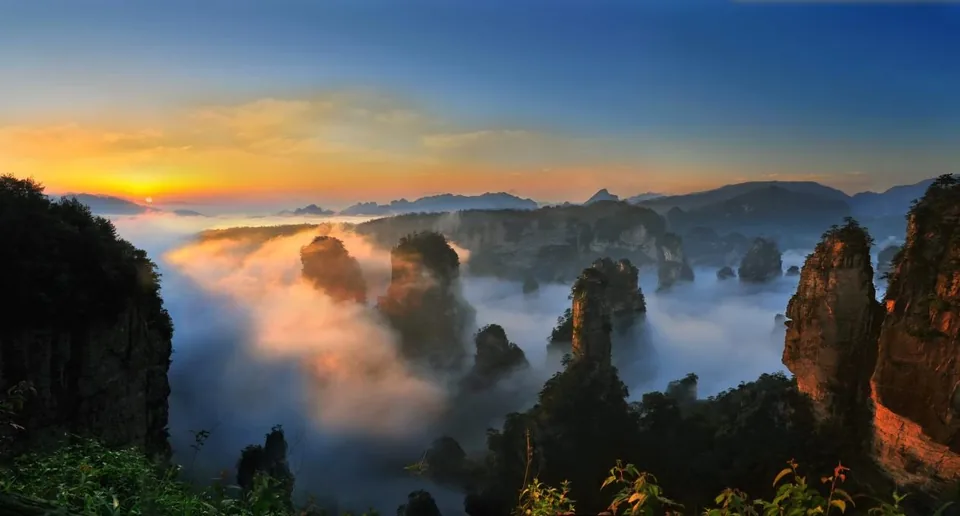
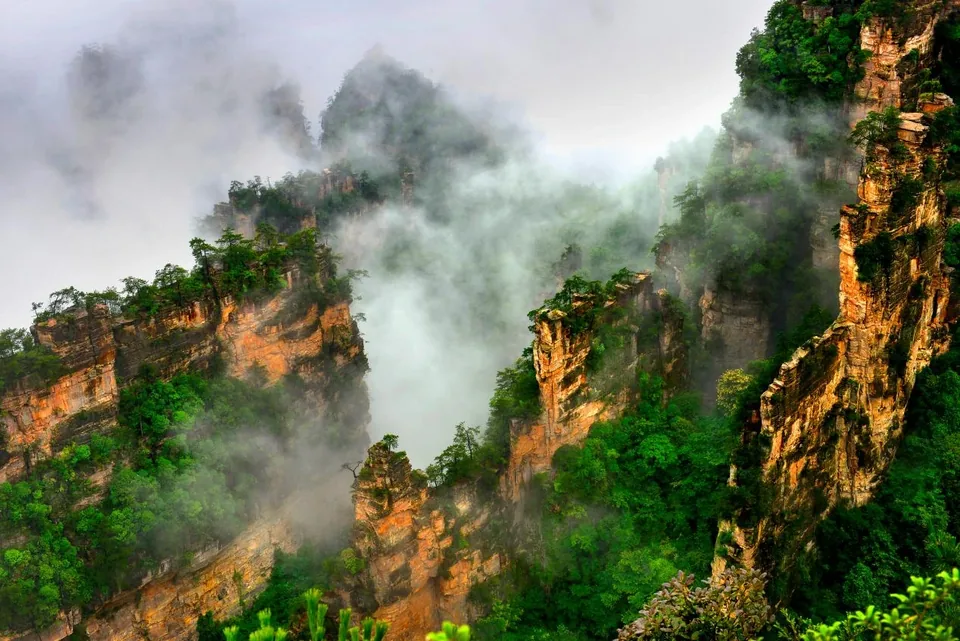
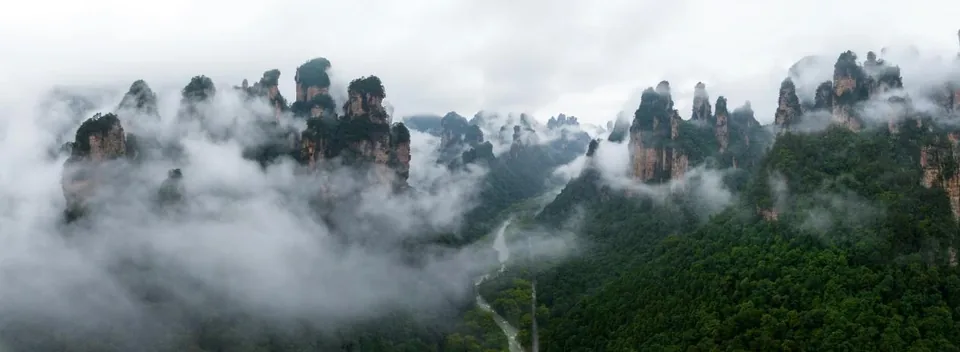
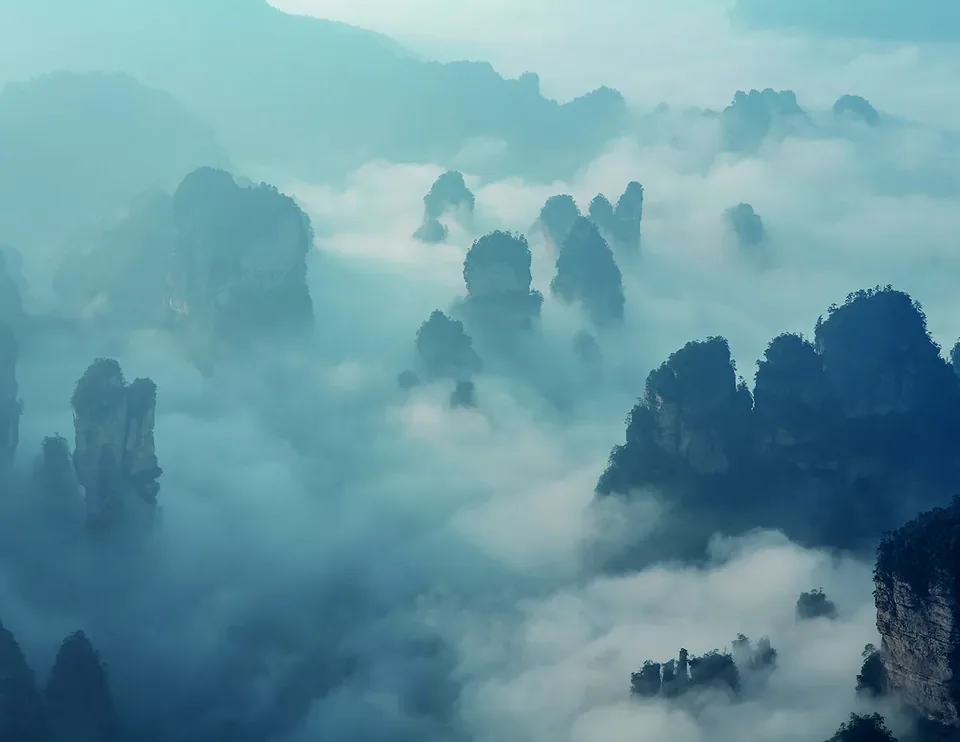
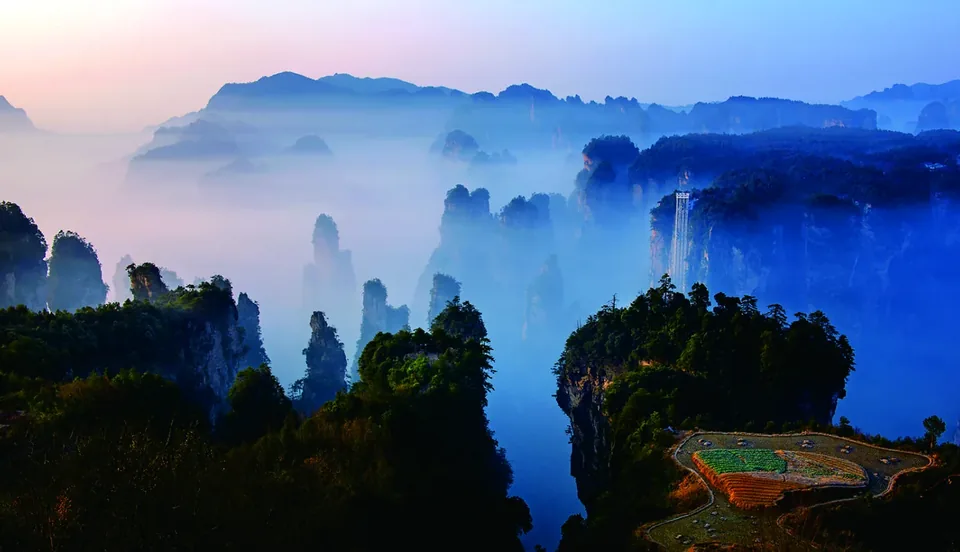
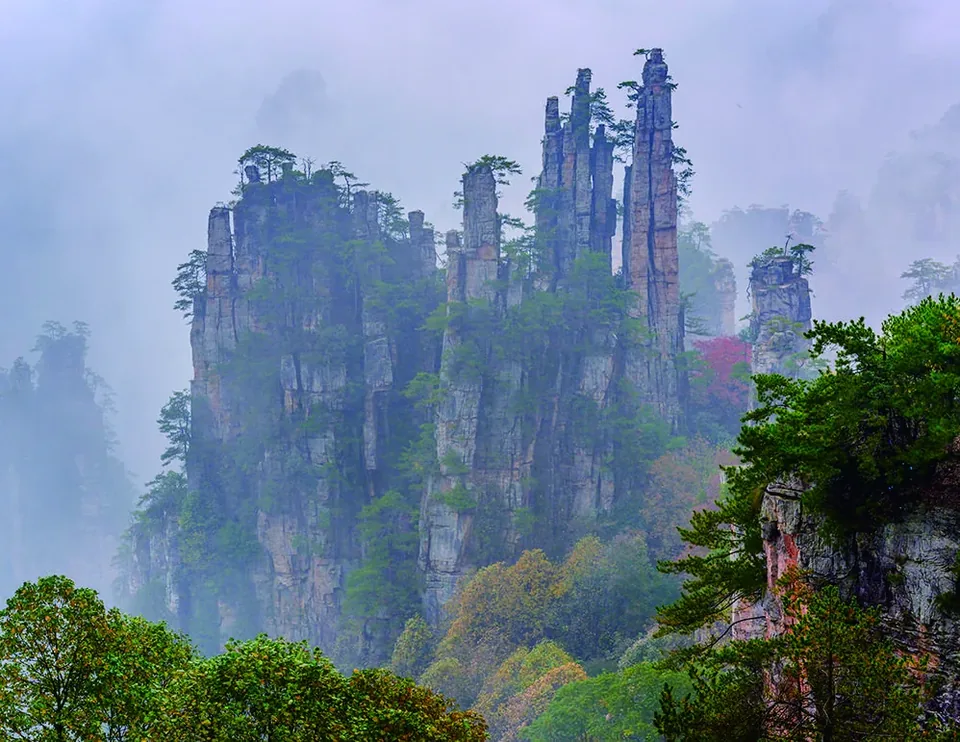
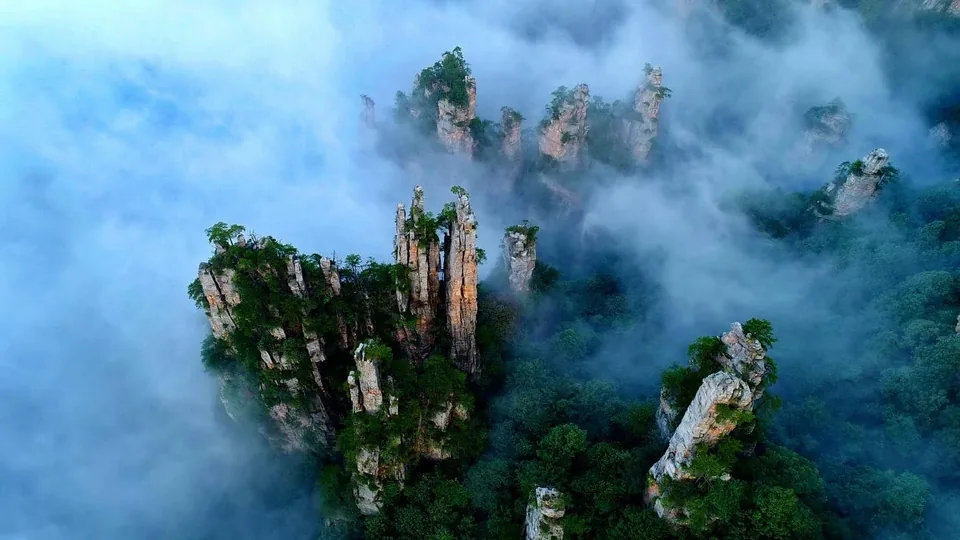
When clouds and mist rise among the countless peaks and valleys, the pillars appear and disappear as if floating in a celestial landscape, revealing both the grandeur and the delicate, otherworldly beauty of the Zhangjiajie landform.

Avatar Mountain and the No. 1 Bridge in the World

Avatar Mountain and the No. 1 Bridge in the World

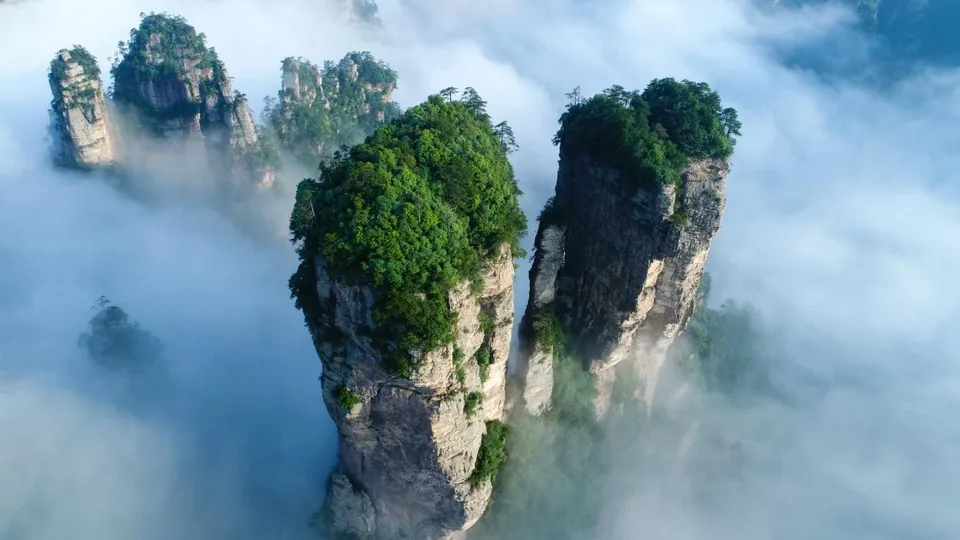
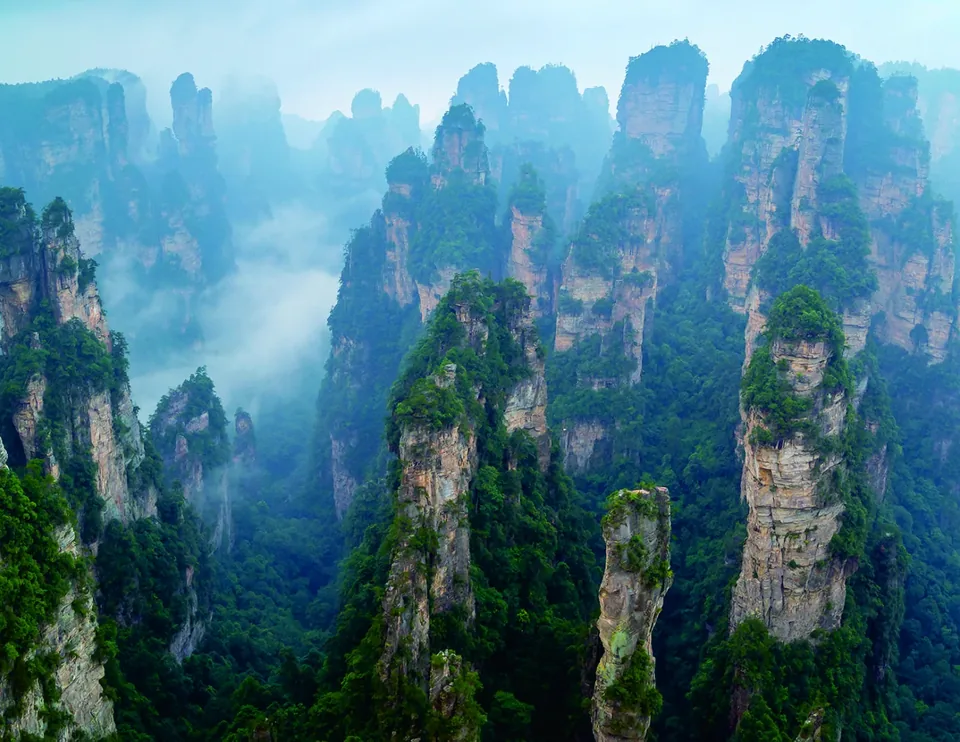
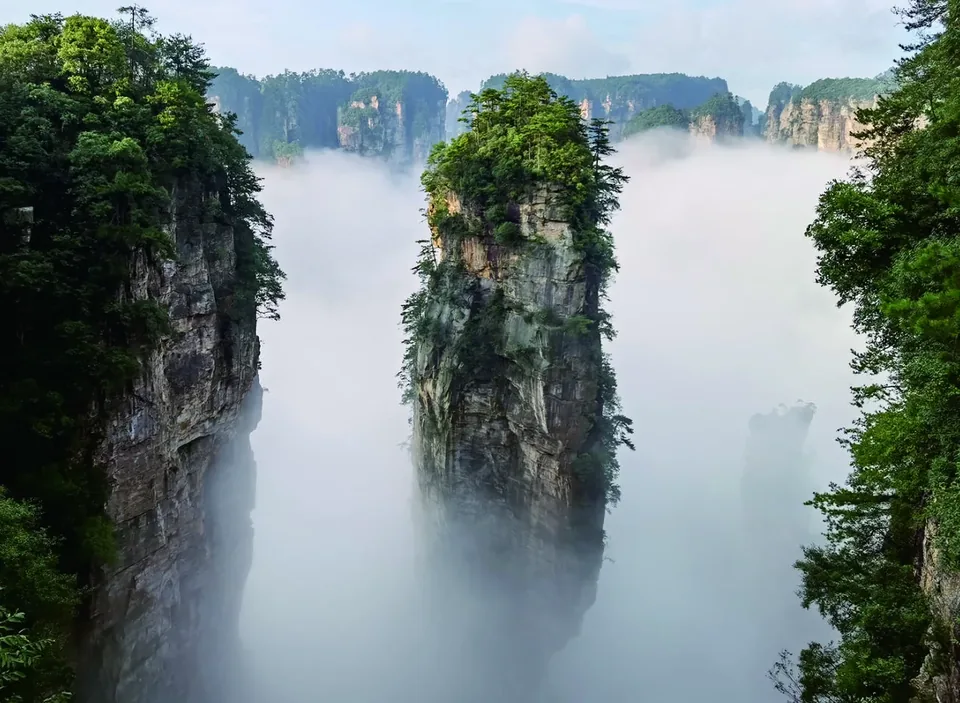
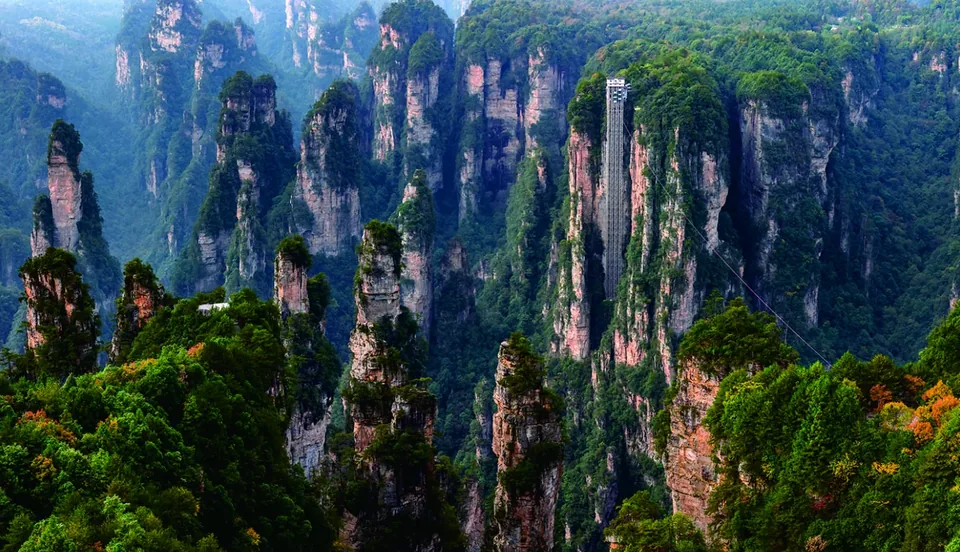
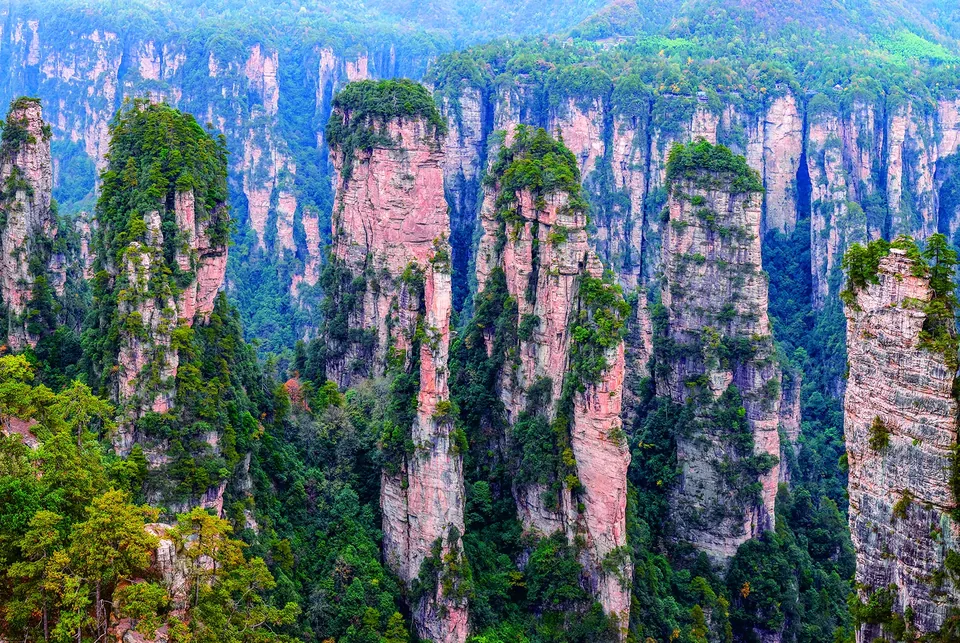
Qiankun Pillar, also known as Avatar Mountain, is one of Zhangjiajie’s “Three Thousand Remarkable Peaks”. The guidebook records an elevation of 1,074 metres and a vertical relief of about 150 metres. Lush vegetation crowns its distinctive form, whose clearly cut vertical joints make it rise as if hewn by an axe. Its name evokes a pillar supporting heaven and earth. It is associated with the inspiration for the floating Hallelujah Mountains in Avatar and has become a destination sought out by visitors from China and abroad.

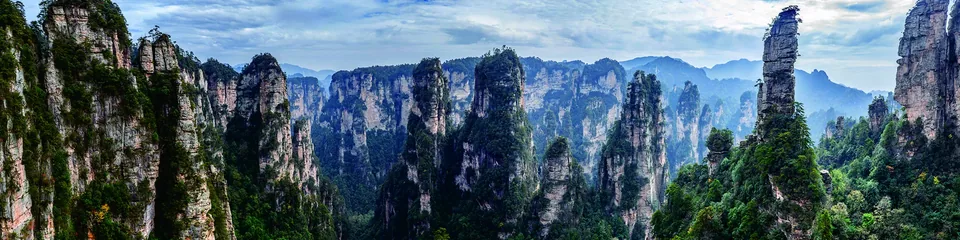
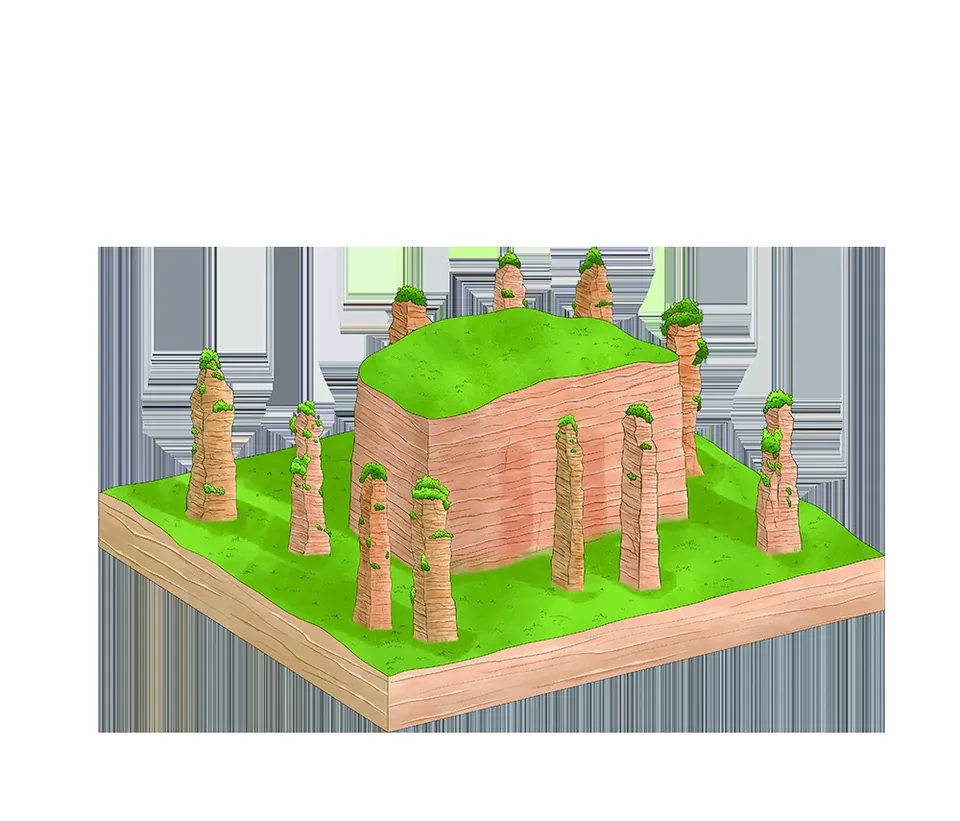
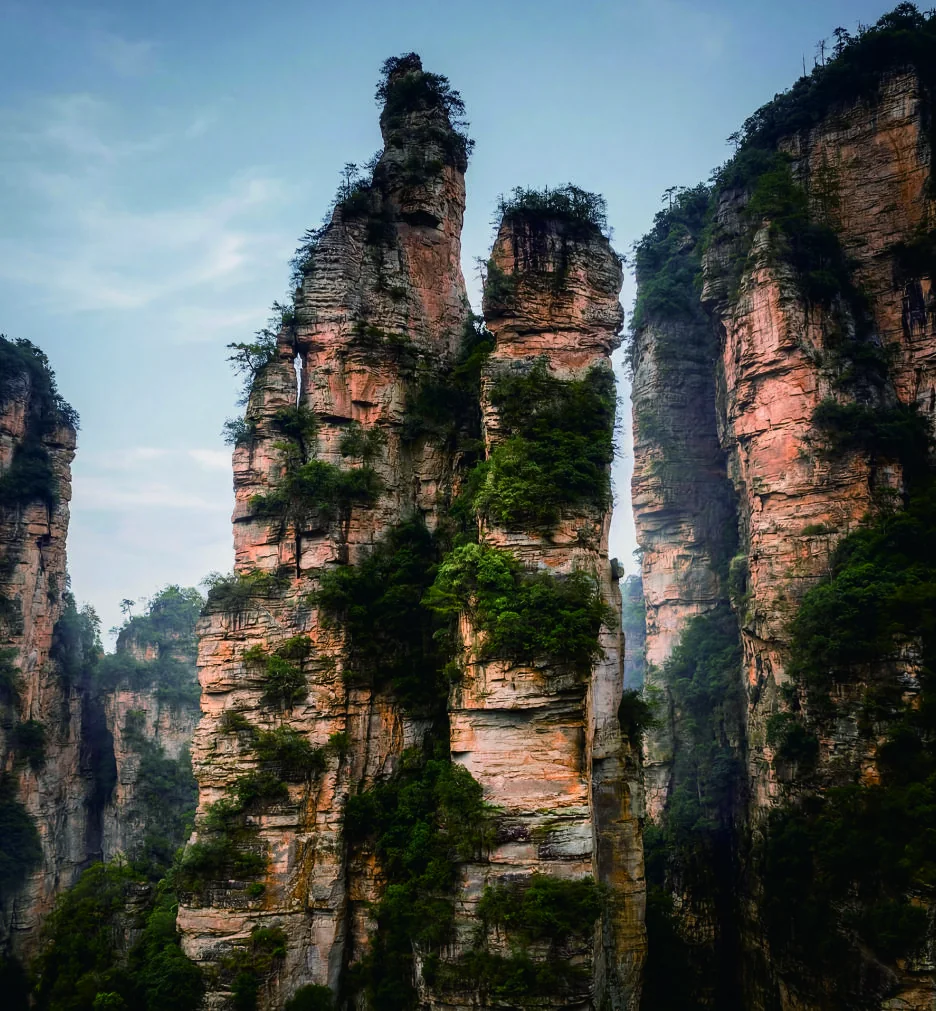
Formation of prismatic sandstone peak forests: the tall, upright pillars have four walls that look axe-cut. These smooth faces are mostly joint planes or surfaces developed along joints. Crustal movements subjected the quartz-sandstone strata to strong tectonic compression. Horizontal stress created numerous parallel vertical joints and fractures; flowing water eroded along them like a sculptor’s blade, establishing the core framework of Zhangjiajie’s sandstone peak-forest landform.

The prismatic-pillar formation sequence shows vertical joints created by crustal compression, water erosion along those joints, and the formation of prismatic sandstone peak forests.

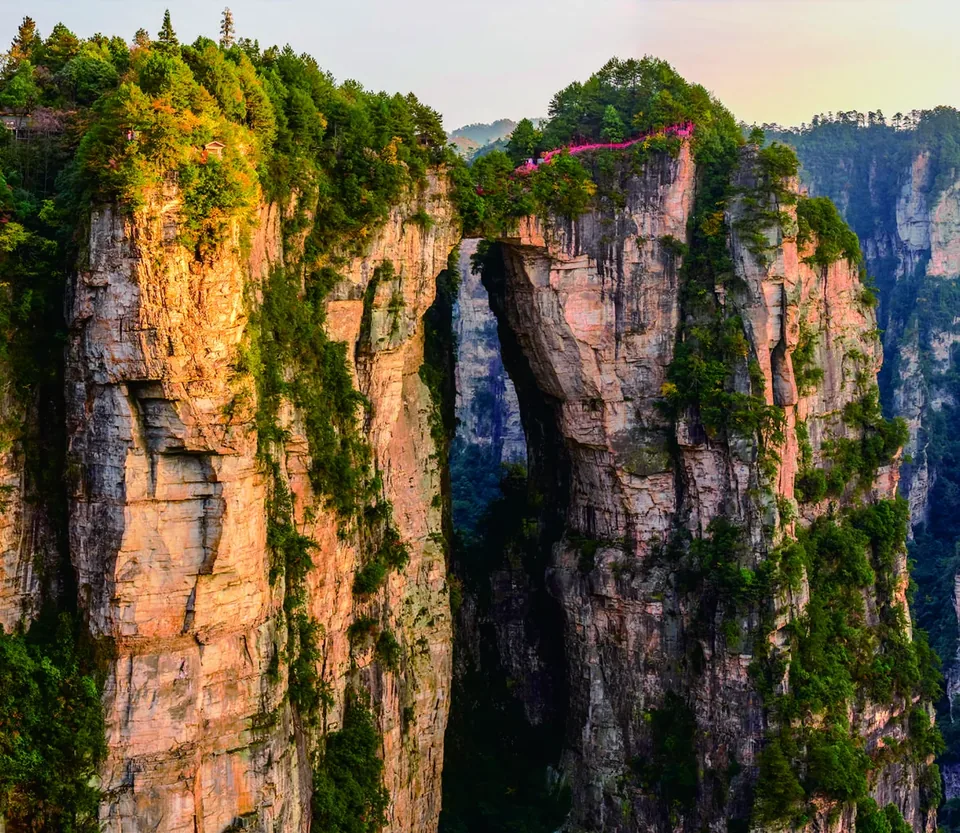
The No. 1 Bridge in the World links two peaks with a suspended rock corridor, forming a natural arch. Often enveloped in mist, it presents an imposing sight. The deck is about 2 metres wide and more than 20 metres long, with a vertical relief of approximately 350 metres. Tall pines grow on the bridge, old vines hang beside it, and a deep abyss lies below. Amid rising mist and wind in the pines, a visitor may feel as though the bridge itself is trembling and swaying: an exhilarating impression.

Formation of the bridge: dense vertical joints developed in the quartz sandstone. As water cut along them and separated the peak walls, softer rock layers beneath the bridge weathered, disintegrated and collapsed, forming caves on both sides. Stronger erosion gradually connected the caves. When the height of the opening became much greater than the thickness of its roof, the first form of a natural bridge appeared. A dense, hard hematite layer reinforced the deck, allowing it to remain as a geological feature.

The natural-bridge formation sequence shows water erosion along vertical joints; local collapse and intensifying erosion; caves joining through the cliff; and further rock collapse leaving a natural bridge.

Yangjiajie

Yangjiajie

Yangjiajie takes its name from a tradition that descendants of the Yang family generals of the Northern Song dynasty lived and multiplied here and stationed troops in the area. It is a characteristic setting for Zhangjiajie’s quartz-sandstone peak walls, which stand like screens: imposing, steep and shaped by natural processes.

Many local sights are closely associated with the Yang family generals. Their descendants are said to continue living here, while the Yang family genealogy and ancestral tombs from the Ming and Qing dynasties remain.

Walking through forests and across ravines reveals the Natural Great Wall, Tianbo Mansion and Wulong Village. The monumental walls and their broad scale convey a different, more expansive character than the pillar forests.

Natural Great Wall and peak-wall landforms

Natural Great Wall and peak-wall landforms

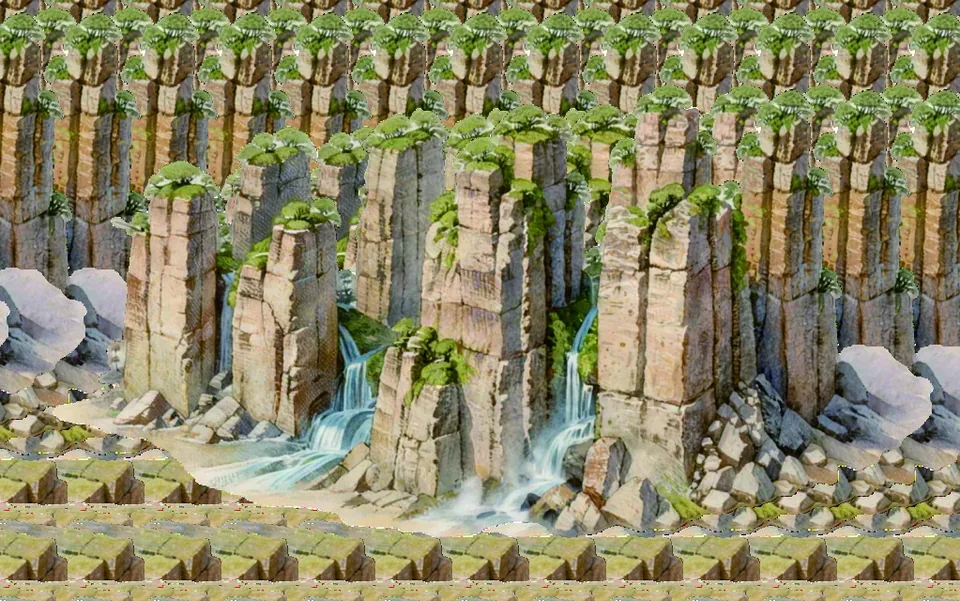
The Natural Great Wall consists of parallel quartz-sandstone peak walls, like a stone wall built across the land by nature. Rising a little over a hundred metres and extending for several hundred metres, the steep, upright walls have a commanding presence. They form where water continuously erodes a set of vertical joints in a quartz-sandstone platform, producing walls aligned in one direction. Sturdy pines crown them, and layered rock textures reveal the geological sculpting. The continuous walls stretch across the mountains like great dragons.

Wulong Village, formerly called Heilong Village, is surrounded by cliffs on steep terrain. A former bandit stronghold, it evokes the saying “one person guarding the pass can fend off ten thousand”. The approach to its summit is described as involving narrow cliff passages, bending through rock cracks or climbing ladders. Deep precipices surround the rear of the village. The adjacent Tianbo Mansion viewpoint overlooks dozens of aligned quartz-sandstone peak walls and offers a notable view of Zhangjiajie.

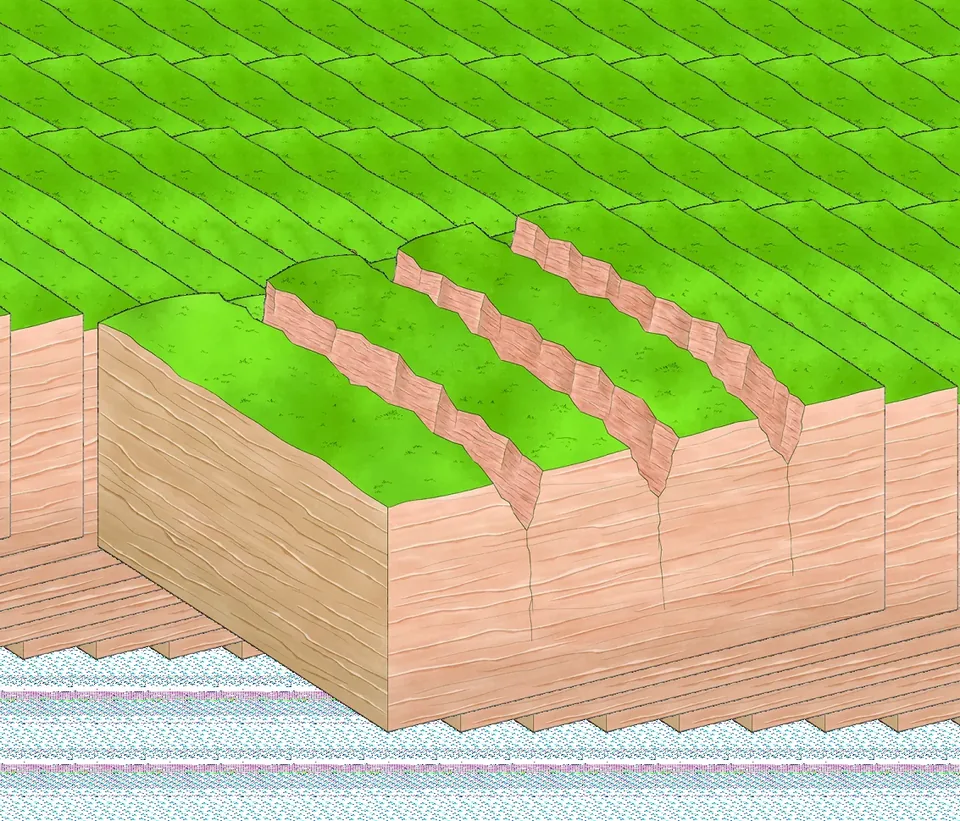
Formation of the Natural Great Wall: water continuously erodes a set of vertical joints in a quartz-sandstone platform or mesa, leaving wall-shaped mountain ridges extending in one direction. With steep, upright faces on both sides, they appear as peaks from the side and walls from the front. Several parallel sets resemble a natural Great Wall.

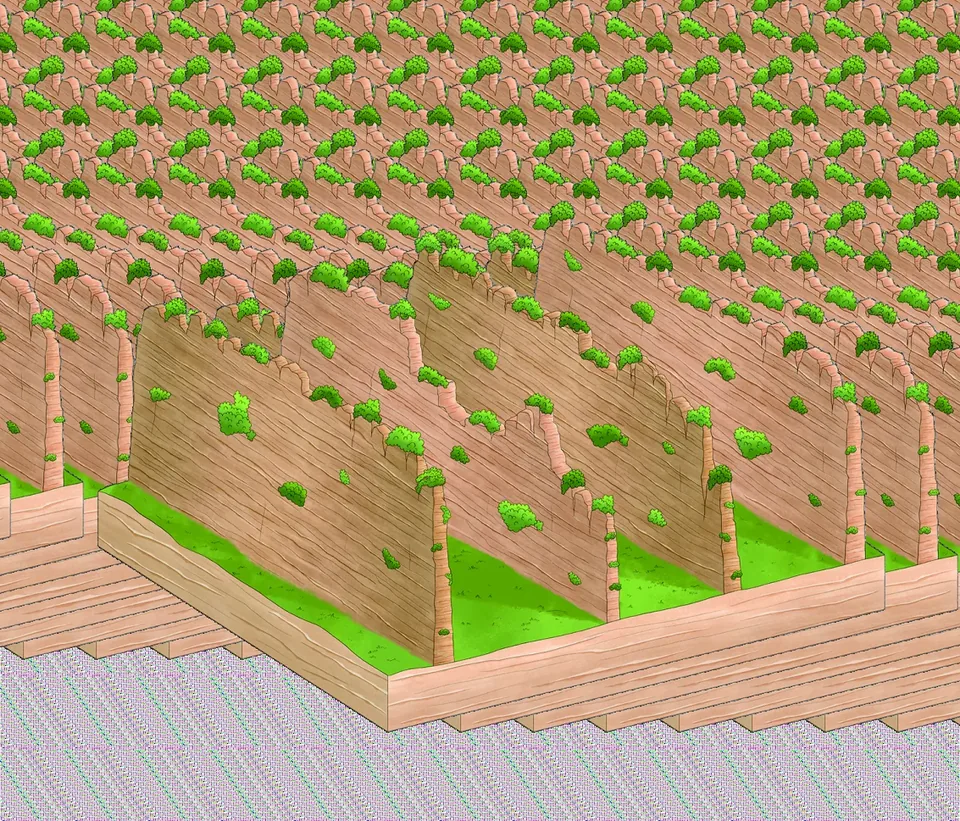
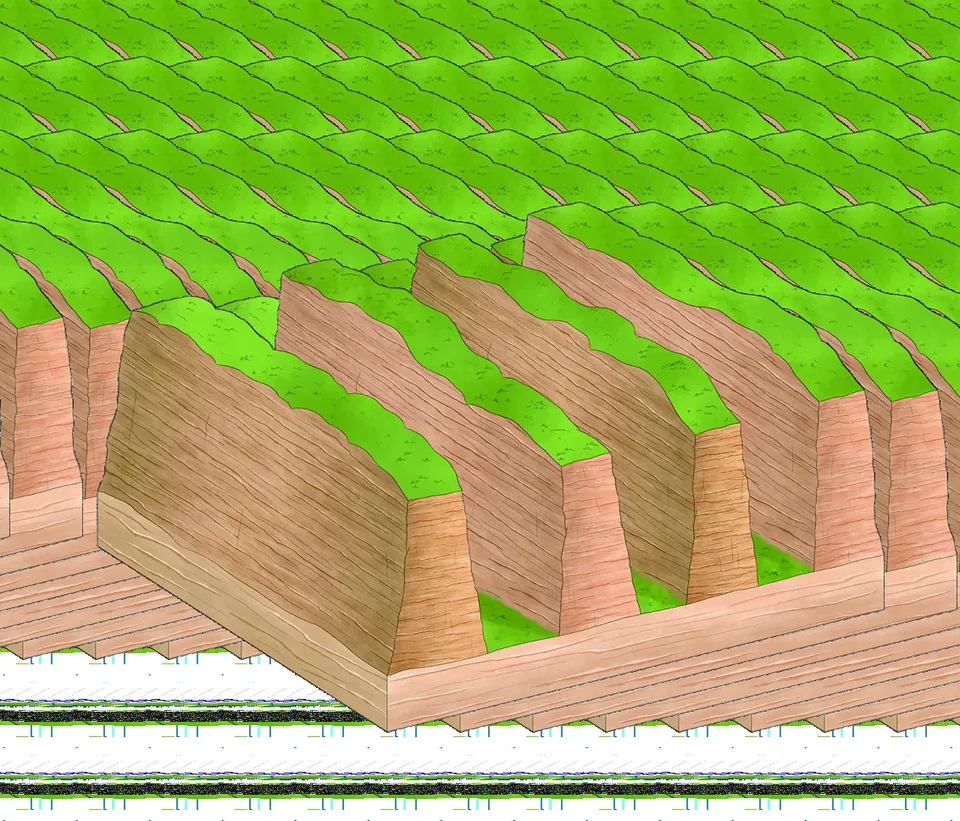
The peak-wall formation sequence begins with tectonic activity creating a set of nearly parallel vertical joints in a quartz-sandstone platform or mesa. Water continuously erodes along these joints, forming gullies and ravines.

As the crust rises, erosion reaches progressively deeper and shapes tall walls. If several sets of joints run in different directions, the walls are eventually divided into individual pillars.

Tianzi Mountain

Tianzi Mountain

Tianzi Mountain is named after a tradition that the Tujia leader Xiang Dakun raised a rebellion here and proclaimed himself King Xiang Tianzi. It is one of the representative areas of the Zhangjiajie landform.

Here the towering peak forests and layered ridges combine grandeur with delicate beauty. From the summit, the Imperial Brush Peak, Fairy Scattering Flowers and West Sea Peak Forest can be seen in the distance.

When clouds and mist sweep through, the peaks appear and disappear in the cloud sea like a long ink-painted scroll, revealing the scale and ethereal atmosphere of the landscape. A traditional saying praises Tianzi Mountain: once you have seen its face, other mountains seem less compelling.

Imperial Brush Peak, Celestial Warriors and peak-forest evolution

Imperial Brush Peak, Celestial Warriors and peak-forest evolution

Imperial Brush Peak consists of several groups of parallel quartz-sandstone pillars a little over a hundred metres high. They taper towards the top, with sharply defined sides and well-developed vertical joints. The rock surfaces are mottled, and upright pines on the summits resemble spread brush bristles. Legend identifies them as the writing brushes of King Xiang Tianzi. In swirling clouds, the peaks appear and vanish as if a divine brush were painting a great landscape scroll. The feature displays the distinctive form of the sandstone pillars and evokes the atmosphere of traditional Chinese landscape painting.

Celestial Warriors: dozens of differently shaped pillars rise almost vertically like bronze halberds cast by celestial beings. They form a dense, ordered “pillar array”. Legend says they are King Xiang Tianzi’s 48 great generals and 48 lesser generals meeting here. Seen from Tianzi Mountain, the feature is called Celestial Warriors; from Bailong Elevator, it is the Forty-eight Generals Rock. The view changes with the angle.

Evolution of the Zhangjiajie sandstone peak-forest landform - youthful stage: tectonic stress creates X-shaped shear joints in quartz sandstone. Water seeps into and scours these weak joint surfaces, deepening and widening the fractures to produce platforms, nascent mesas and linear ridges.

Adolescent stage: as cracks widen, water erodes the rock more rapidly and collapse begins, forming the earliest pillar forests. Erosion along weak interlayers reshapes the sandstone, moving the landform from its youthful stage into a visually striking adolescent stage. Peak clusters, walls, natural bridges and narrow ravines are characteristic.

Mature stage: rapid crustal uplift intensifies river incision and headward erosion. Valleys and tributary valleys develop fully; the sandstone is further divided and broken down, and the pillar-forest area expands. This is the most spectacular stage of the landscape, characterised by peak forests, narrow ravines and gorges.

Old stage: when the crust becomes relatively stable, lateral river erosion and valley widening dominate. The earlier sandstone peak forests begin to disintegrate and collapse under gravity. The landform enters its old stage, characterised by remnant forests of pillars, isolated peaks and broad valleys.

Huangshizhai

Huangshizhai
Huangshizhai

Huangshizhai takes its name from a tradition that Huang Shigong, the mentor of Zhang Liang in the Han dynasty, practised Taoism here. It is a large mesa representing an early stage in the development of Zhangjiajie’s quartz-sandstone peak-forest landform. The guidebook records an average elevation of about 1,100 metres and a flat, open summit covering about 0.2 square kilometres.

Walking around the mesa brings constantly changing views amid clusters of peaks. Double Welcome Gate, Star-picking Terrace and the Remaining Piers of the Heavenly Bridge are among its features, set against overlapping ridges.

From the summit, countless pillars and a rolling cloud sea spread into the distance, evoking a fairyland and revealing the grandeur and beauty of the Zhangjiajie landform. A local saying holds that a visit to Zhangjiajie is incomplete without Huangshizhai.

Huangshizhai mesa, Star-picking Terrace and Heavenly Bridge remnants

Huangshizhai mesa, Star-picking Terrace and Heavenly Bridge remnants

Evolution of the Huangshizhai mesa: tectonic activity created two sets of nearly parallel vertical joints in the quartz-sandstone platform. Water continually eroded along these joints to form gullies and ravines.

Star-picking Terrace is the highest aerial viewpoint on Huangshizhai, formed from two naturally stacked layers of quartz sandstone. The guidebook records a base rock of about 20 square metres and roughly 5 metres high; the upper rock is about 10 metres tall and 5 metres in diameter, with an old pine standing on top.

The terrace overlooks a deep valley, with clouds overhead and wooded peaks below. On misty rainy days the surrounding pillars appear and disappear in the cloud sea. Under a bright moon, the stars seem close enough to pluck by hand. In November 1993, State Councillor Zhang Jingfu visited the terrace and gave it this name.

The Remaining Piers of the Heavenly Bridge are a row of elliptical pillars more than 200 metres high rising steeply out of the gorge. Tall and striking, they resemble naturally formed bridge piers. They were shaped by water continually eroding, cutting and sculpting along multiple sets of joints in quartz sandstone.

Golden Whip Stream

Golden Whip Stream
Golden Whip Stream

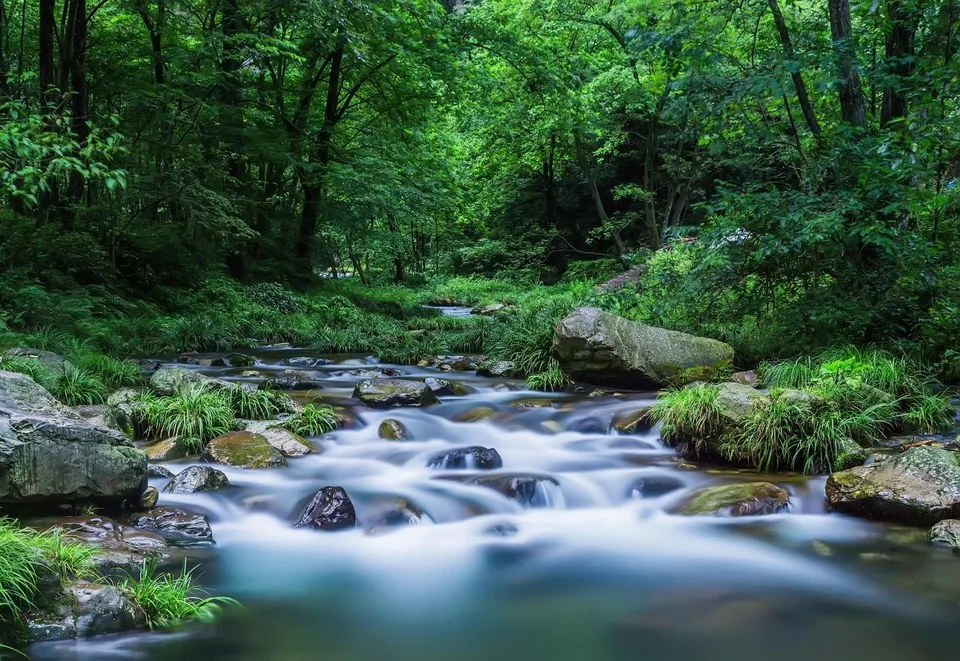
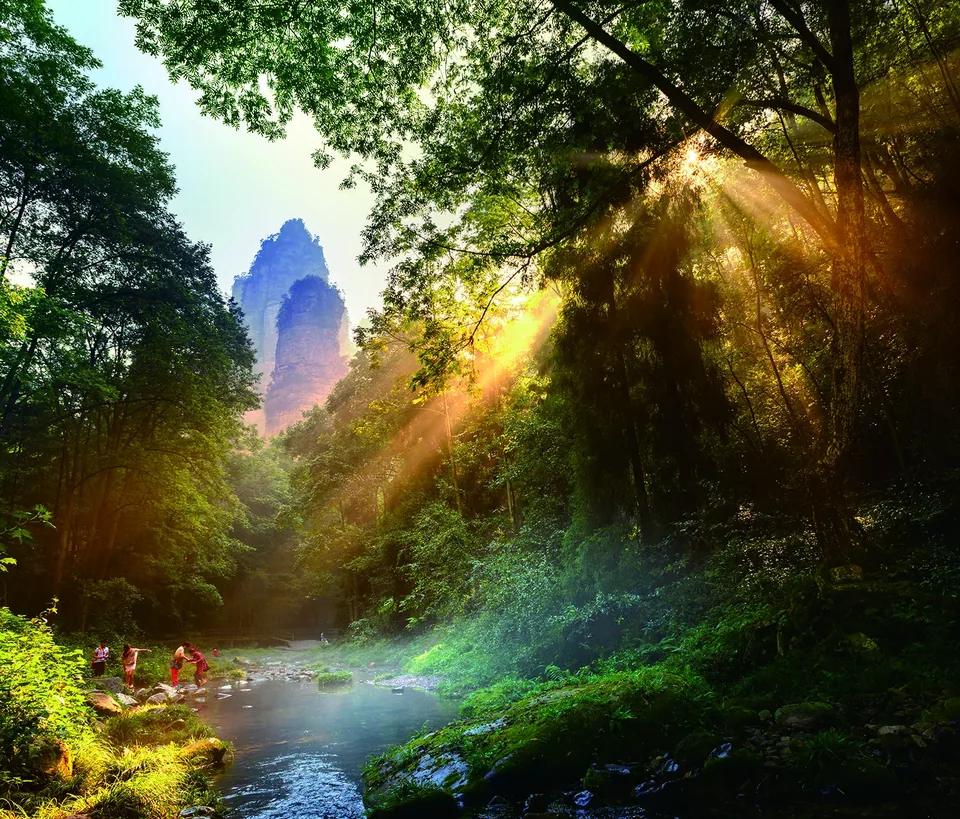
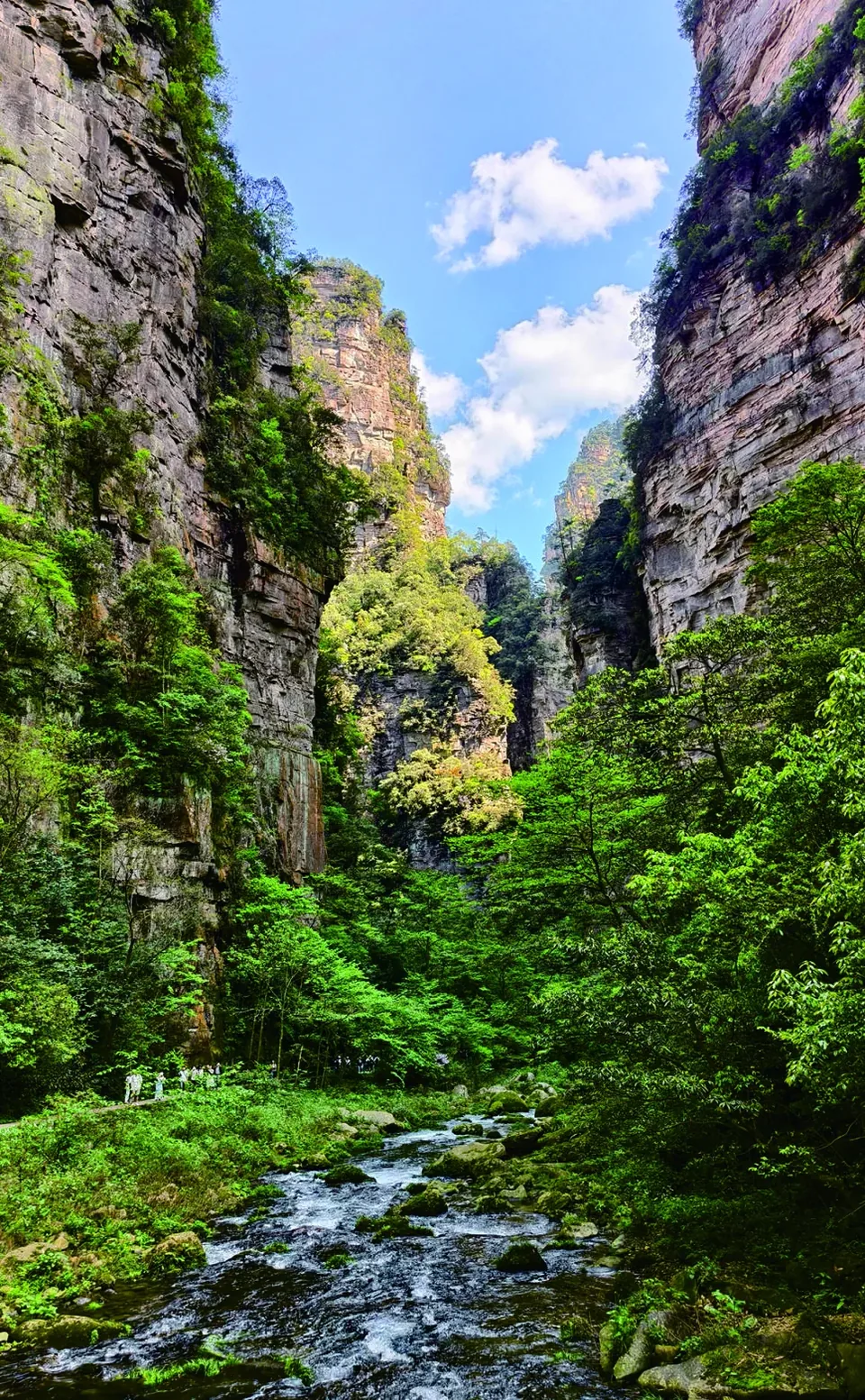
Golden Whip Stream takes its name from Golden Whip Rock, which it flows past. In the upper reaches of the Suoxi River, the stream extends for about 7.5 kilometres and offers a distinctive place to walk beside the water and follow its course. Unusual peaks and facing cliffs rise on both sides, while flowing water links clear, deep pools. The gorge has been praised as “the most beautiful gorge in the world”. A walk along the stream passes more than 20 scenic sights, including Golden Whip Rock and the Journey to the West rock formation. Views change at every turn, revealing the grace and character of the Zhangjiajie landform.

Landmarks along Golden Whip Stream

Landmarks along Golden Whip Stream

Boudoir Gate is formed by more than ten quartz-sandstone pillars. One resembles a giant with recognisable facial features, hands clasped over its chest and a slight smile; it is called Welcome Rock. To its right, a sheer cliff stretches across the skyline, with greenery on its crest and shrubs hanging from its face like a screen. This is Boudoir Gate Rock. Together the two rocks suggest a doorway opening, an image of a woman emerging from her private chamber to welcome guests.

Golden Whip Rock has a relative height of more than 350 metres. Steep and sharply edged, with a broad base tapering to a slender top, it resembles a long whip planted in the earth. Its quartz sandstone glitters in sunlight, giving the rock its name. A peak of similar height stands to its left and resembles a mountain eagle: its wings are half-spread as if beginning to beat, its beak slightly open, and it seems ready to swoop down and defend the whip from an intruder. This striking, lifelike silhouette is known as Eagle Guarding Golden Whip.

Qianli Xianghui, or Couple’s Reunion from Afar, consists of two quartz-sandstone pillars joined at the base but separate at the top. They resemble a husband and wife meeting after a long separation and gazing affectionately at one another. The husband appears tall and imposing, wearing a helmet and armour as though returning from a distant journey; his waist and head bend slightly as if comforting his wife. She has a well-proportioned, full figure, short hair and a graceful bearing. Her left hand rests around his waist and her face tilts upward, as though quietly sharing the feelings of their time apart. The rock forms express both nature’s extraordinary craftsmanship and a human story, bringing the rugged character of the mountains together with affection through immense geological time.

Huanglong Cave

Huanglong Cave
Huanglong Cave
Huanglong Cave

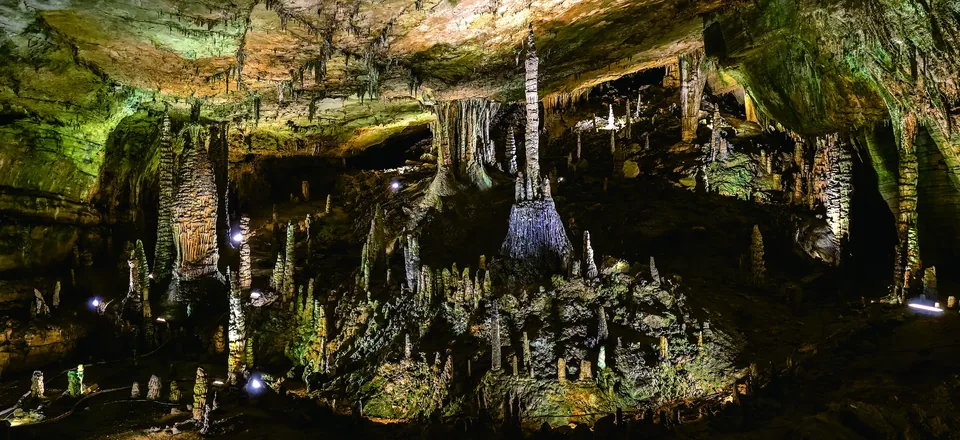
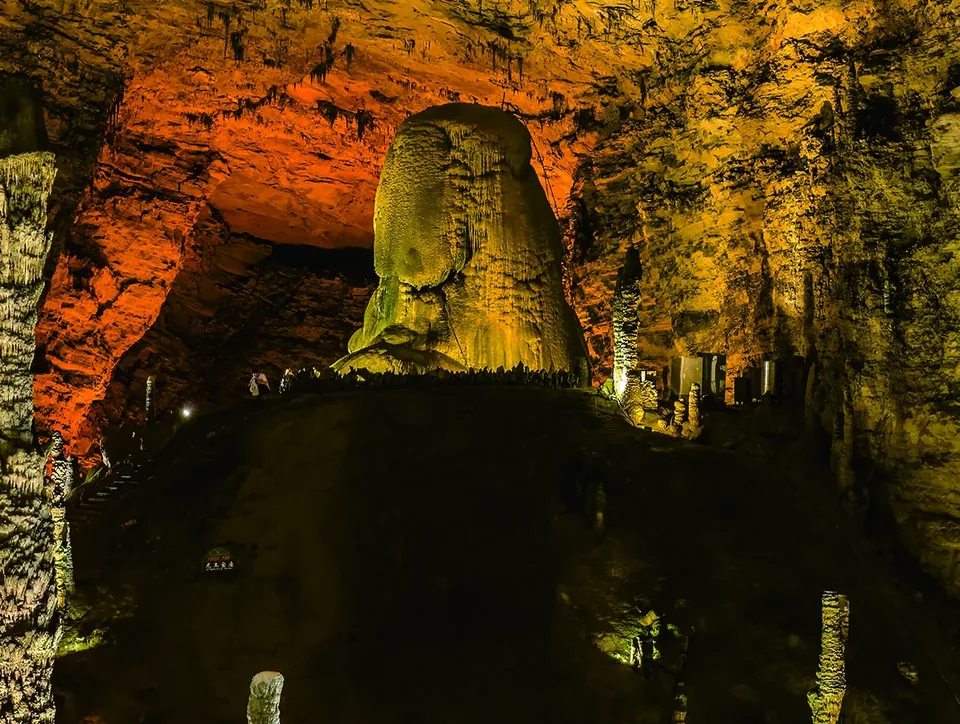
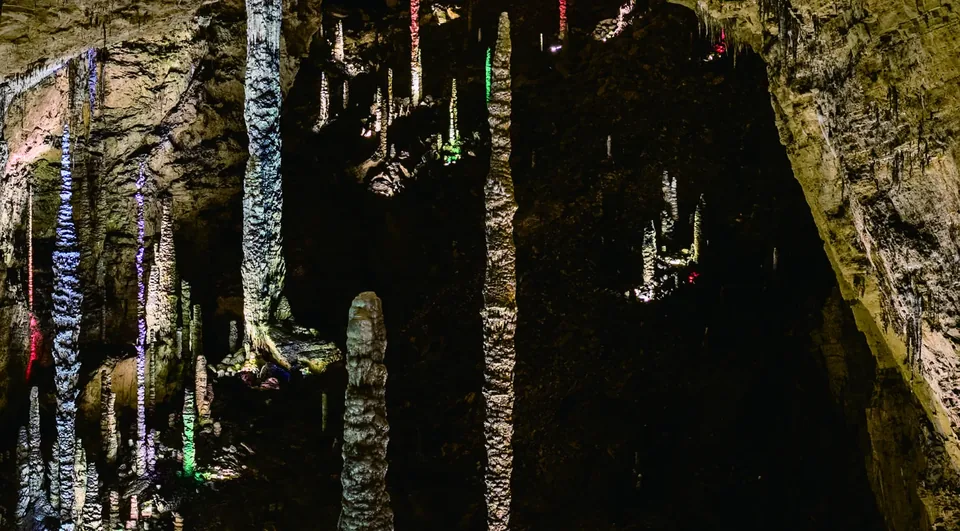
Huanglong Cave takes its name from a legend that a yellow dragon once hid here. It is a representative karst cave landscape in Zhangjiajie. The cave has four levels from top to bottom: two dry levels and two levels containing waterways. Its features include one reservoir, two rivers, three pools, four waterfalls, 13 halls and 98 passageways. The cave system extends for about 7.5 kilometres, covers more than 200,000 square metres and has a vertical height difference of 140 metres.

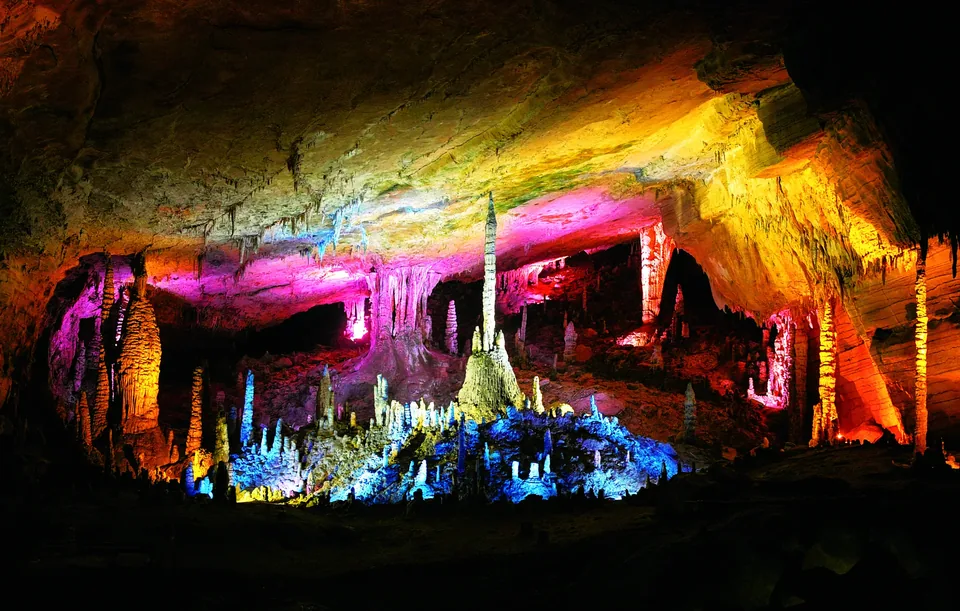
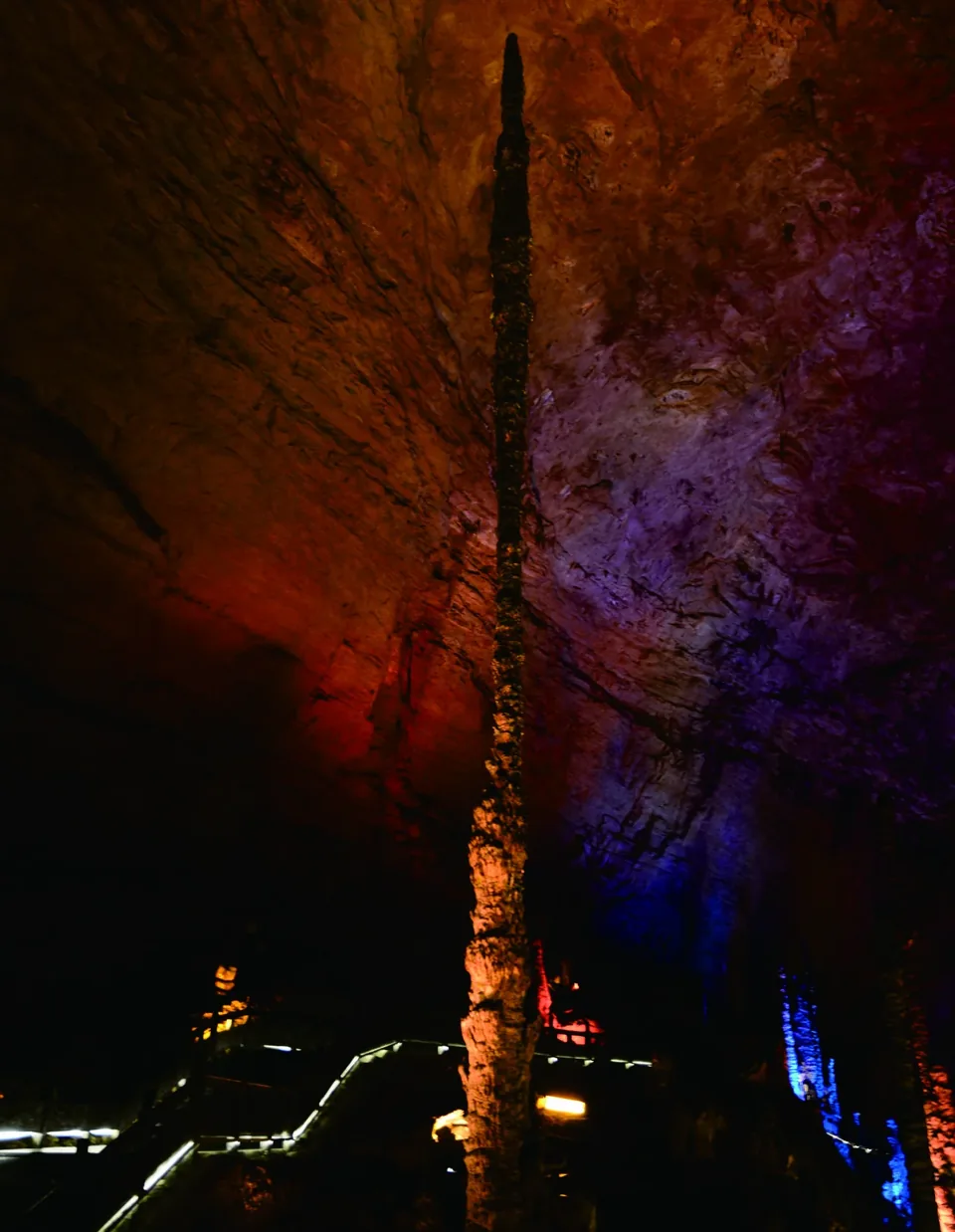
Stalactites, stalagmites, columns, stone waterfalls, draperies, curtains and cave corals create changing views throughout the cave. Its best-known stalagmite is the Sea-stabilising Rod, about 19.2 metres high and approximately 0.6 metres in diameter. Slender and upright, it is celebrated for its exceptional proportions.

Karst wonders of Huanglong Cave

Karst wonders of Huanglong Cave

The Sea-stabilising Rod stands in the uppermost Dragon Palace Hall. This stalagmite is thicker at both ends and slender in the middle, and is regarded as Huanglong Cave’s signature treasure. It is about 19.2 metres tall and approximately 0.6 metres in diameter, giving a diameter-to-height ratio of roughly 3%. Its shape and unusually high height-to-diameter ratio make it striking. Its surface has a crystalline sheen, and it stands on a slope of collapsed rock like the legendary Golden Cudgel reaching toward the ceiling. Its textured surface suggests the marks of time, with a faint blue sheen under dim light. Looking up, the rhythmic sound of dripping water seems like the whispers of passing time. This remarkable formation, shaped by water drop by drop, is a natural work of art hidden deep within the cave.

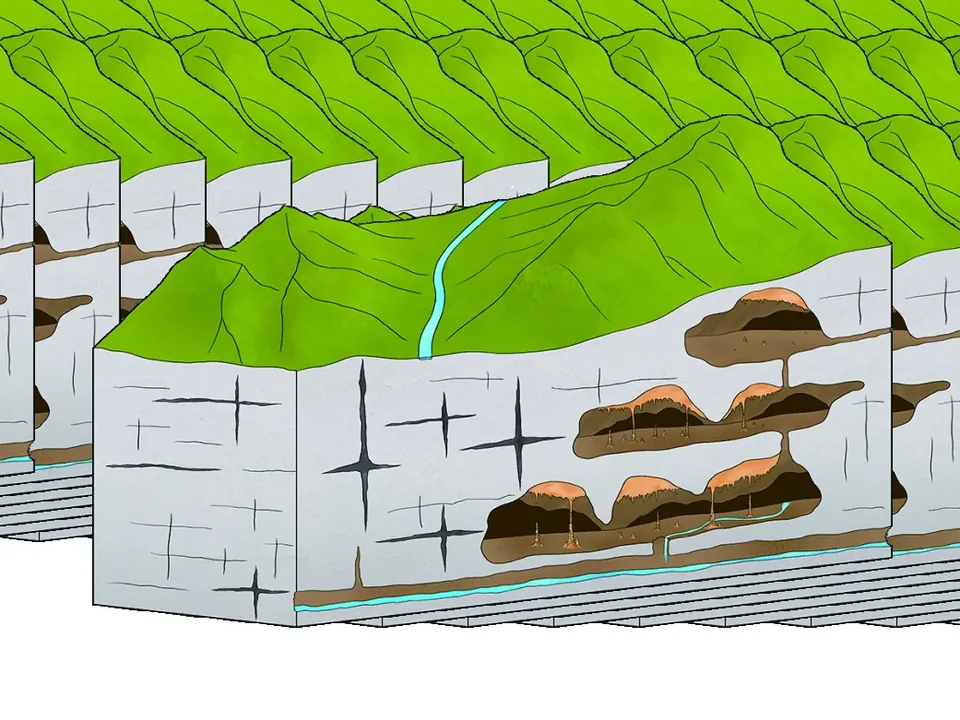
How did Huanglong Cave acquire its four storeys? As you follow the cave’s solution passages, the route sometimes climbs and sometimes descends steeply, opening into broad halls or narrowing into confined corridors. Careful observation reveals four approximate levels. Their formation can be understood through the following sequence.

Stage 1: Around 250 million years ago, the Zhangjiajie region was a marine environment. Biological and chemical processes produced large quantities of limestone composed mainly of calcium carbonate, providing the material from which the cave would later develop.

Stage 2: Over a long span of geological time, limestone that had been buried deep underground became exposed at the surface. Surface water began dissolving it, forming features such as solution grooves, rock pinnacles and sinkholes.

Stage 3: As the crust rose, water dissolved downward along limestone bedding planes, joints and fractures, forming underground drainage and cave systems. During periods of relative crustal stability, dissolution and gravity-driven collapse widened the spaces laterally into large halls and solution passages.

Stage 4: The crust subsequently rose several more times. After each uplift, groundwater began dissolving farther downward, developing deeper drainage and cave systems. Repetition of this process produced today’s four-level cave landscape, a silent witness to crustal uplift.
Baofeng Lake

Baofeng Lake

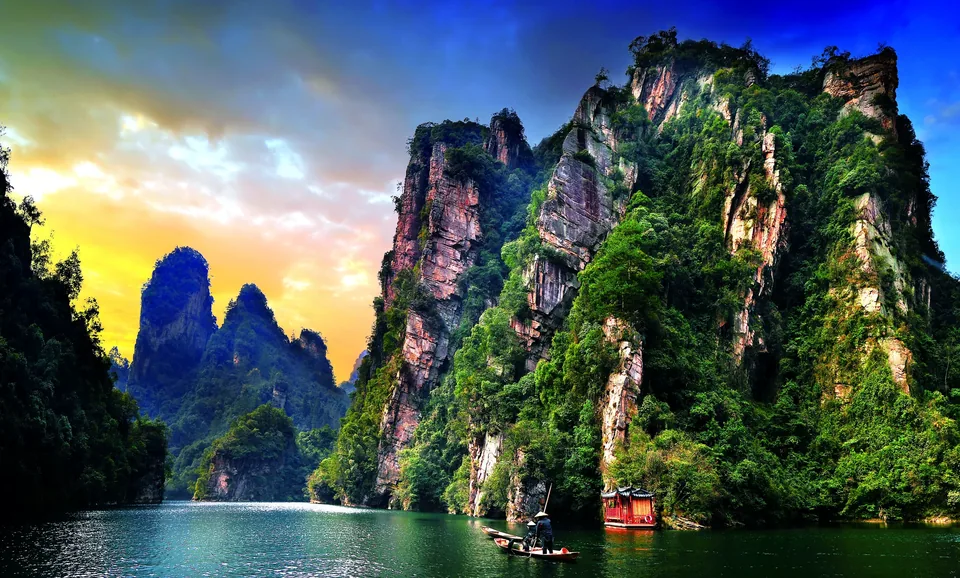
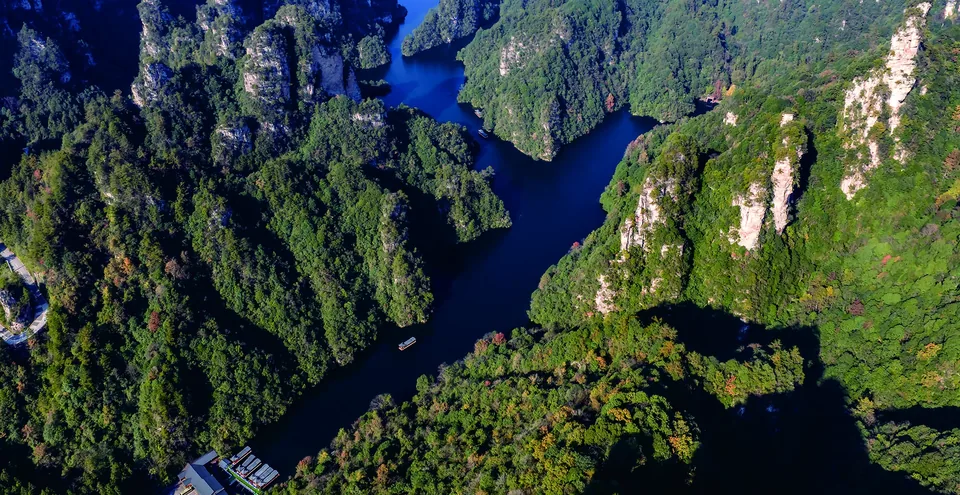
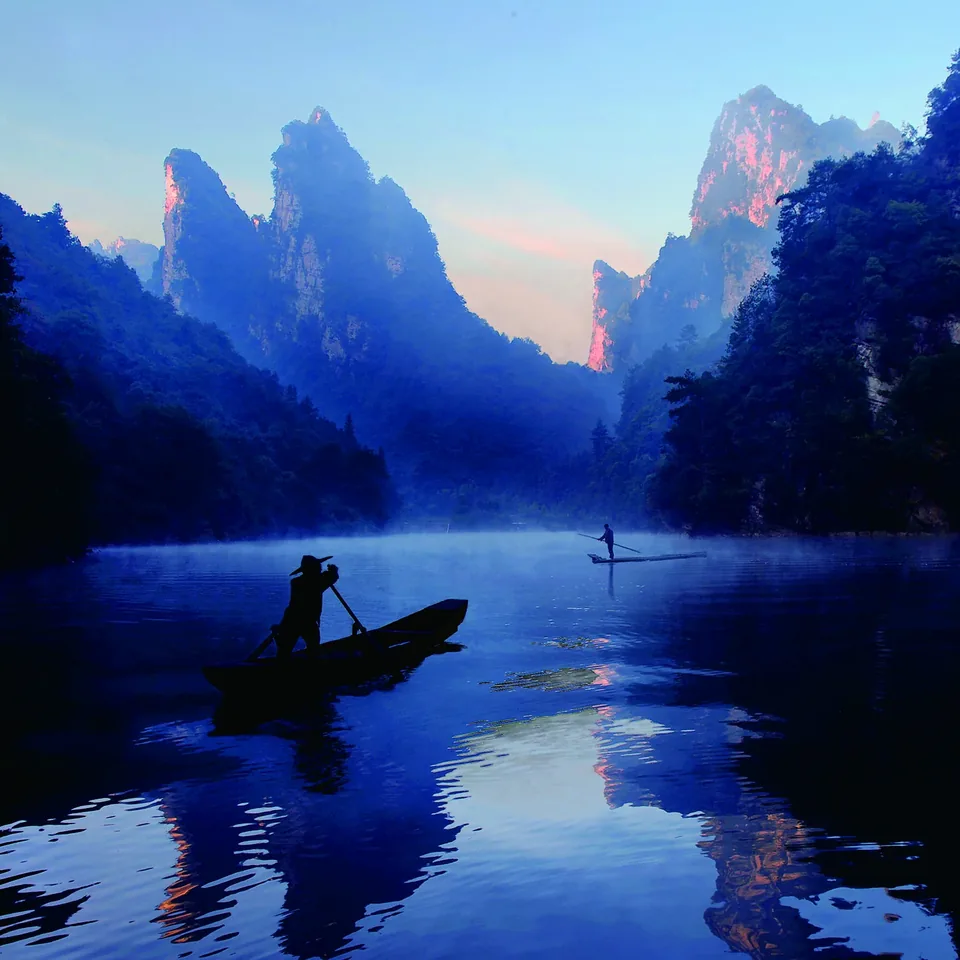
Baofeng Lake takes its name from nearby Baofeng Mountain. It is a distinctive high-gorge lake among Zhangjiajie’s sandstone peak forests. Its basin developed where flowing water eroded a depression along three sets of rock joints and water accumulated. The lake follows the mountains in a long, irregular shape.

Unusual peaks and overlapping ridges line the shore. Clear, mirror-like water reflects the green mountains and rock pinnacles, while the mountains frame the water in return. Together they create the poetic landscape for which the lake is known.

After visiting, the writer and poet Wang Zengqi expressed the scene in verse: “A mirror lies hidden among emerald hills, as if the scenery of the Three Gorges had gathered around it. Boats glide into reflections of green mountains, startling pairs of mandarin ducks into flight.”
Landscapes of Baofeng Lake

Landscapes of Baofeng Lake

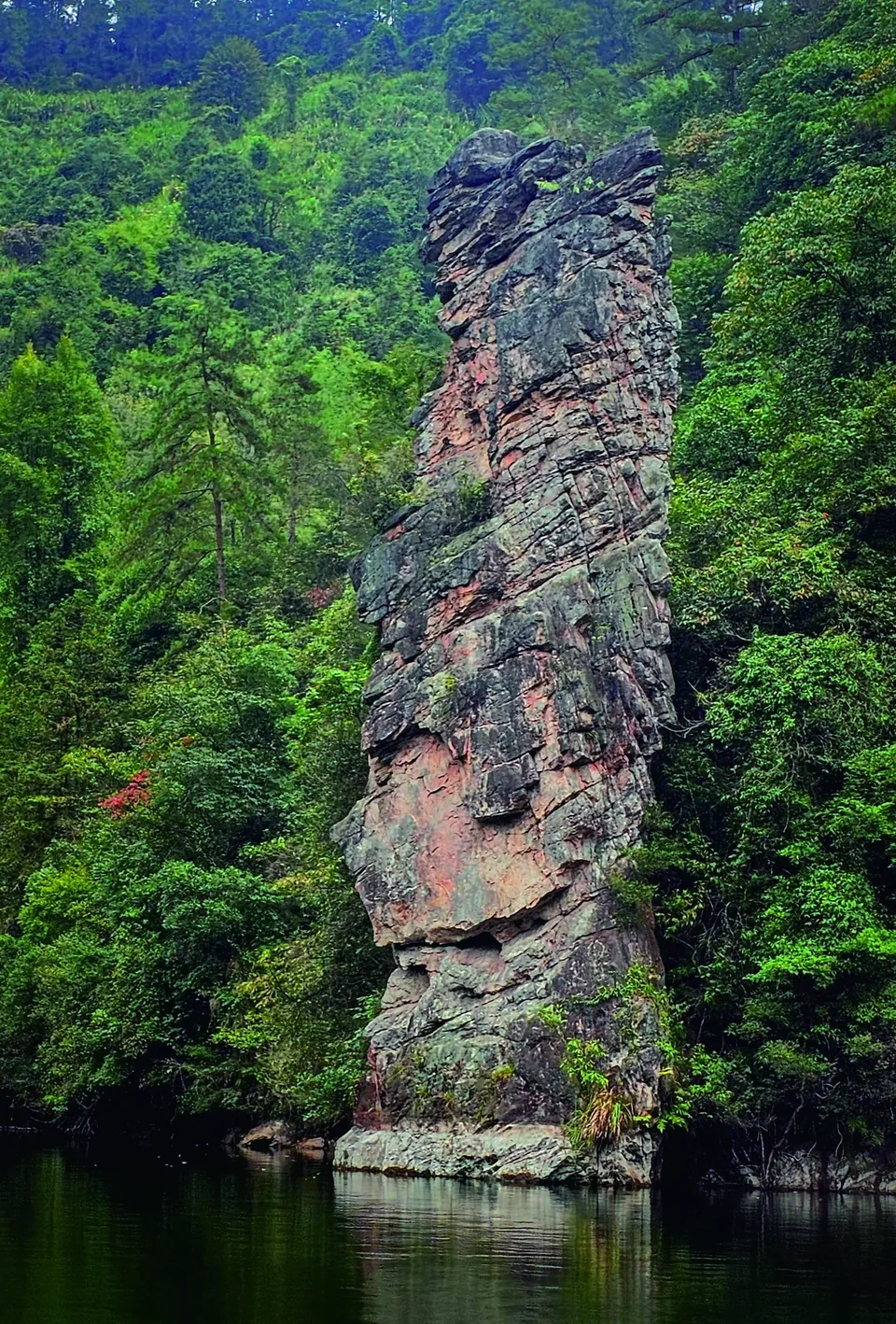
The Baofeng Goddess stands beside Baofeng Lake as a single quartz-sandstone pillar. Also called Fairy Gazing into a Mirror, the formation is about 10 metres high and is reflected in the water. Its outline resembles a graceful young woman with her hair in a high bun, delicate features and softly hanging sleeves, looking down at the lake as though arranging her appearance. Gazing from a boat, the clear water mirrors her figure; a passing breeze almost seems to carry her quiet laughter, creating an enchanting scene.
EXPLORE BY AREA

Key sights within each area

Zhangjiajie National Forest Park is a national 5A-rated scenic attraction. Tianzi Mountain, Yuanjiajie, Huangshizhai, Yangjiajie, Golden Whip Stream and Ten-mile Gallery are six visitor areas within the park, not six separately ticketed attractions. Baofeng Lake and Yellow Dragon Cave are independent 4A-rated scenic attractions with separate tickets.

Yuanjiajie

16 places

Continue exploring →
  1. Bridge Viewing Terrace望桥台
  2. Three-view Terrace三观台
  3. Ape Man Gazing at the Moon猿人望月
  4. The No. 1 Bridge in the World天下第一桥
  5. Door Opening to Mountains开门见山
  6. Five Women Setting Out五女出征
  7. Turtle Inquiring of Heaven神龟问天
  8. Longevity Pond长寿潭
  9. Avatar Mountain乾坤柱
  10. Slender-waist Peak小蛮腰
  11. Yuan's Manor袁家寨子
  12. Enchanting Terrace迷魂台
  13. Immortal-worshipping Terrace拜仙台
  14. Rear Garden后花园
  15. Songzigang松子岗
  16. Generals in Formation将军列队

Yangjiajie

18 places

Continue exploring →
  1. Natural Great Wall天然长城
  2. Tianbo Mansion天波府
  3. Wulong Village乌龙寨
  4. Crowing Rooster金鸡报晓
  5. One Man Guards the Pass一夫当关
  6. Fearful Step一步难行
  7. Bowing Head不得低头
  8. Singing Pavilion放歌亭
  9. Wulang Worshipping Buddha五郎拜佛
  10. Conglang Rock枞琅岩
  11. Twin Elms Embracing Rock双榆抱石
  12. One Step to Heaven一步登天
  13. Sky Corridor空中走廊
  14. Rock Biting Tree灵石咬树
  15. Longfeng Temple龙凤庵
  16. Kitten Fishing小猫钓鱼
  17. Regret Meeting Late相见恨晚
  18. General Rock将军岩

Tianzi Mountain

24 places

Continue exploring →
  1. Divine Hen Pecking神鸡啄食
  2. Fearful Step一步难行
  3. Celestial Bridge仙人桥
  4. Imperial Throne天子座
  5. Big Sky Farmland空中大田园
  6. Small Sky Farmland空中小田园
  7. Celestial Warriors神兵聚会
  8. Parade-reviewing Terrace阅兵台
  9. Dragon Emerging from Water蛟龙出水
  10. Lovers' Tryst情人幽会
  11. Peak-forest Maze人间迷宫
  12. Shentang Bay神堂湾
  13. General's Terrace将军台
  14. Imperial Brush Peak御笔峰
  15. Warrior Taming a Horse武士驯马
  16. Tianzi Pavilion天子阁
  17. Upper Crescent Pass月亮垭
  18. Lower Crescent Pass小月亮垭
  19. Golden Armchair金交椅
  20. South Heavenly Gate南天门
  21. Echoing Cliff回音壁
  22. Fairy Scattering Flowers仙女散花
  23. Generals Setting Out众将出征
  24. Helong Park贺龙公园

Huangshizhai

29 places

Continue exploring →
  1. Remaining Piers of the Heavenly Bridge天桥遗墩
  2. Highland Homestead界上人家
  3. Maitreya Peak弥勒宫
  4. Pines Singing in the Wind松风听涛
  5. Sanjie Pavilion三界亭
  6. Huang Shigong's Enlightenment黄公悟道
  7. Sword Pointing to the Sky剑指苍穹
  8. Huangshi Pine黄石松
  9. Imperial Garden御花园
  10. Echoing Cliff回音壁
  11. Jade Vase Peak玉瓶峰
  12. Natural Mural天然壁画
  13. Lovers' Peak情人峰
  14. Five-finger Peak五指峰
  15. Zhang Liang Hanging the Seal张良挂印
  16. Twin Gates Welcoming Guests双门迎宾
  17. Star-picking Terrace摘星台
  18. Nine-storey Celestial Pavilion九重仙阁
  19. Immortal Peak神来峰
  20. Six Wonders Pavilion六奇阁
  21. General-honouring Terrace拜将台
  22. Golden Turtle in the Misty Sea海螺金龟
  23. Zhang Liang's Battle Array张良布阵
  24. Huang Shigong's Secret Scroll黄公秘卷
  25. Fairy Presenting Flowers仙女献花
  26. Armour-removing Peak卸甲峰
  27. Tongtian River通天河
  28. Elephant Watching the Battle Array神象观阵
  29. Huang Shigong's Military Drill黄公演兵

Golden Whip Stream

18 places

Continue exploring →
  1. Boudoir Gate Welcoming Guests闺门迎宾
  2. Golden Whip Rock金鞭岩
  3. Eagle Guarding the Golden Whip神鹰护鞭
  4. Mother-and-child Peak母子峰
  5. Journey to the West师徒取经
  6. Splitting the Mountain to Save Mother劈山救母
  7. Candle Peak蜡烛峰
  8. Longevity Spring长寿泉
  9. Great Literateur Rock文星岩
  10. Twin Turtles Peering into the Stream双龟探溪
  11. Zicao Pool紫草潭
  12. Scholar Hiding Books秀才藏书
  13. Meeting from a Thousand Li Away千里相会
  14. Huanglian Bay黄莲湾
  15. Phoebe Woods楠木坪
  16. Camel Peak骆驼峰
  17. Leaping Fish Pool跳鱼潭
  18. Reunion Tree重欢树

Yellow Dragon Cave

16 places

Continue exploring →
  1. Sea-stabilising Needle定海神针
  2. Xiangshui River响水河
  3. Crystal River水晶河
  4. Labyrinth迷宫
  5. Golden Lance and Silver Spear金戈银枪
  6. Hundred-step Sky Ladder百步天梯
  7. Twin Gates Welcoming Guests双门迎宾
  8. Dragon Dance Hall龙舞厅
  9. Dragon King's Throne龙王宝座
  10. Lithophone Mountain石琴山
  11. Sky-column Street天柱街
  12. Celestial Bridge天仙桥
  13. Dragon Gorge倒龙峡
  14. Conch Calling to the Sky海螺吹天
  15. Inner Palace后宫
  16. Echoing Cliff回音壁

Baofeng Lake

16 places

Continue exploring →
  1. Baofeng Bridge宝峰桥
  2. A Thread of Sky一线天
  3. Waterfall Stage瀑布舞台
  4. Qifeng Waterfall奇峰飞瀑
  5. Mountain Moon Pavilion山月亭
  6. Baofeng Goddess宝峰女神
  7. Golden Turtle Emerging from Water金龟出水
  8. Giant Salamander Rock娃娃鱼岩
  9. Qingliang Pavilion Wharf清凉亭码头
  10. Happiness Bridge幸福桥
  11. Half-face Pigsy半脸八戒
  12. Guanyin Hall观音殿
  13. Eagle's Nest Fortress鹰窝寨
  14. Immortal-herb Bay仙药湾
  15. Peacock in Full Plume孔雀开屏
  16. Golden Toad Holding the Moon金蟾含月

Opening hours, tickets, transport and visitor services may change. Check the latest official information before travelling.